
A clinic workload API must confirm which calling service is connecting, not only prove the API name to that caller. Which design performs that caller check?
Select an answer to reveal the explanation.
Short Explanation
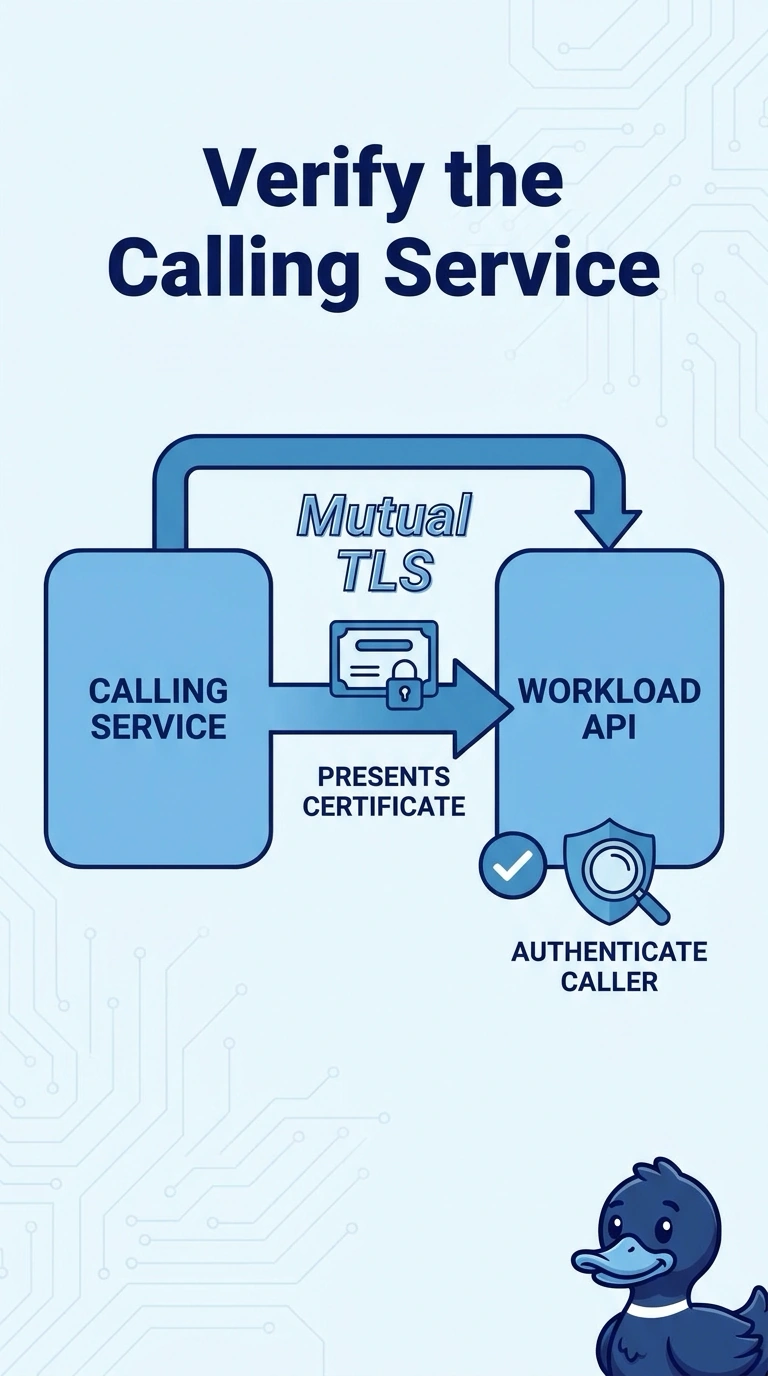
Showing your own badge at the door does not tell you who is knocking. The clinic API must authenticate the caller, and mutual TLS does that by requiring the calling service to present its own certificate. A one-way server certificate only proves the API to the caller.
Full Explanation
A server certificate authenticates the server, not the caller. Mutual TLS, so the calling service presents its own certificate and the workload API can authenticate that caller, is the design that answers which service is connecting. A one-way server certificate on the API lets the caller authenticate the API and does not identify the calling service. A longer lifetime on the API server certificate extends that server certificate and still does not name the caller. Stretching the server certificate dates does not create a client identity. An exportable private-key file on the API host can be copied off the host and still does not authenticate the calling service. An exportable key is a theft risk for the API identity. If the API enforces current certificate revocation information, revoke the certificate for the exposed key and replace it with one backed by a fresh key. It does not prove the caller. Exam caveat: the caller certificate still has to come from a trusted issuer, sit inside its validity window, and fail if it is revoked. Operational check: call the API without a client certificate and expect rejection, then call it with the service certificate and expect the API to record that caller.