
An airline identity provider flags a crew password as leaked. The same user completed MFA successfully last month, and the help desk wants to allow today's sign-in on that basis. Which decision fits the new risk?
Select an answer to reveal the explanation.
Short Explanation
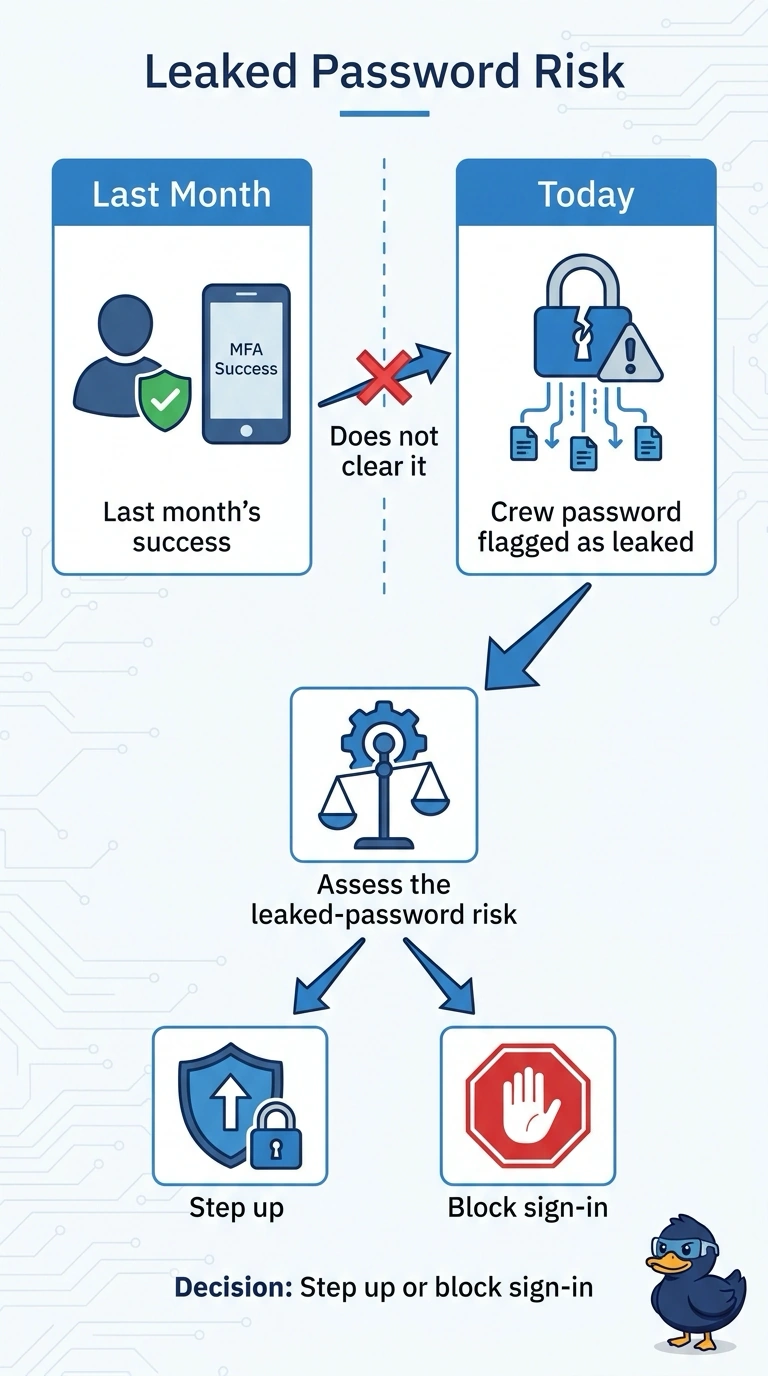
Last month's visitor sticker does not excuse a new alert at the door today. A leaked-password flag is a fresh risk signal, and you should not treat last month's MFA success as a pardon. Step up or block this sign-in.
Full Explanation
A leaked-password hit is a current identity signal and an input to the access decision now. An MFA success from last month is stale context and does not clear a new risk. The fitting decision is to step up or block this sign-in based on the leaked-password signal, since last month's MFA success does not clear it. Accepting the sign-in because the crew member completed MFA last month, and treating that older success as enough to retire the new leaked-password finding, lets a fresh credential problem ride on an old prompt. Deleting the identity-provider risk event so the application log stays quiet hides the signal and does not reduce the risk. Issuing a device certificate and treating that certificate as proof the leaked password is no longer a concern answers a device question and leaves the leaked password in play. On the exam, a prior MFA success does not wash out a new identity-provider risk such as a leaked password. In operations, confirm the access policy steps up or blocks when this leaked-password signal is present, and that the decision does not depend on a successful prompt from last month.