
A warehouse container platform must stop a container process in the kernel when that process reads a sensitive shipping file. Pod addresses are already assigned by the cluster network plugin. Which control performs the stop?
Select an answer to reveal the explanation.
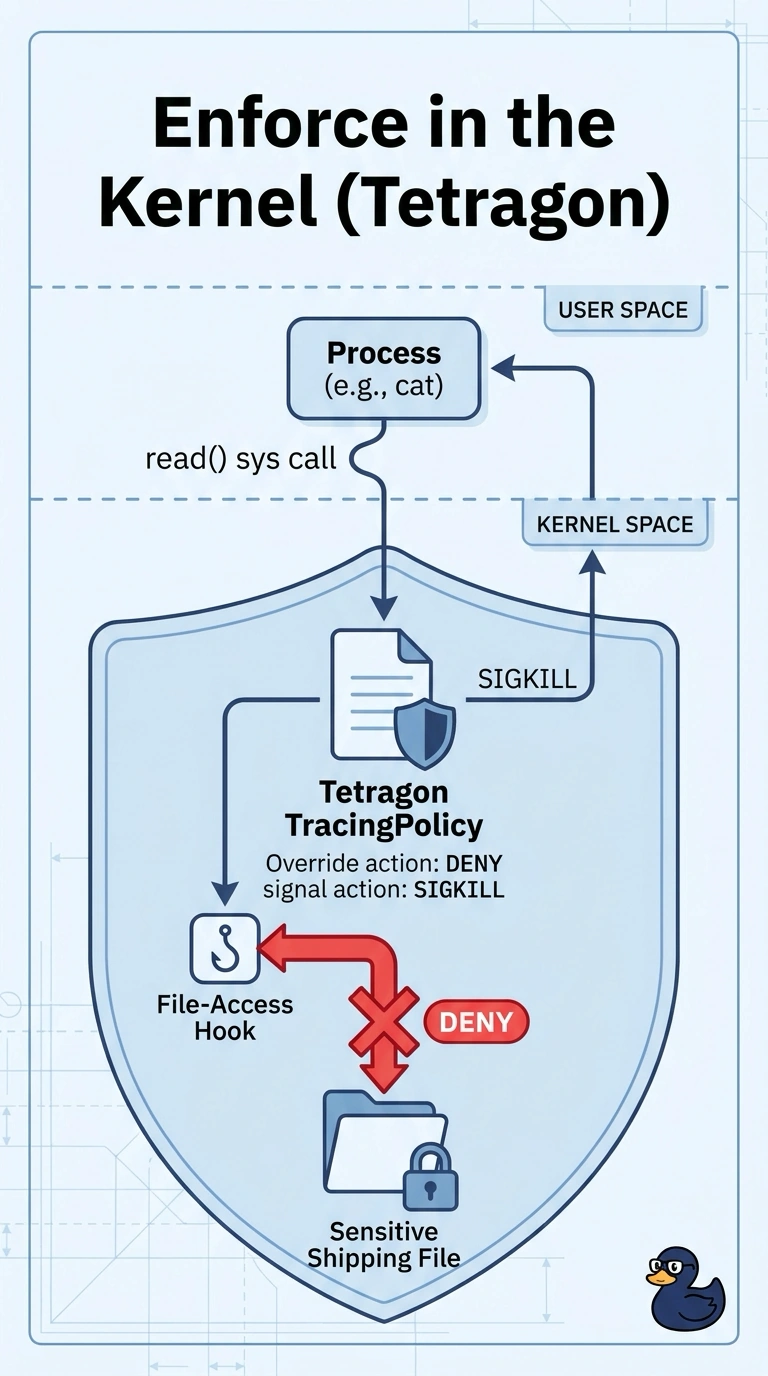
Short Explanation
You need Tetragon to enforce on the file access in the kernel, using a TracingPolicy with an Override action to deny the read. Add a signal action if the process must also terminate. Killing the process alone does not guarantee that the triggering operation was prevented.
Full Explanation
A sensitive file read is process and file activity on the node, and stopping it means enforcing in the kernel. Tetragon can use a TracingPolicy with an Override action at a supported file-access hook to deny the read, and a signal action can be added if the process must also terminate. Killing the process alone does not guarantee that the triggering operation was prevented, which is why the Override action matters. Cilium provides pod network identity, network policy, and flow visibility, but giving pods network identity does not stop a file read inside the container. The address plugin alone hands the pod an address; that interface is not the kernel point that blocks a sensitive file read. A namespace label names a group of pods, but naming the namespace neither blocks a file read nor provides a runtime sensor on the node. Exam caveat: Cilium network policy that denies east-west traffic can still leave a local file read untouched, because that read does not become a flow. Operational check: have a test container read the sensitive shipping file, confirm the read is denied, and confirm Tetragon records the file activity and ends the process if a signal action is configured.