
A research lab's monitoring raises a CPU alarm on a cloud instance during a suspected copy of study data, and leadership asks who called the export API. Which evidence identifies that caller?
Select an answer to reveal the explanation.
Short Explanation
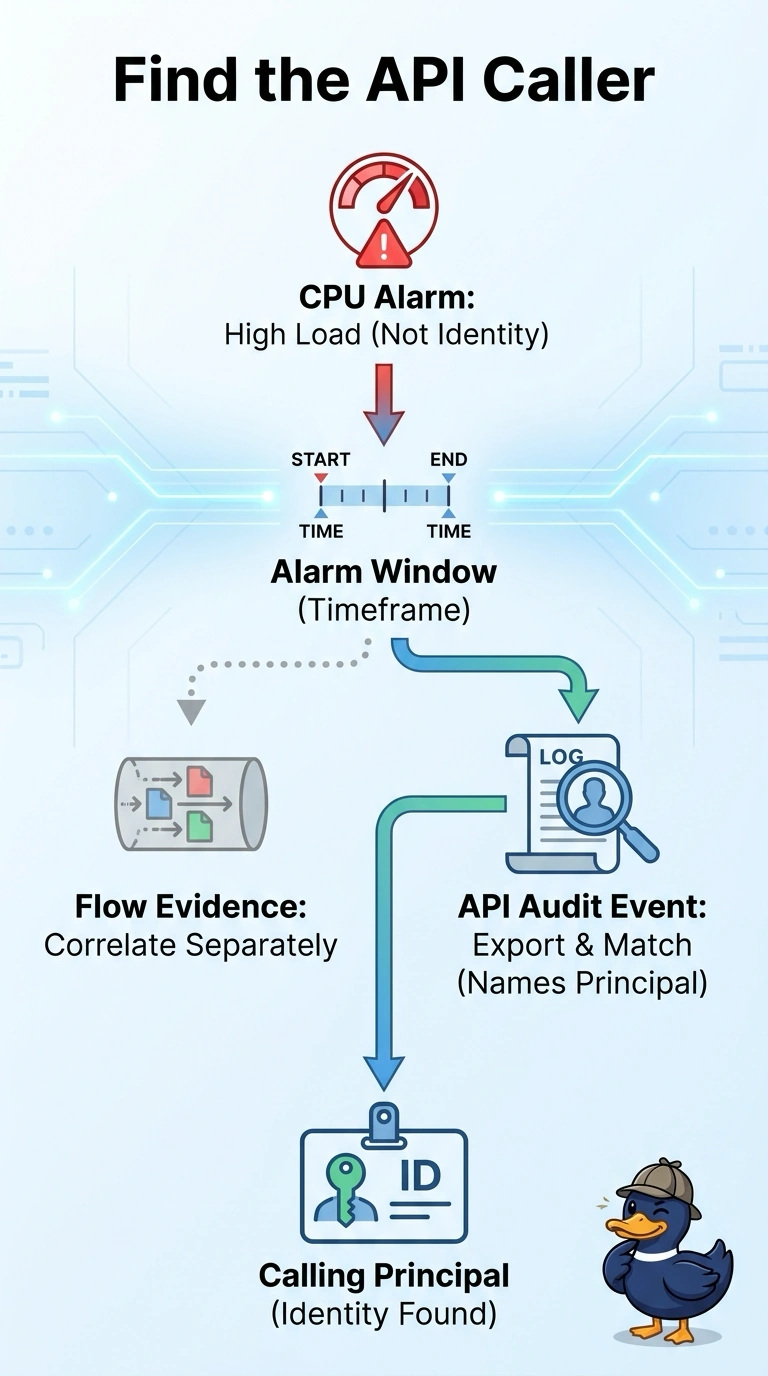
A tachometer shows the engine is working hard, not who turned the key. You identify the export caller with the API audit event that names the principal, not with the CPU alarm. The trap is handing leadership a busy-instance graph and calling it the identity behind the API.
Full Explanation
A CPU alarm tells you an instance was busy. It does not tell you which identity called an API during that busy window. The export API audit event that names the principal that invoked the call during the alarm window is the record that answers leadership. The CPU graph that shows the instance was busy while the suspected study-data copy was in progress confirms load, which you already have from the alarm, and still omits the caller. A VLAN diagram of the lab subnet where that cloud instance's network interface is attached shows where the interface sits, not who signed the export. A posture finding that the instance image matched a configuration baseline earlier in the week is a configuration result, not the identity that invoked the export API. Exam caveat: questions that ask who called an API are audit-record questions even when the stem opens with a CPU alarm. Use API audit records for caller identity and correlate network flow evidence separately. Operational check: pull the export API audit events for the alarm window and name the principal on those events before you report a caller.