
A hospital privacy officer asks which identity invoked a sensitive records API overnight. The cloud team can show a VLAN diagram or the platform audit trail. Which evidence answers who called that API?
Select an answer to reveal the explanation.
Short Explanation
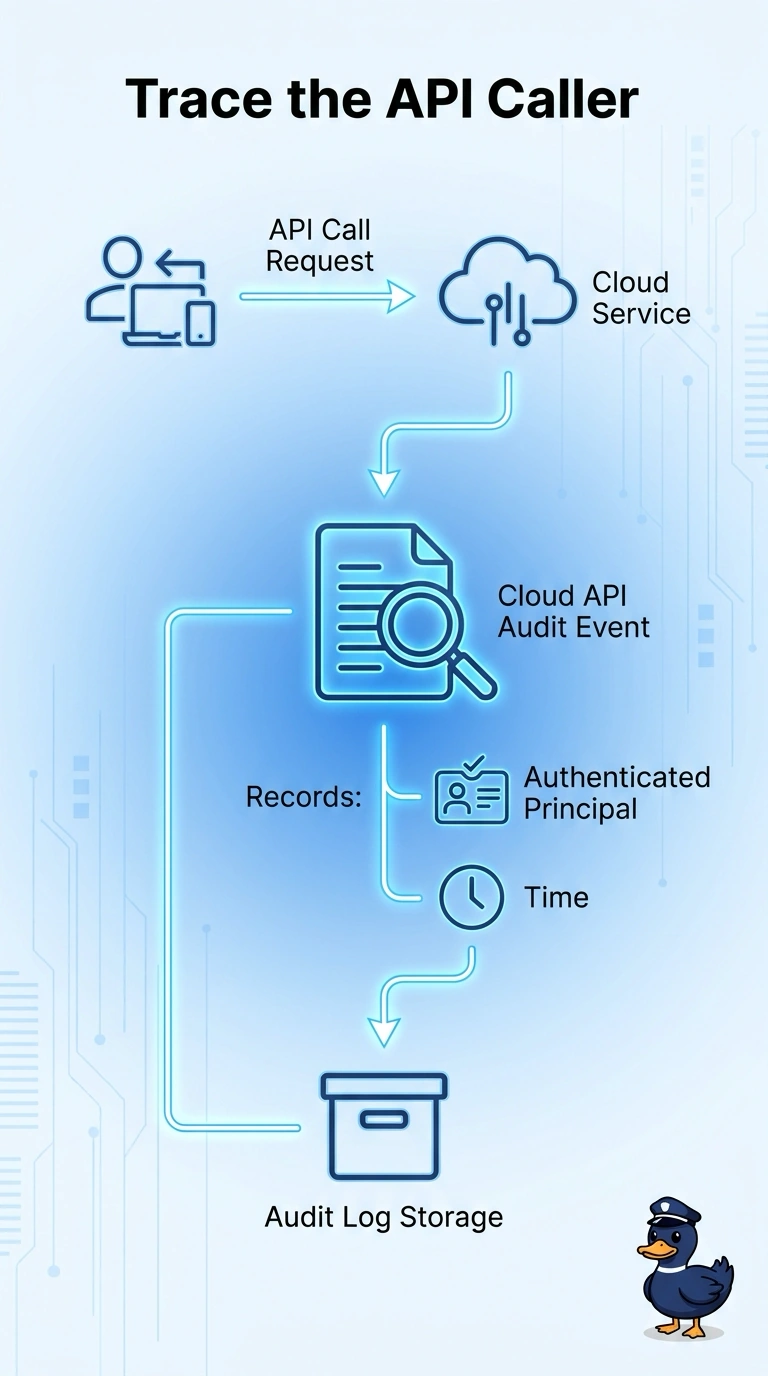
Think of the API audit trail as a sign-out sheet: it records who took the chart, while a floor map only shows the rooms. You want the cloud API audit event that records the authenticated principal and time for that sensitive records call. The trap is treating a VLAN diagram or a CPU graph as if either one identified the caller.
Full Explanation
The cloud API audit event records the authenticated principal and time for the records API call. Network flow logs can supplement the audit event with network metadata. The audit event binds the sensitive records call to an identity, a time, and the interface that was used, which is the fact the privacy officer needs before anyone discusses scope. A VLAN diagram of the subnets behind the hospital firewall is the right picture when the question is which networks sit where, and it can be current while still omitting the principal that signed the request. A CPU graph of the records service overnight is the right picture when the question is whether the instance was busy, and that busy line does not name the API caller. A switch inventory that lists device names and the VLAN numbers those hospital switches currently carry helps a cabling or segmentation review, and it does not record the call. Exam caveat: a healthy chart and a tidy topology are attractive distractors whenever the stem places a diagram next to an identity question. Operational check: filter the cloud API audit log to that records API over the overnight window and read the identity on the matching events before you brief the privacy officer.