
A university research pipeline stores a long-lived cloud API key in the source repository so nightly jobs can create storage. Which change removes that standing key from the repository?
Select an answer to reveal the explanation.
Short Explanation
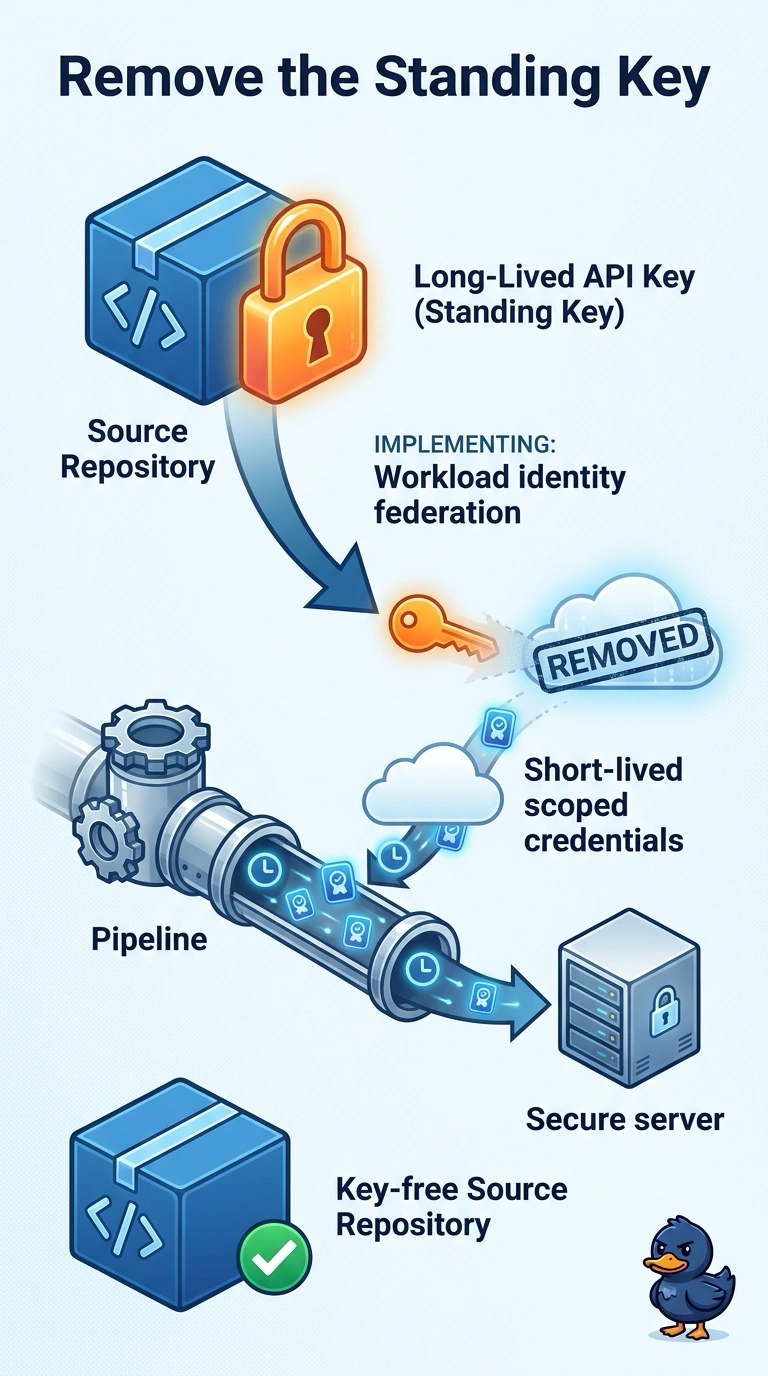
A master key taped under a public doormat is how standing secrets get copied. You replace the repository key with workload identity federation so the job receives short-lived credentials. The trap is encrypting the file, writing a finding, or filtering packets while the key stays in the repo.
Full Explanation
A long-lived API key committed to a repository is a standing credential anyone who can read the repo can reuse. Workload identity federation replaces that pattern: the pipeline assumes a short-lived, scoped identity for the job, and the long-lived key can be removed from the repository instead of being refreshed in place. A security group on the storage service limits which network tiers can connect. It does not hide a committed key, and the same standing key would still authenticate the nightly job. Encryption of the repository at rest protects stored bytes on disk and still leaves the pipeline holding the standing key. A cloud posture finding records that the key is exposed. A finding is not the same as deleting the secret, so the next job run can keep using it. Exam caveat: federation is the control that removes the standing key. A report about the key is not that control. Operational check: after the cutover, search the repository for the old key and confirm the job receives a short-lived credential and fails if that federation path is removed.