
A passenger airline already allows its crew application in policy, yet crews say the application is slow. ThousandEyes shows packet loss on an ISP hop along the path. How should the network team treat that report?
Select an answer to reveal the explanation.
Short Explanation
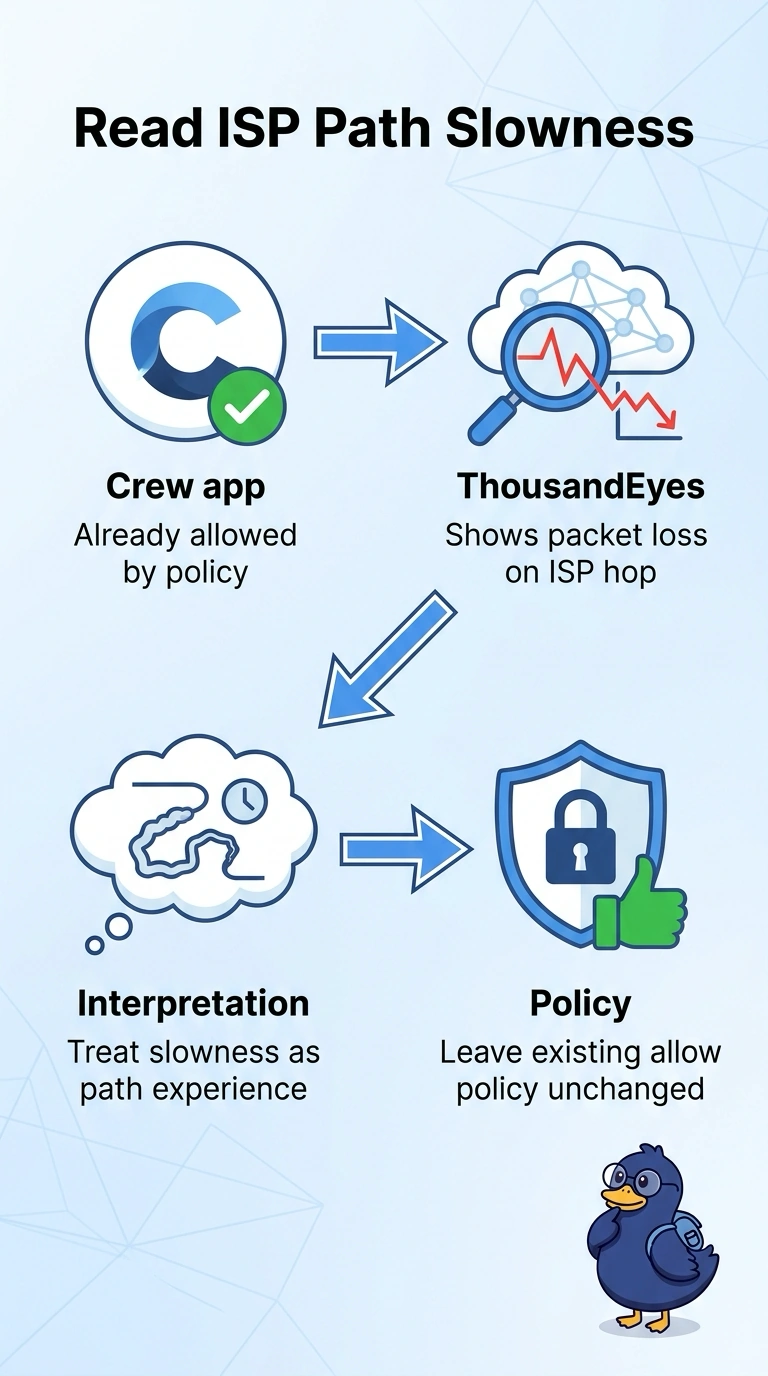
A correct guest list does not fill a hole in the road. You already allow the application, and the loss is on an ISP hop, so you treat the slowness as path experience. The trap is loosening the allow and hoping that repairs the path.
Full Explanation
ThousandEyes, used with Secure Access, is experience and path evidence. Treat the hop result as a troubleshooting clue; corroborate it with downstream and end-to-end loss before attributing slowness to that hop. It does not say the allow was wrong, so the team should treat the report as path experience and leave the existing allow policy unchanged. Loosening the allow so a wider set of destinations is reachable does not fill in a lossy hop, and a broader destination list is not a repair for ThousandEyes loss. Changing the allow into a deny withholds an application the policy already approved. A path test is not a prerequisite that must be perfect before an allowed application may open, and a deny would add an outage on top of the loss. Dropping identity verification because of path loss confuses a network measurement with a change in who the user is. Loss on a hop does not mean the user can no longer be trusted. Exam caveat: a policy allow does not explain loss on an ISP hop, and loosening policy does not fix that hop. Operational check: keep the allow in place, open the ThousandEyes hop view for the crew path, and work the loss with the provider that owns the hop showing the drops.