
A clinic must allow only its company file-sharing tenant. Personal tenants of the same product have to be blocked, while the product stays available for company work. The file-sharing product supports tenant restrictions and the managed traffic is inspected by the gateway. Which control does that?
Select an answer to reveal the explanation.
Short Explanation
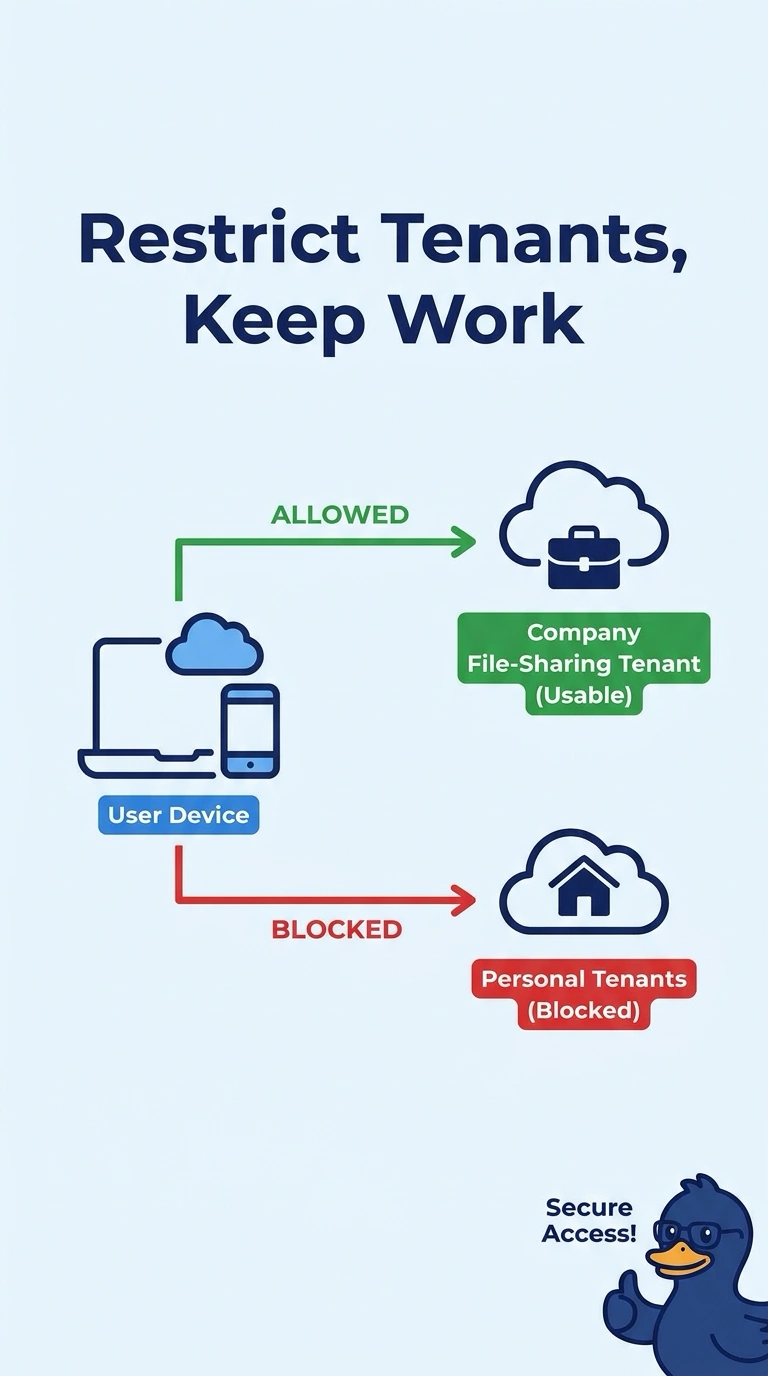
Letting staff into the company storeroom while locking their personal lockers is not the same as boarding up the shop. You apply a tenant restriction and leave the product available for the company tenant. The trap is a category block that shuts the company tenant too.
Full Explanation
Restricting users to the company tenant is a tenant control, not a ban on the product. A tenant restriction can leave the company file-sharing tenant usable and block personal tenants of that same product, which is the split the clinic asked for. A category block of the entire file-sharing product also stops the company tenant, so daily work fails along with the personal tenants. A private resource connector publishes private applications inside a network you control. It does not publish a sanctioned SaaS tenant, and it does not hide personal tenants on the internet. An AI Guardrails privacy rule identifies sensitive content; a separate security guardrail targets prompt injection. Choosing a file-sharing tenant is not a prompt-injection match. Staff still need the company tenant for daily work, so the control has to tell the company tenant and a personal tenant of the same product apart. Exam caveat: tenant restriction and a category block are different outcomes for the same product. Operational check: sign in to the company tenant and to a personal tenant with a test user, and confirm only the personal tenant is blocked.