
A utility discovery scan lists sensitive spreadsheets already stored in a cloud tenant. While that report is open, an analyst is uploading another spreadsheet through the proxy. Which control can stop that upload?
Select an answer to reveal the explanation.
Short Explanation
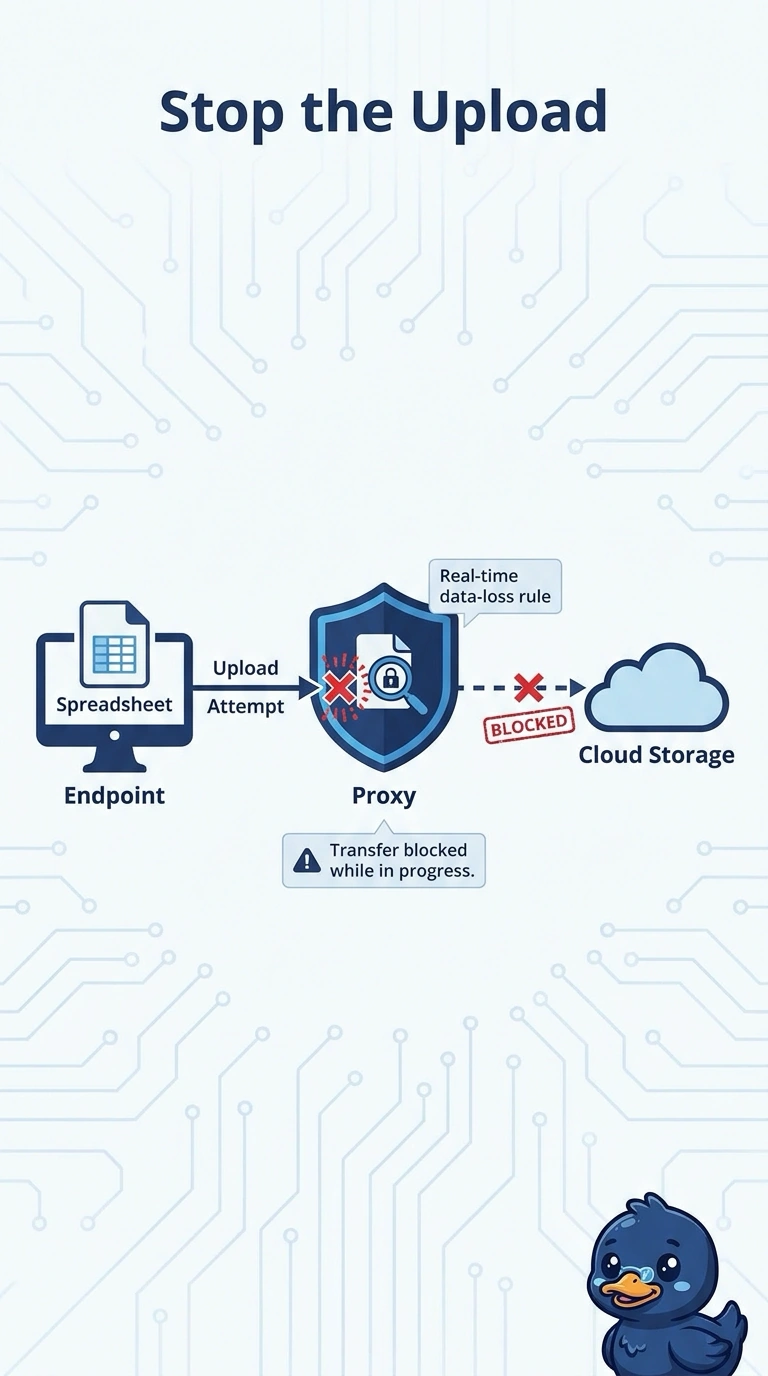
Counting boxes already on the shelf does not grab a carton that is still on the truck. You need a real-time rule to block the upload that is happening now. The trap is expecting a discovery inventory to stop a live post.
Full Explanation
An on-demand discovery scan inventories files that are already stored. It does not sit in the path of a transfer that is happening now, so it cannot stop the spreadsheet the analyst is posting through the proxy. A real-time data-loss rule on the proxy evaluates that upload as it crosses and can block it while the transfer is still in progress. The same on-demand discovery scan does not gain an inline block just because the report is open. The email data-loss integration inspects mail, and a browser upload into the cloud tenant is not outbound mail from the utility. A SaaS API rule aimed at files already stored can act on objects after they land in the tenant. It does not stop the spreadsheet while it is still crossing the proxy. Exam caveat: discovery, SaaS API inspection, and real-time proxy rules answer three different moments in the life of a file. Operational check: upload a labeled test spreadsheet through the proxied browser and confirm a real-time rule blocks it before the discovery report changes.