
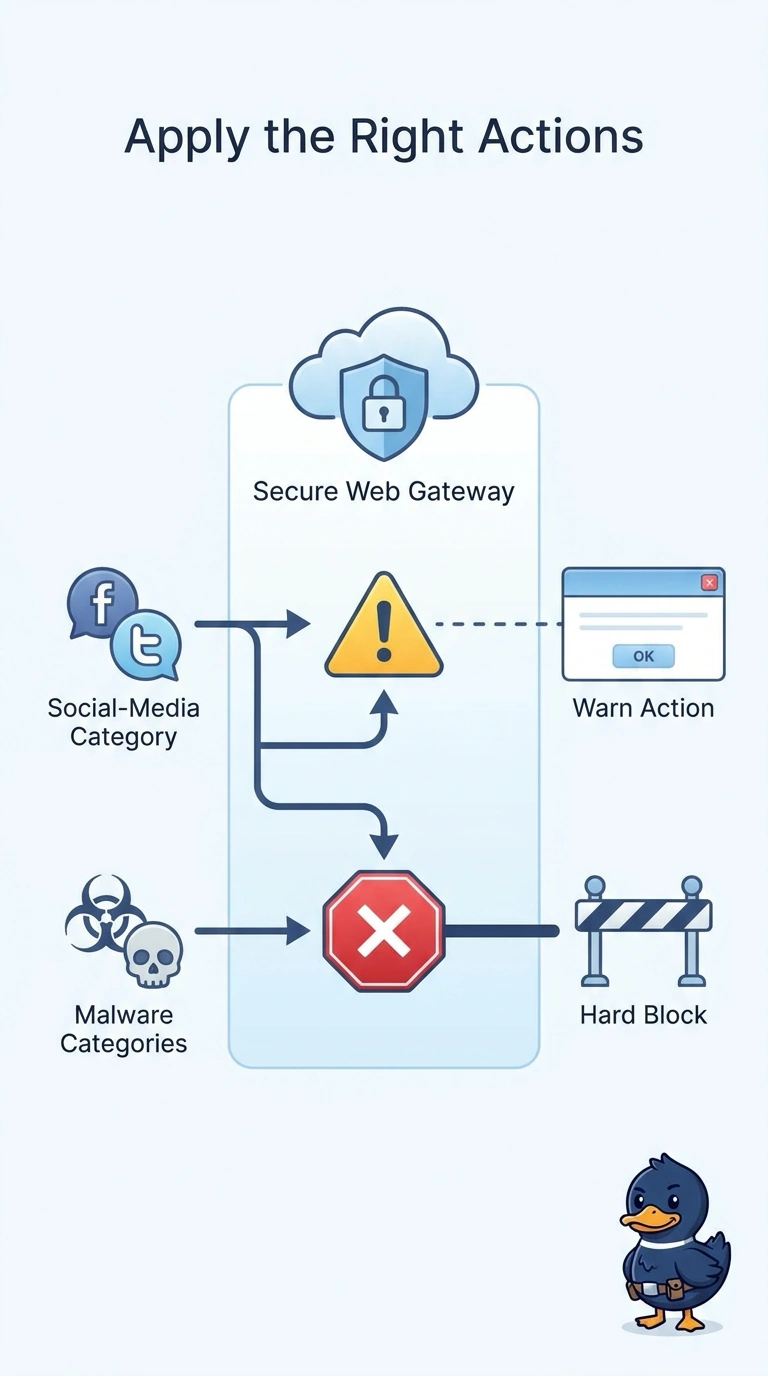
An airline security policy says social-media sites should warn the user, while malware categories must be hard-blocked at the secure web gateway. Which design matches both outcomes?
Select an answer to reveal the explanation.
Short Explanation
A theater can warn you at the snack bar and still refuse entry to a banned guest, because those are two different actions. You warn on social media and hard-block malware categories at the gateway. The trap is one global block that ignores the warning the airline asked for.
Full Explanation
The secure web gateway can take a different action per category, so a warn action on the social-media category still lets an informed user continue, while a hard block on malware categories denies that destination. One global block applied to both social-media sites and malware categories denies the social sites outright and therefore misses the warning the policy requires. Warning on malware categories and hard-blocking social media swaps the two outcomes and leaves known malware reachable after a click-through. Allowing both categories and relying on a DNS list does not perform either gateway action, and a name block cannot express a warn-versus-block split on the full URL. Exam caveat: application control inside a category is a further split, but this requirement is already solved by two different category actions. Operational check: browse a social-media test URL from an airline identity and confirm a warning page appears, then request a malware-category test destination and confirm the gateway returns a block rather than a warning.