
A factory enables TLS inspection on the secure web gateway, and managed browsers immediately report certificate errors for ordinary websites that previously loaded. Which change lets inspection stay on without those errors?
Select an answer to reveal the explanation.
Short Explanation
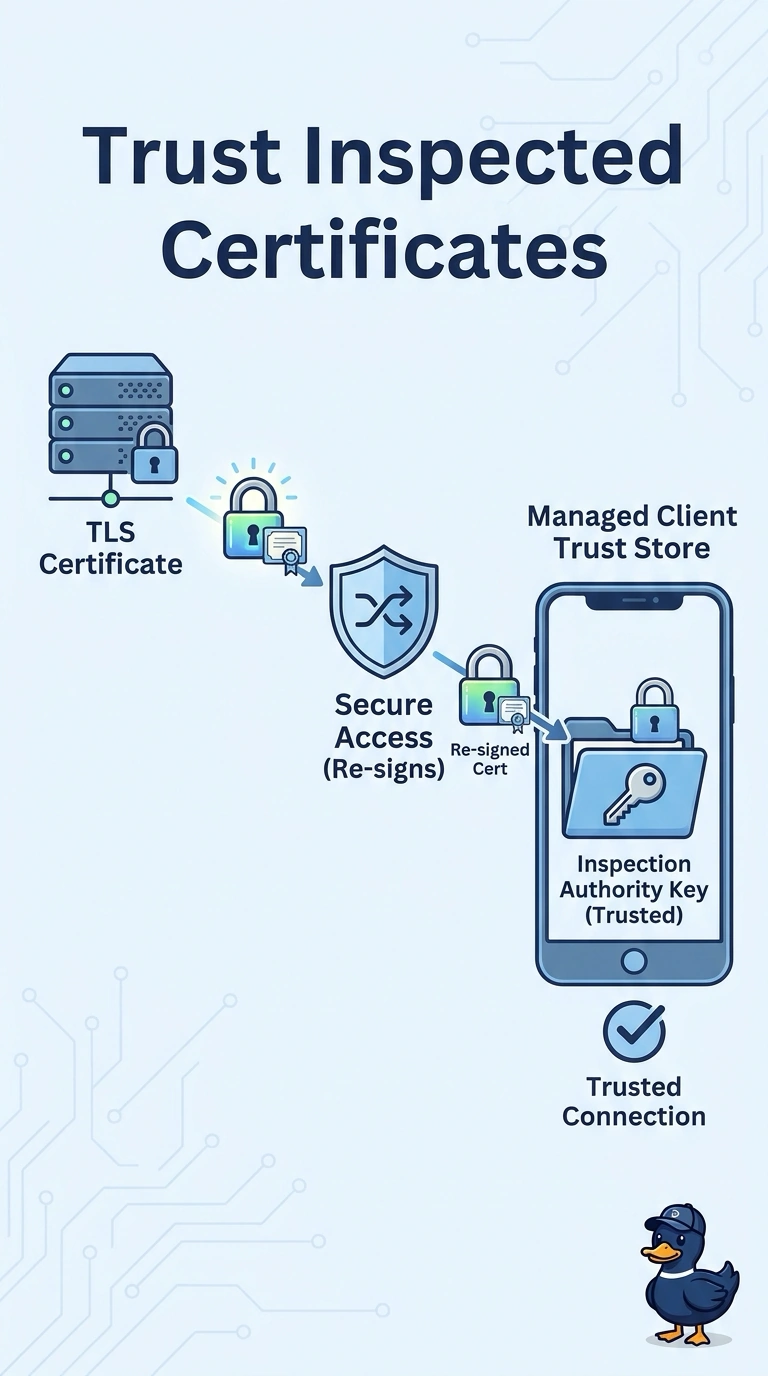
It is like a club changing the stamp on your hand while the door staff still expect the old ink. You install the Secure Access inspection authority in the managed trust stores so the re-signed certificates are accepted. The trap is turning inspection off for everyone, which stops the errors and also blinds the gateway.
Full Explanation
TLS inspection works by re-signing the site certificate with an inspection authority. Browsers trust that re-signed certificate only when the Secure Access inspection authority is present in the client trust store, which is why deploying it to managed clients removes the errors without turning inspection off. Turning TLS inspection off for every factory user does stop the warnings, but the gateway then no longer sees paths or file bodies, so HTTPS path and file-body inspection are lost, although applicable hostname, category, and DNS controls can still operate. Importing each public website certificate does not help, because the browser is presented with the inspection authority's re-signed certificate, not the original site certificate. Pointing the managed browsers at an unmanaged resolver changes where names are looked up and does not make a re-signed certificate trusted. Exam caveat: a category that is intentionally left encrypted, such as a banking category bypass, will still limit what file inspection can see even after trust is fixed. Operational check: open an ordinary inspected site from a managed browser, confirm the certificate chains to the inspection authority, and confirm the gateway log shows the full URL rather than a handshake error.