
DNS security at a factory returns a block for a phishing name, so the name no longer resolves for clients that use the protected resolver, but the phishing message is still in several mailboxes. Which outcome matches what that DNS control did?
Select an answer to reveal the explanation.
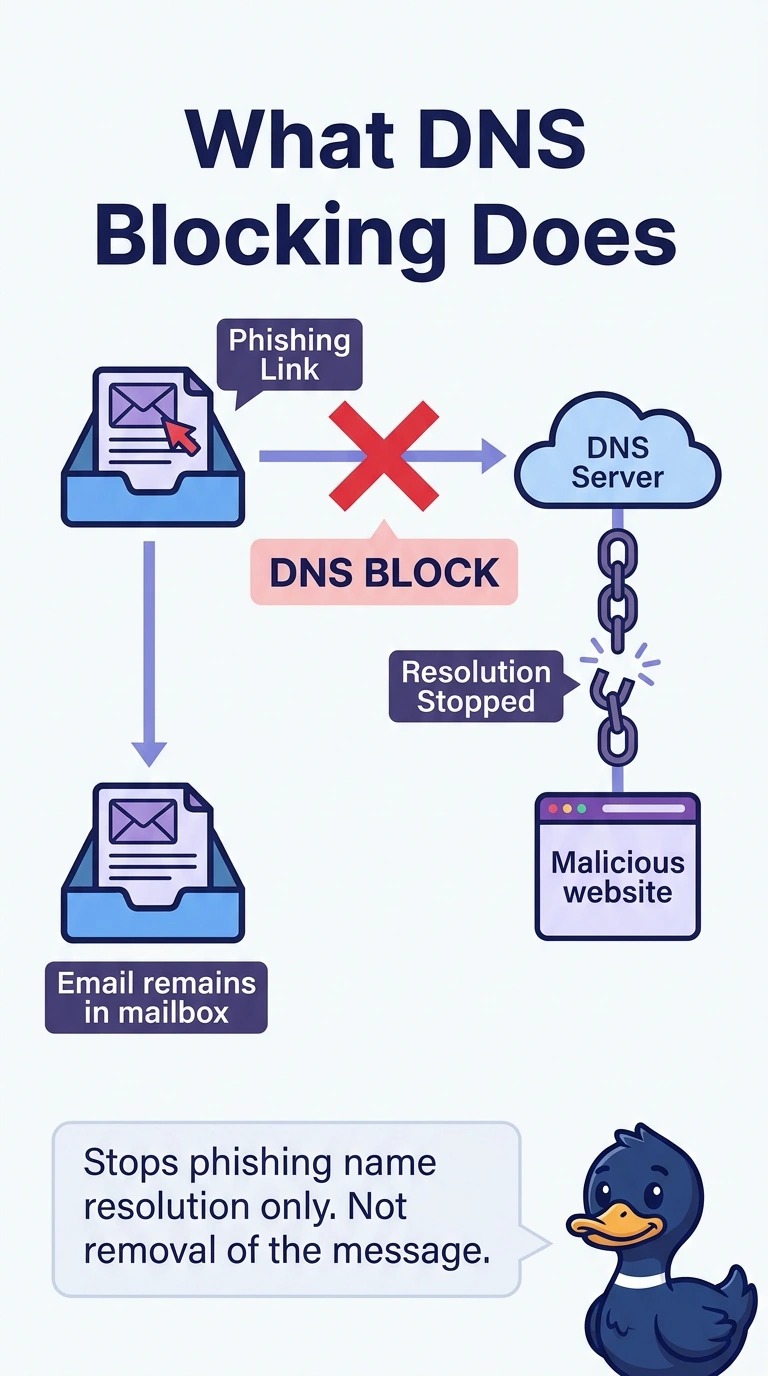
Short Explanation
Crossing a name off the lobby directory does not pull a flyer that is already in someone's hand. You should read this DNS block as a stop on resolution of the phishing name. It does not remove the message that is already sitting in the inbox.
Full Explanation
A DNS security block on a phishing name stops clients that use the protected resolver from resolving that name, so a new connection based on the name does not start. It does not reach into a mailbox and delete a message that was already delivered. Treating the DNS block as stopping resolution of the phishing name only, and not as removal of the message from the mailbox, matches what the control did. Expecting the DNS block to delete the phishing message from the factory mailboxes assigns an email-removal job to a resolver. Turning off mailbox filtering because the resolver block has already removed the phishing message from every inbox abandons mail controls on a false belief that the inbox was cleaned. Relaxing the mail policy so it will allow that phishing name, because DNS security already returned a block, widens mail permission and does not finish a mailbox cleanup either. On the exam, DNS security acts on resolution, and mailbox cleanup is a different control. In operations, confirm clients on the protected resolver cannot resolve the phishing name, and handle the existing messages with the mail controls rather than with the DNS block.