
A logistics warehouse added IP cameras from a vendor that ISE has never seen, so they profile as generic printers and land in the printer VLAN. The security lead wants new device types and MAC maker prefixes to arrive from Cisco on a schedule rather than the team hand-writing rules each quarter. Which ISE feature delivers those profiling updates?
Select an answer to reveal the explanation.
Short Explanation
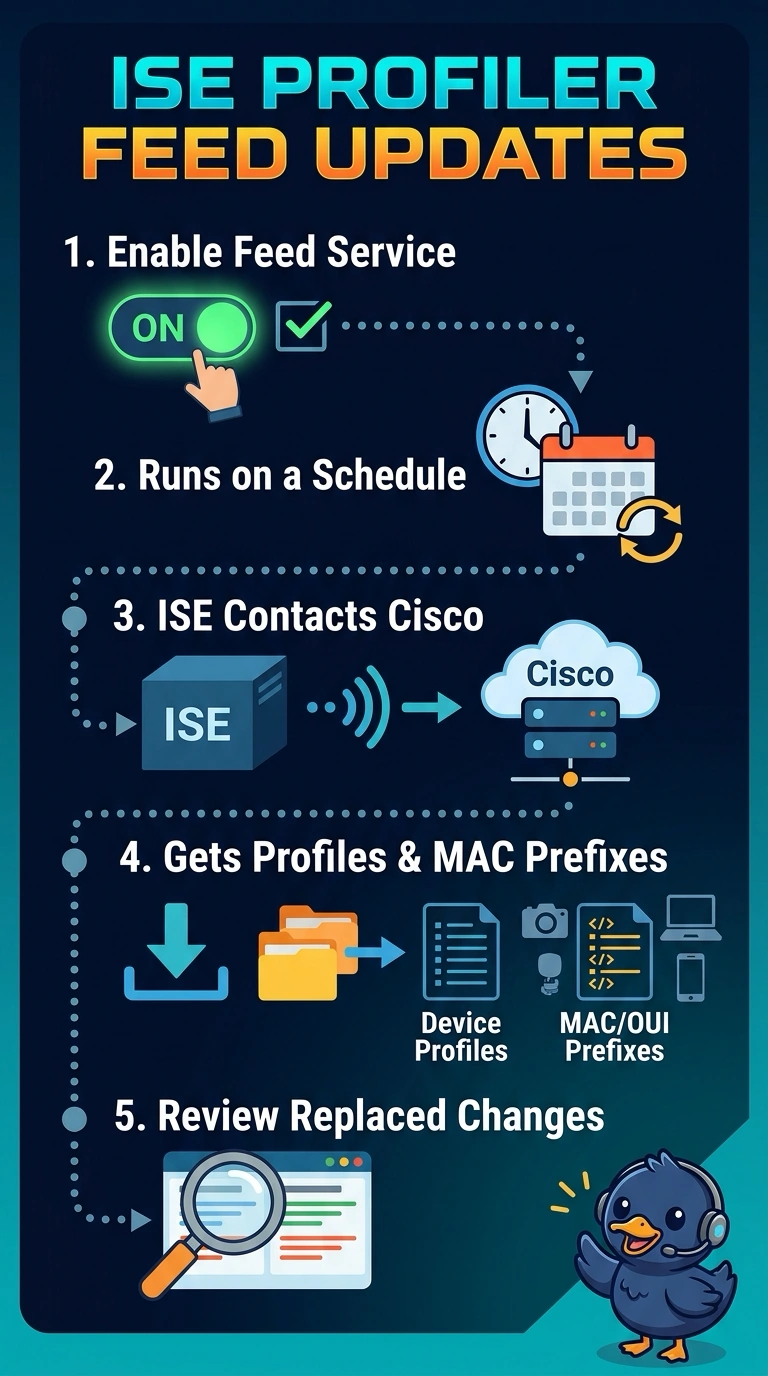
It's ISE's shopping run: the feed service contacts Cisco's feed server and brings back updated profiles and maker prefixes on a schedule. When Cisco publishes a profile that matches the cameras, the feed can add it without you hand-writing every rule.
Full Explanation
The profiler feed service downloads new and updated profiling policies together with OUI database entries from the Cisco feed server and applies them on a schedule you can monitor in the feed status. That is why enabling it addresses the request: profiling content and vendor prefixes published by Cisco arrive without someone on your team having to create them manually. Device sensor collection sends endpoint attributes learned by the switch to ISE, which can help profiling but does not deliver Cisco's policy or OUI database updates. An Nmap probe gathers device fingerprints, but it does not add profiling policies or OUI entries from Cisco. A hand-built custom policy does not meet the requirement for scheduled Cisco updates. One exam caveat: feed updates can replace administrator-modified versions of Cisco-provided policies, so local edits to those profiles may be lost on the next apply. A practical check: open the feed status, note the feed version, and compare the last update time with the schedule you configured.