
A retail chain is deploying ISE on a shared vSphere cluster that also runs point-of-sale servers. The infrastructure team wants the policy VM to have guaranteed CPU and memory capacity, while the design must still absorb the 6 a.m. burst when thousands of endpoints re-authenticate. Which VM resource configuration fits Cisco's sizing guidance?
Select an answer to reveal the explanation.
Short Explanation
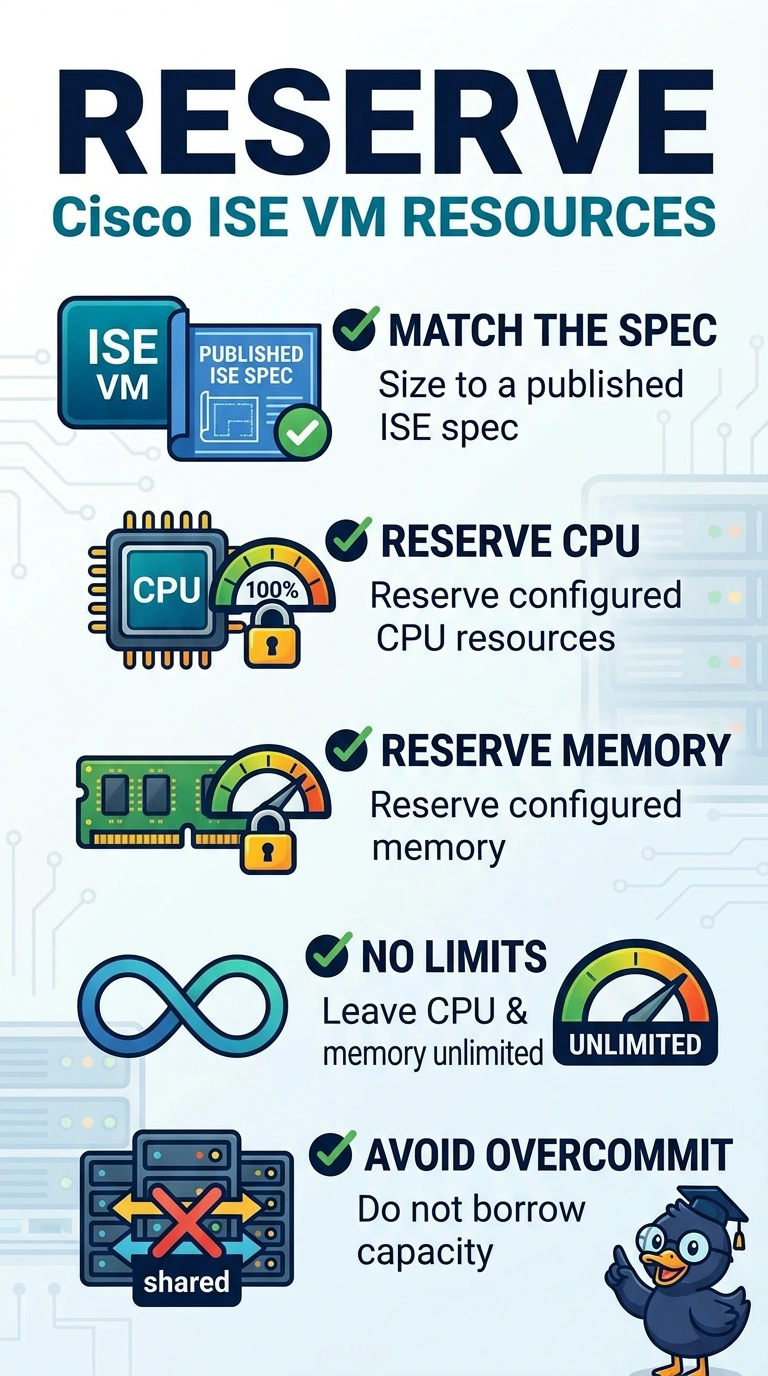
Reserve the VM’s full CPU and memory allocation so your ISE policy VM has its configured resources ready when needed. Leave both limits unlimited, so they don’t act like a ceiling during the 6 a.m. rush.
Full Explanation
Cisco's virtual machine guidance calls for reserving the CPU and memory resources configured for an ISE node and leaving CPU and memory limits unlimited. Reservations guarantee the configured capacity; unlimited limits avoid adding a cap that could constrain the guest. Limits below the configured allocation can restrict available resources during a burst. Host overcommitment with memory ballooning does not provide the same guarantee, since memory may be reclaimed. Adding a second policy node can increase total capacity, but does not reserve resources for the first guest. ISE sizes some internal settings based on the resources it detects at installation, so the VM should meet the applicable sizing requirements before installation. Check the VM resource settings to confirm the reservations and unlimited limits.