
A platform team must stand up a new ISE region as six blank OVA nodes in a remote datacenter, and the build standard says every node's install, host and network details, DNS and NTP settings, and enabled services must come from one prepared file with no engineer answering setup prompts at a console. Which capability meets that build standard?
Select an answer to reveal the explanation.
Short Explanation
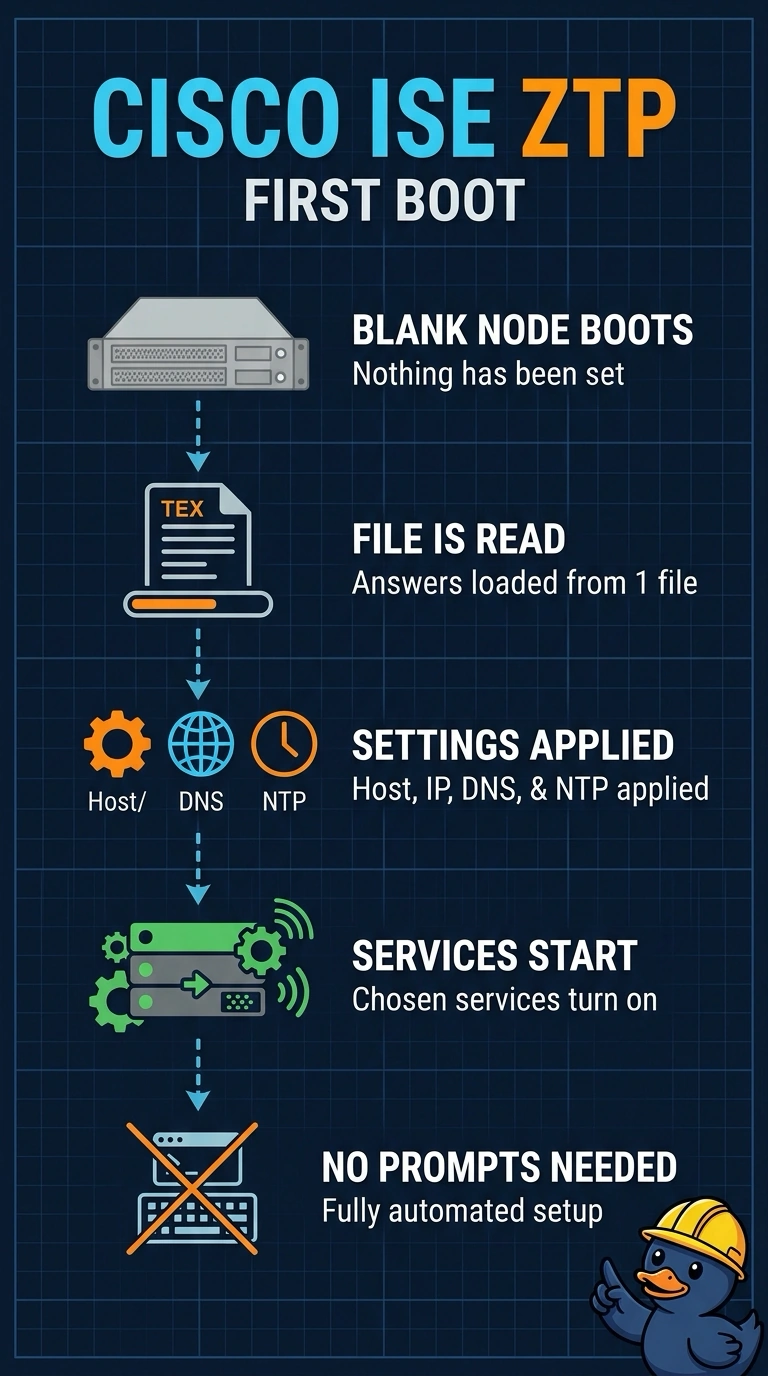
You can meet this standard by having each blank node install and apply all required settings from one prepared file at first boot, with no console prompts. That gives your team a zero-touch rollout across the remote region. The other approaches either split the information across files, start from preinstalled images, or require console approval.
Full Explanation
The approach that has each blank OVA node perform its install and receive its host, network, DNS, NTP, and enabled-service settings from one prepared file at first boot meets the full build standard. Because no engineer must answer setup prompts at a console, it supports a consistent, unattended rollout across all six nodes in the remote datacenter. An unattended install followed by settings from a separate prepared file fails the single-file requirement, even if that file contains the configuration details. Deploying preinstalled ISE images and applying settings from one file at first boot does not meet the requirement that the blank nodes obtain the install itself through the prepared-file workflow. Loading the install and settings from one file but requiring console approval fails the no-prompt requirement, so setup is not fully unattended. Exam caveat: distinguish a workflow that automates configuration from one that automates both installation and configuration, and check whether the requirement calls for one file rather than separate files. Practical check: test the workflow on a blank OVA node and confirm that installation and all required settings complete from the prepared file without console input before deploying the remaining nodes.