
A university runs ISE posture over staff laptops and wants the posture library managed from one place. Requirement and agent definitions must refresh automatically, every policy node must serve the same definitions, and the refresh must run server-side without waiting for laptops to connect. Which Posture Work Center configuration meets all of these requirements?
Select an answer to reveal the explanation.
Short Explanation
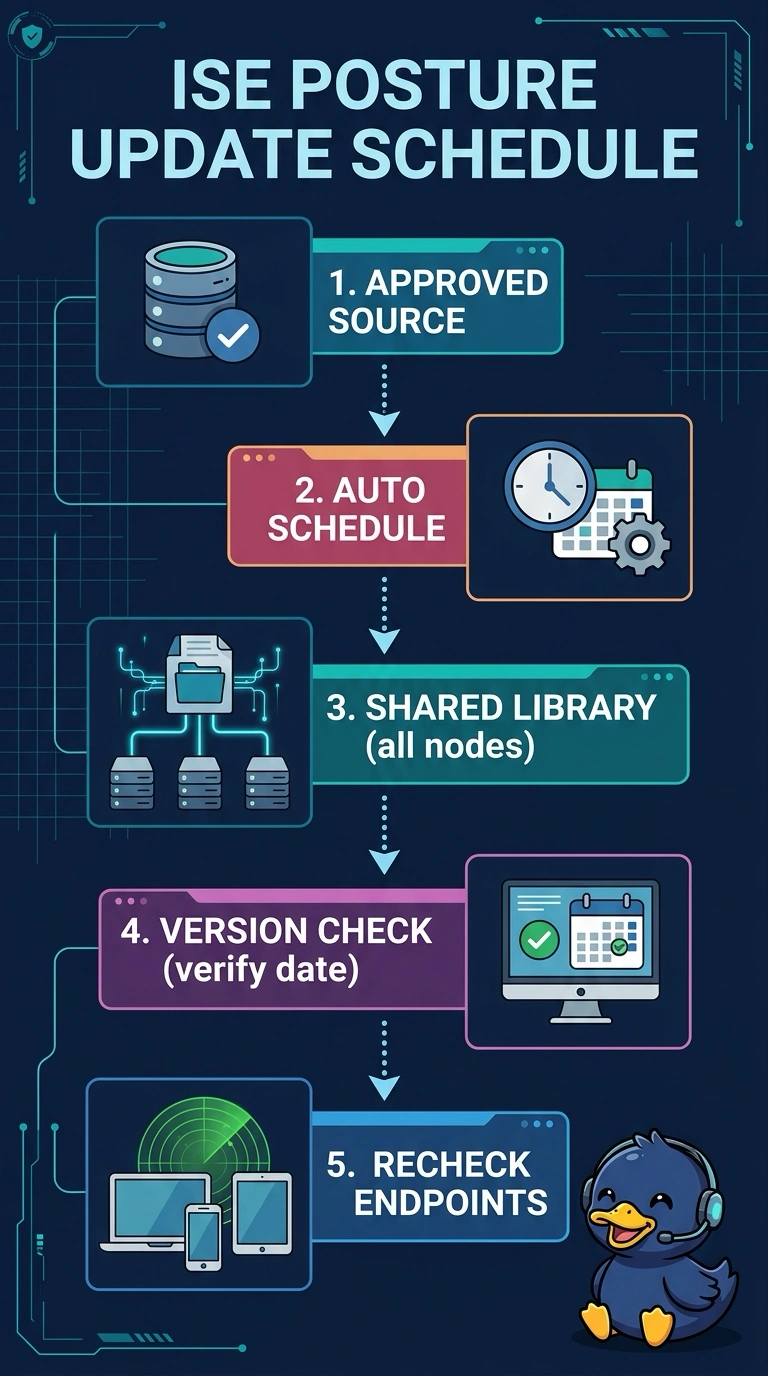
You can schedule automatic posture updates from the approved source in the Posture Work Center, so ISE refreshes the shared definitions on the server side. Central updates keep every policy node on the same version, helping you get consistent compliance results. The refresh does not have to wait for staff laptops to connect.
Full Explanation
Scheduling automatic posture updates from the approved source in the Posture Work Center meets the requirements because ISE runs the refresh on the server side, manages the definitions centrally, and distributes them so every policy node serves the same definitions. Having an administrator import requirements and agent definitions after each vendor release is centrally managed, but it is not automatic. Configuring each policy node to download updates automatically from a common source does run on the servers, but independent schedules can leave nodes serving different versions, so a common source alone does not ensure consistency. Having a centrally managed library send updates to laptops when assessment begins is automatic and centrally managed, but the refresh depends on laptop assessment rather than running independently on the server side. Exam caveat: distinguish a centrally configured update source from coordinated distribution; per-node automation does not guarantee that all nodes serve the same version at a given time. In practice, check the Posture Work Center update history and the version status on every policy node, then confirm that an update can complete while staff laptops are disconnected.