
A hospital is enabling posture for wired and wireless users. Windows and macOS laptops must be offered the Cisco Secure Client posture module after the user signs in to the provisioning portal. Which ISE policy decides which client package each endpoint receives?
Select an answer to reveal the explanation.
Short Explanation
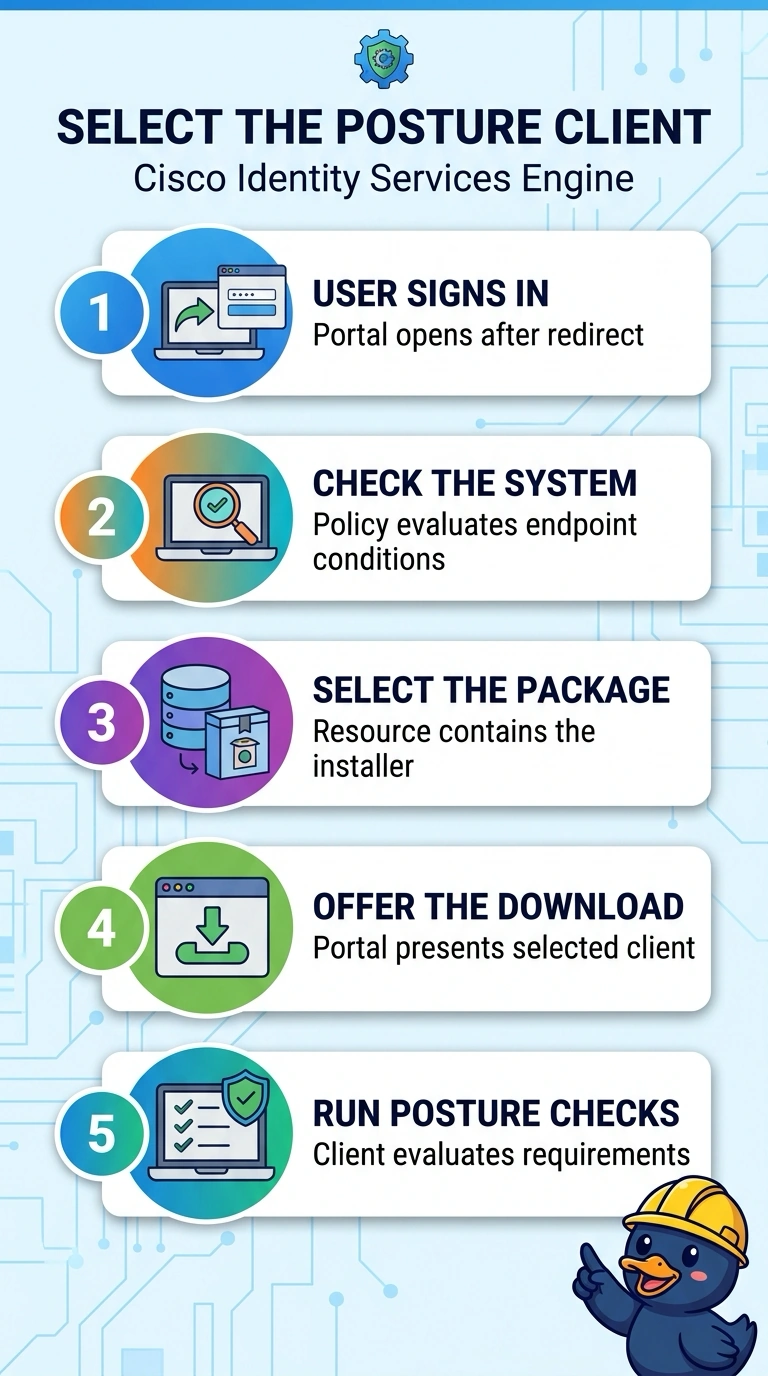
Your client provisioning policy matches each endpoint’s operating system to the provisioning resource with the right Cisco Secure Client posture installer. It’s like a sorting desk that sends each laptop the package made for it.
Full Explanation
Client provisioning involves an authorization result that can redirect the endpoint to the provisioning portal, followed by client provisioning policy evaluation. The matching policy rule selects a provisioning resource containing the client installer, so Windows and macOS endpoints can be offered the appropriate Cisco Secure Client posture module. A posture policy is not the selector: it evaluates requirements such as services, hotfixes, or disk encryption after a posture client is present. An authorization profile and redirect ACL can direct an endpoint to the portal, but they do not select the package. Authorization policy can apply an enforcement result based on posture status, but it does not select a client installer.