
A hospital runs DHCP, HTTP, SNMP and NetFlow profiling probes across 4,000 endpoints, yet many bedside infusion pumps land in the Unknown profile with out-of-date vendor attribution. The pump vendor forbids active scanning of the bedside VLAN, and the engineer has no time to rewrite profiling rules. Which endpoint profiling data source should be refreshed to give ISE current context for these devices?
Select an answer to reveal the explanation.
Short Explanation
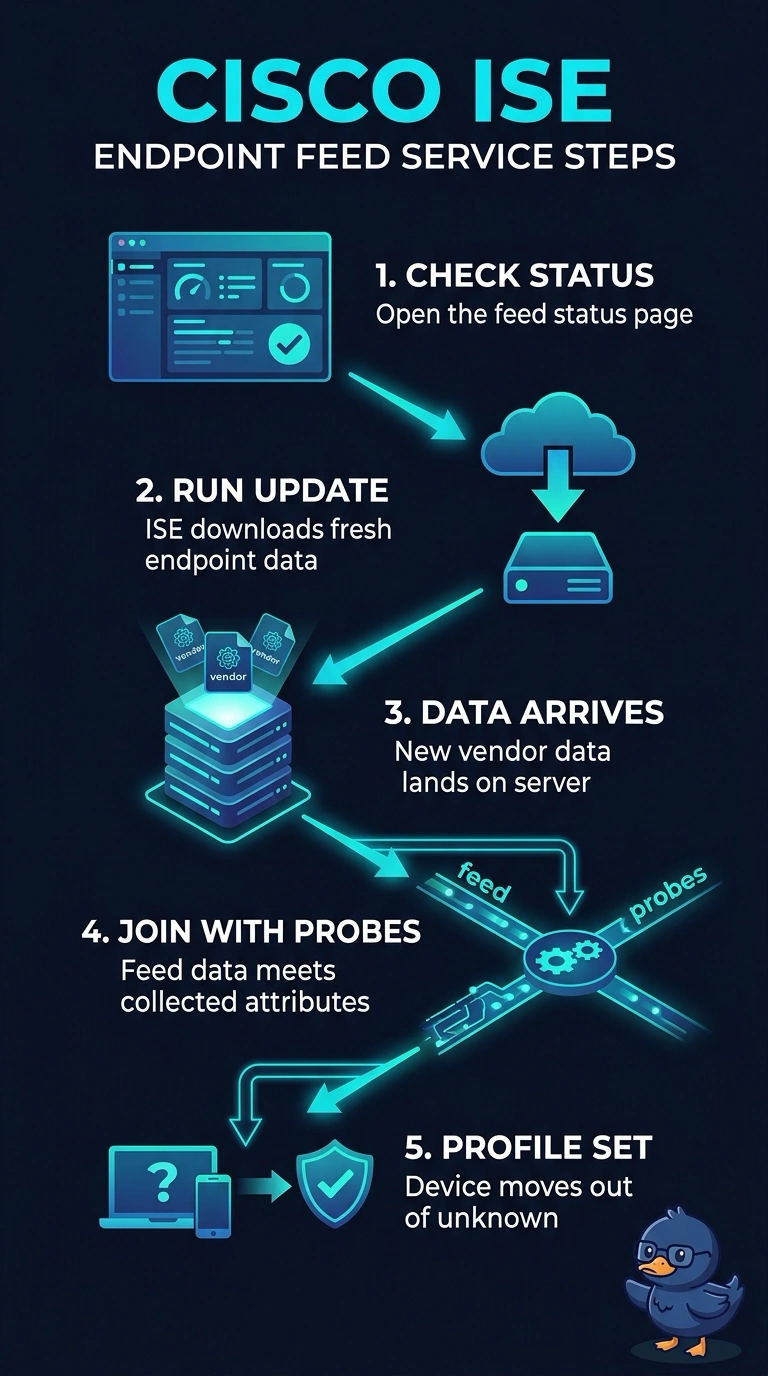
Your probes already collect endpoint attributes; the stale part is the vendor attribution ISE uses alongside them. Refreshing the feed service gives you current attribution without changing profiling rules. DHCP, RADIUS accounting, and NetFlow provide different context, but they do not refresh that attribution.
Full Explanation
The ISE feed service is the appropriate source because it supplies current endpoint attribution data that complements attributes learned from DHCP, HTTP, SNMP, and NetFlow probes. This addresses the stale vendor attribution while respecting the prohibition on active scanning and avoiding changes to profiling rules. Refreshing DHCP relay data can improve lease and vendor-class context, but those observations do not refresh the vendor attribution that is stale here. RADIUS accounting can provide current session and VLAN information, but it depends on the pumps having authenticated sessions, a fact not established in the question, and does not supply the missing attribution. NetFlow can add traffic-derived profile and activity context without contacting the devices, but traffic records do not provide the missing vendor attribution. Exam caveat: distinguish collecting more observations from refreshing the external attribution feed; additional probe data does not necessarily correct stale manufacturer information. Practical check: after refreshing the feed, verify that a representative pump’s endpoint record shows updated vendor attribution while its observed probe attributes remain present.