
A logistics firm is rolling out IBNS 2.0 ports across its warehouse offices. Every desk port carries one Cisco IP phone with no supplicant, authorized first through CDP device detection, plus one PC using EAP-TLS. The phone and the PC must receive independent authorization results, and a failed PC must leave the phone working. Which 802.1X host mode belongs on these access ports?
Select an answer to reveal the explanation.
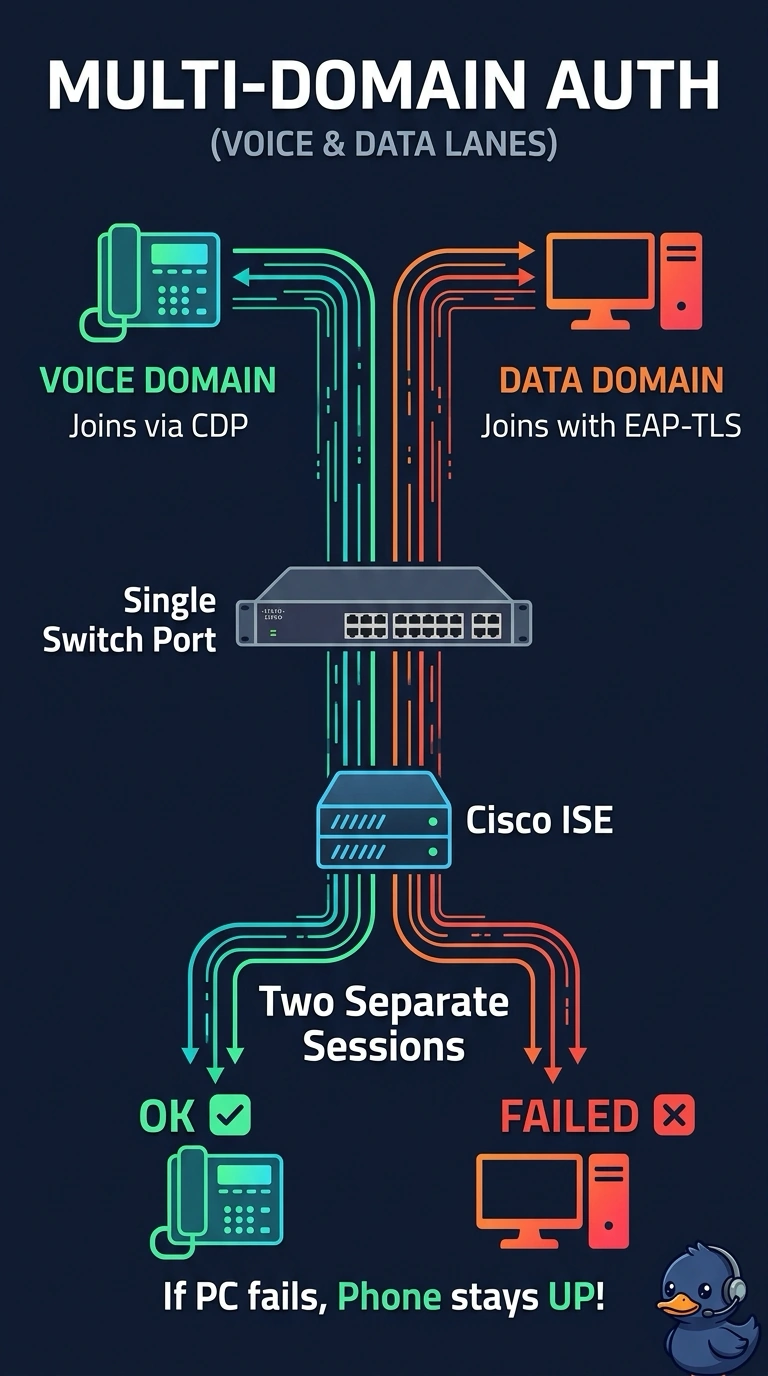
Short Explanation
You want multi-domain authentication, with your phone in the voice domain and your PC in the data domain, so each gets its own authorization result. It’s like giving two guests separate badges: if your PC fails EAP-TLS, your CDP-detected phone can keep working.
Full Explanation
IBNS 2.0 host modes determine how endpoints share a port and how they are authorized. Multi-domain mode supports one voice device and one data device: the switch can identify the voice device through CDP device detection and authorize the PC in the data domain through 802.1X, keeping their authorization results independent. Multi-authentication mode also supports multiple authenticated devices, including a voice device and multiple data devices; it does not combine them into one shared session. Multi-host mode lets one authenticated session admit other devices on the port, which does not provide the required independent authorization. Single-host mode permits one endpoint only, so it does not support both devices. Practical check: use the platform's documented authentication-session command to verify that the phone and PC have separate sessions and authorization results.