
A logistics warehouse enables web authentication on its access switches so contractor laptops can authenticate before touching the warehouse VLAN, and the login page must come from the switch rather than from ISE. Every submitted login still has to appear as an ISE session for auditing. Which statement describes the local web authentication flow used here?
Select an answer to reveal the explanation.
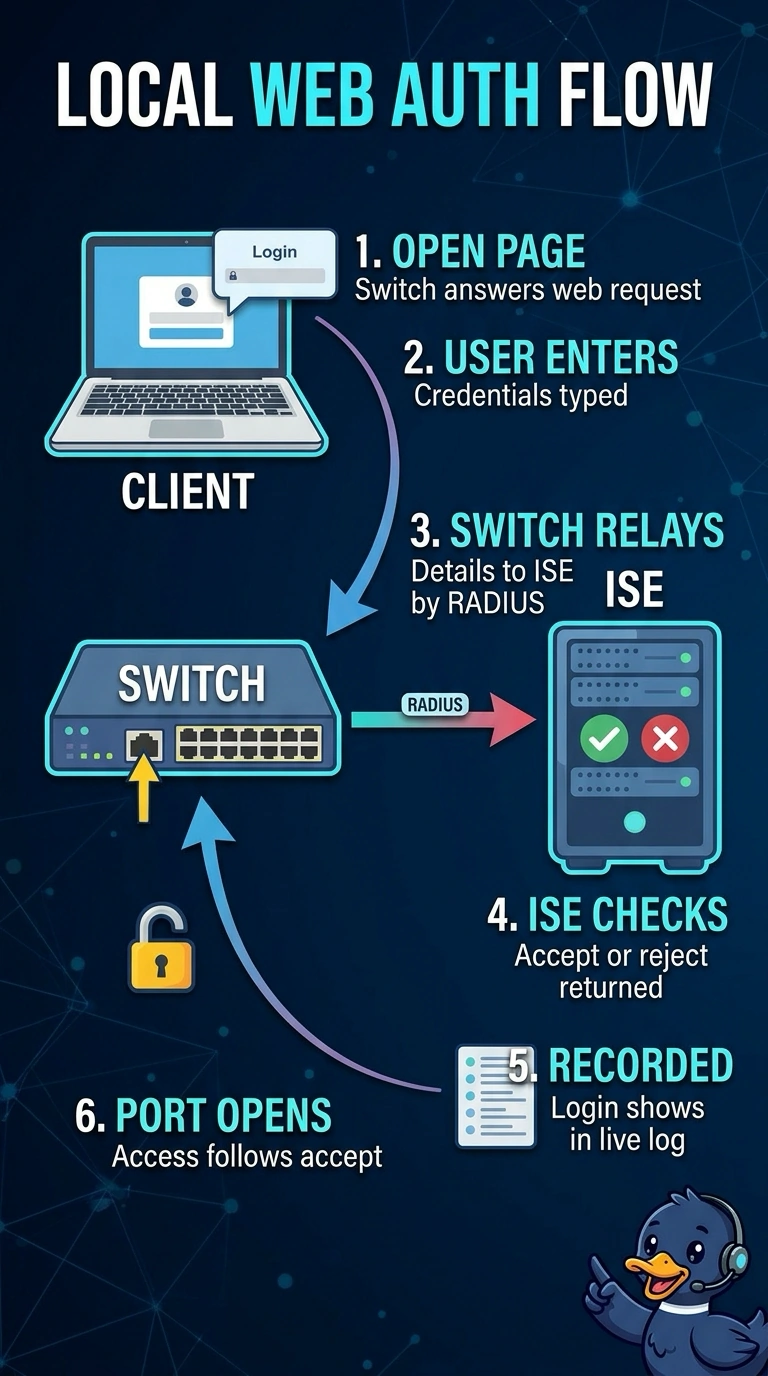
Short Explanation
Local web auth keeps the page on the access device and uses it as a relay, so the credentials still reach ISE as a normal RADIUS request. Central web auth is different because ISE hosts the page and the browser talks to it directly. It's like a hotel front desk taking your details and calling them in rather than sending you over to the reservation office.
Full Explanation
Local web authentication means the network access device owns the portal: it answers the HTTP request, presents the login form, and then forwards what the user typed to ISE as a RADIUS authentication request, so ISE still receives the credentials and still records a session for auditing. An ISE-hosted portal reached through a redirect URL is central web auth and fails the requirement, because the page itself is fetched from ISE rather than from the switch. Letting the browser post the form directly to ISE also fails the requirement, because that is the central design where the switch never handles the page. Validating the credentials in the switch's own local database fails the requirement, because ISE never sees the credentials or the session it must audit. An exam caveat: local login pages differ by platform and credentials are commonly relayed as PAP, so confirm which AAA protocol the device supports before designing the portal. A practical check: submit a test login and confirm a matching webauth request appears in the ISE live log with the submitted username.