
A regional bank runs forty Secure Firewall Threat Defense devices at branch sites and wants every management function delivered as a vendor hosted service rather than software it installs. It needs one console to push the same access control policy to every branch and to confirm compliance across the estate. Which management tool meets those hosting and central policy requirements?
Select an answer to reveal the explanation.
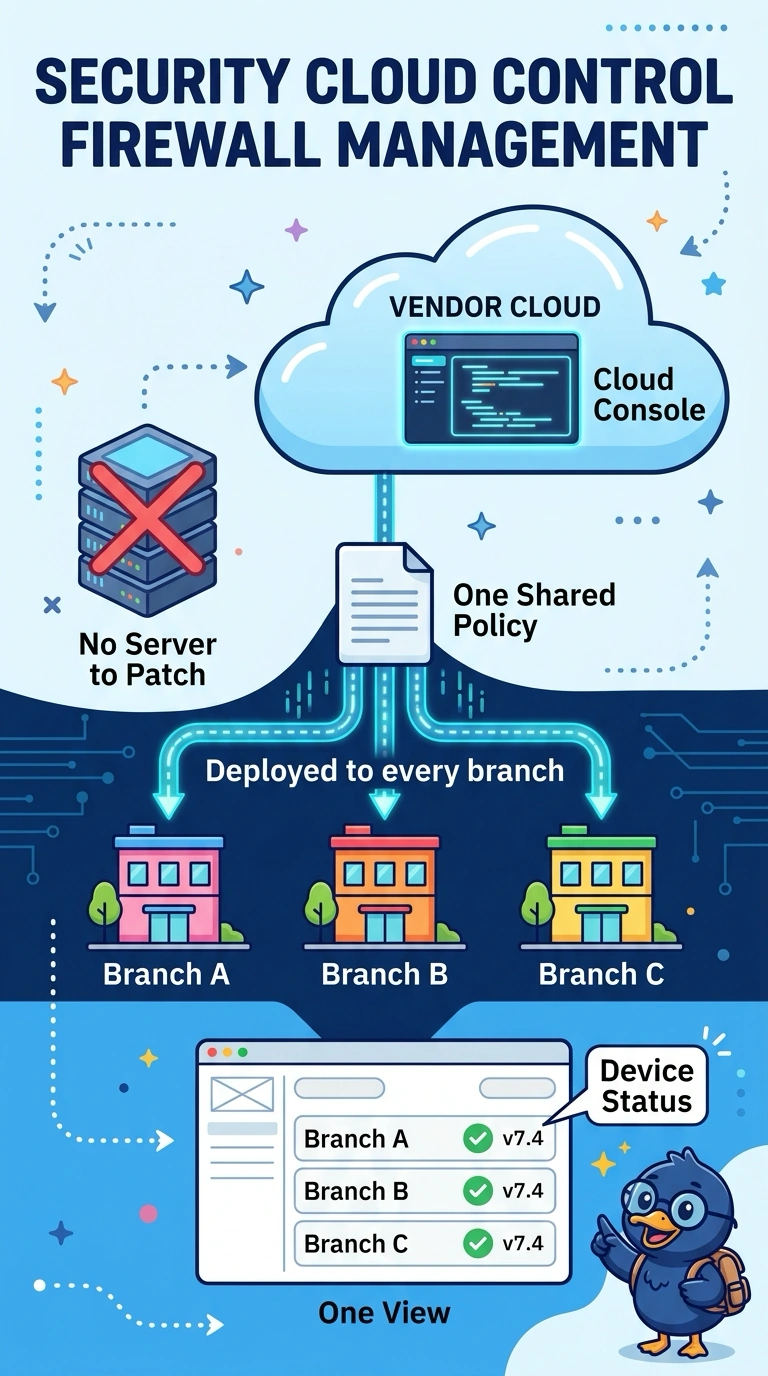
Short Explanation
Security Cloud Control Firewall Management gives you a vendor-hosted console to push the same policy to every branch and check compliance across the estate. You don’t have to install and operate a management server, and both functions stay together in one console.
Full Explanation
Security Cloud Control Firewall Management fits because it is vendor hosted and gives you one console to deploy the same access control policy across the branch Secure Firewall Threat Defense devices and review compliance across the estate. A customer-managed Management Center VM can centrally manage policies and monitor devices, but you must install and operate the management software, which conflicts with the bank’s requirement for vendor-hosted management. A vendor-hosted console paired with a second hosted reporting service can provide policy deployment and compliance information, but it splits those functions between two services rather than providing them in one console. A vendor-hosted console that deploys approved policy variants can still report compliance centrally, but it does not meet the explicit requirement to push the same policy to every branch. Exam caveat: distinguish a centrally managed, customer-operated virtual appliance from a vendor-hosted management service; they may offer similar policy capabilities but have different hosting models. Practical check: confirm that the current service supports the bank’s device versions and licensing, and verify that the intended tenant supports both single-policy deployment and an estate-wide compliance view.