
A data center expects traffic growth beyond what one appliance can pass, and supported established sessions must survive a hardware failure while the whole platform is managed as one system. Which device availability design meets all of those requirements?
Select an answer to reveal the explanation.
Short Explanation
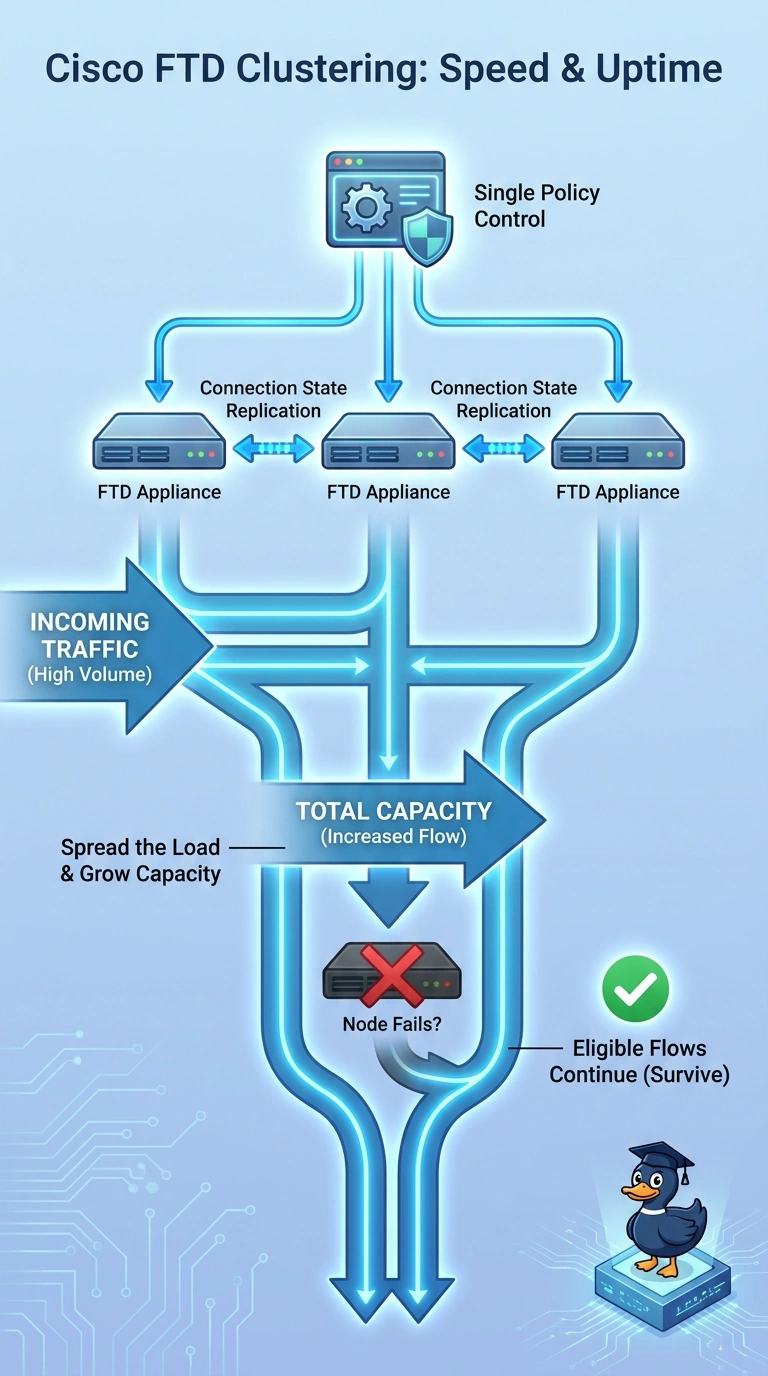
You need clustering: it spreads traffic across three FTD appliances and lets supported sessions survive a member failure. It’s like opening more lanes while keeping traffic moving if one closes.
Full Explanation
An FTD cluster pools several appliances into one logical device, distributing new flows across members while replicating connection state so a surviving member can continue eligible sessions when another member fails; that combination covers both the capacity need and the stateful failover need. An active and standby HA pair fails the requirement because only the active unit forwards traffic, so your ceiling stays that of a single appliance no matter how many boxes you own. Buying one larger appliance fails because a cold spare provides no stateful handoff, so established sessions typically reset when it takes over. Two independent firewalls with routing failover fail because a routing protocol can steer traffic to the surviving box, but without shared connection state existing sessions are not preserved. Exam caveat: clustering has platform and licensing prerequisites, and decrypted TLS sessions reset if the member owning them fails, so confirm support on your models first. Practical check: start a long transfer that is not being decrypted, power off one member, and confirm it continues without resetting.