
Two 10-GbE links run from the FTD appliance to a Catalyst switch whose ports are already configured for LACP active mode. The design calls for one logical interface, traffic balanced over both links, and a member removed from service if a cable breaks and traffic flows only one way. Which port-channel configuration on the firewall meets all three requirements?
Select an answer to reveal the explanation.
Short Explanation
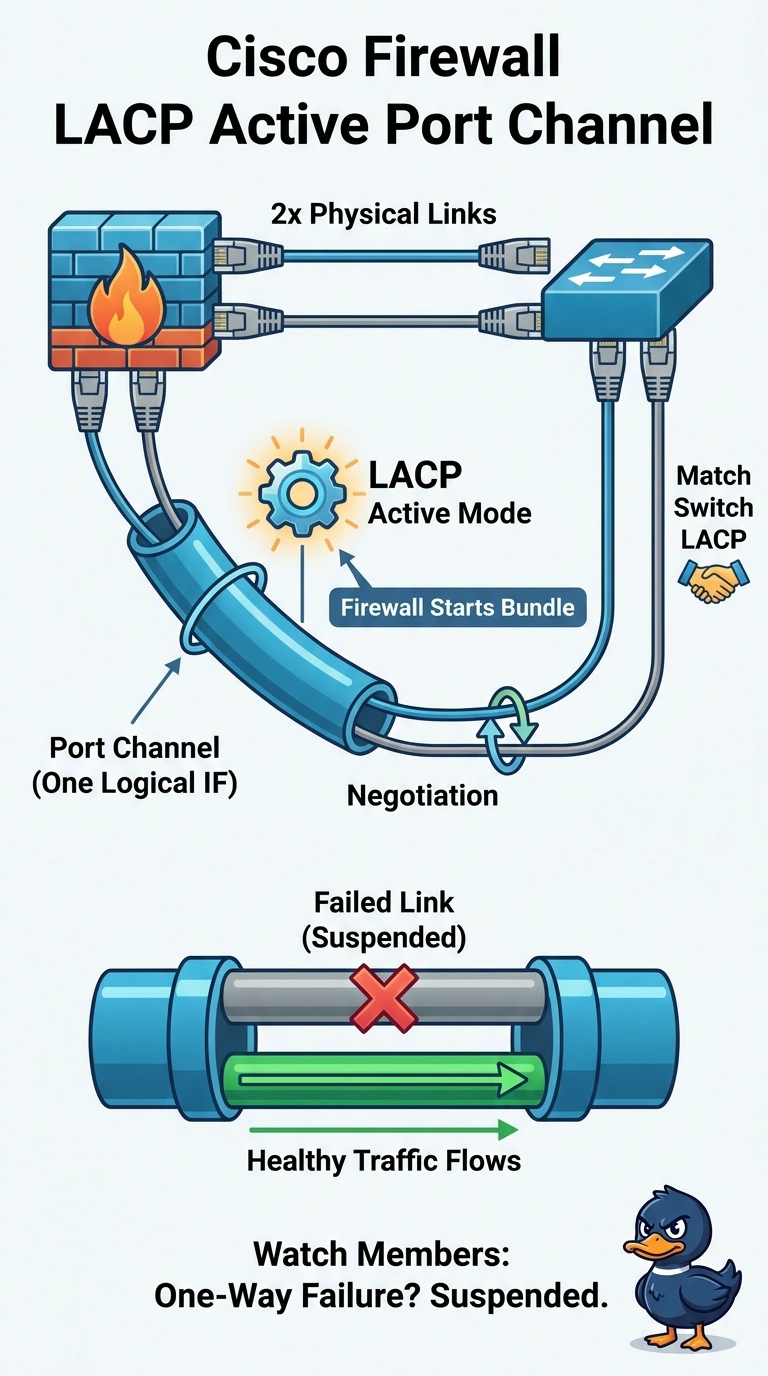
You've read it right: the bundle only works if the links talk to each other. LACP active mode lets both ends negotiate and then watch one another, so a one-way break gets caught and the member is suspended instead of silently black-holing traffic. A static channel is like a knot you tie once and never check again.
Full Explanation
LACP active mode makes the firewall send negotiation frames on each member link and the switch's active ports answer, so both ends agree on one bundle before traffic flows; those same periodic frames let each side notice a member receiving in only one direction and pull it from the bundle. That covers all three goals at once: a single logical interface, hashing across both links, and automatic removal of a half-broken member. A static on-mode channel aggregates traffic and survives a simple link-down, but with no negotiation it cannot detect a unidirectional failure and keeps forwarding into a dead path. Separate routed interfaces spread sessions yet never create one logical interface, so no bundle exists and each link is judged on its own. An active-and-standby arrangement gives failover but leaves one link idle instead of balancing traffic. Exam caveat: members must match in speed and media, or the channel will not come up. Practical check: bring the channel up with both members active, then break one direction of a link and confirm the member is removed while traffic continues.