
A wastewater plant uplink places a cloud burst under the same change-control as on-prem GPU jobs. Why does that operational discipline matter for hybrid AI?
Select an answer to reveal the explanation.
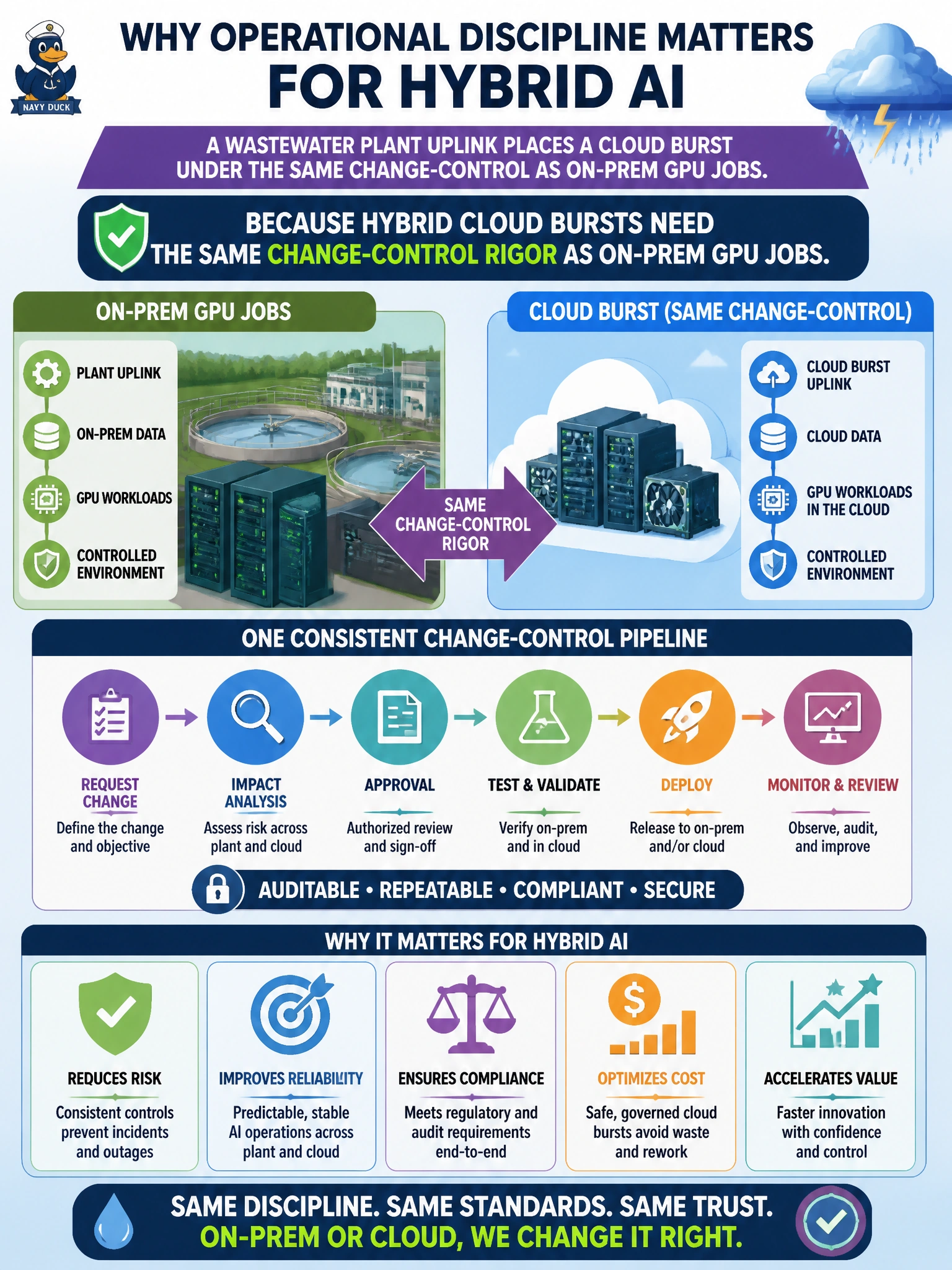
Short Explanation
A cloud burst is still a production change for the civic AI platform. Put it through the same change-control you use for on-prem GPU jobs. "It is just cloud" is how surprises land in the river plant.
Full Explanation
A wastewater plant uplink that places a cloud burst under the same change-control as on-prem GPU jobs does so because hybrid cloud bursts need the same change-control rigor as on-prem GPU jobs. Bursting is still a production change for the civic AI platform—capacity, cost, data egress, and failure modes all shift—so municipal review, windows, and rollback expectations should apply.
The same IAM policy rigor as on-prem GPU jobs is an access-control detail, not a substitute for the same change-control rigor that on-prem GPU jobs require. The same billing tag discipline as on-prem GPU jobs helps with cost tracking, but it does not replace the change-control discipline required for hybrid burst jobs. The same dashboard coverage as on-prem GPU jobs supports observability, yet it does not remove the requirement for change tickets and operational discipline.
Exam caveat: Domain 2.5 expects hybrid integration to remain governable; cloud elasticity does not exempt workloads from municipal operational discipline.
Operational check: require a change record for wastewater hybrid bursts with the same approvers/SLO checks as on-prem GPU jobs, and reject untracked burst submissions from the orchestrator. Include data-egress and cost ceilings in the same change ticket so a wastewater cloud burst cannot quietly enlarge the compliance or budget blast radius. Post-implementation review should compare actual burst behavior to the approved plan the same way on-prem GPU changes are reviewed.
Prefer to study offline? Printable PDF study book + test engine ($7.50, unofficial). These questions stay free here.