
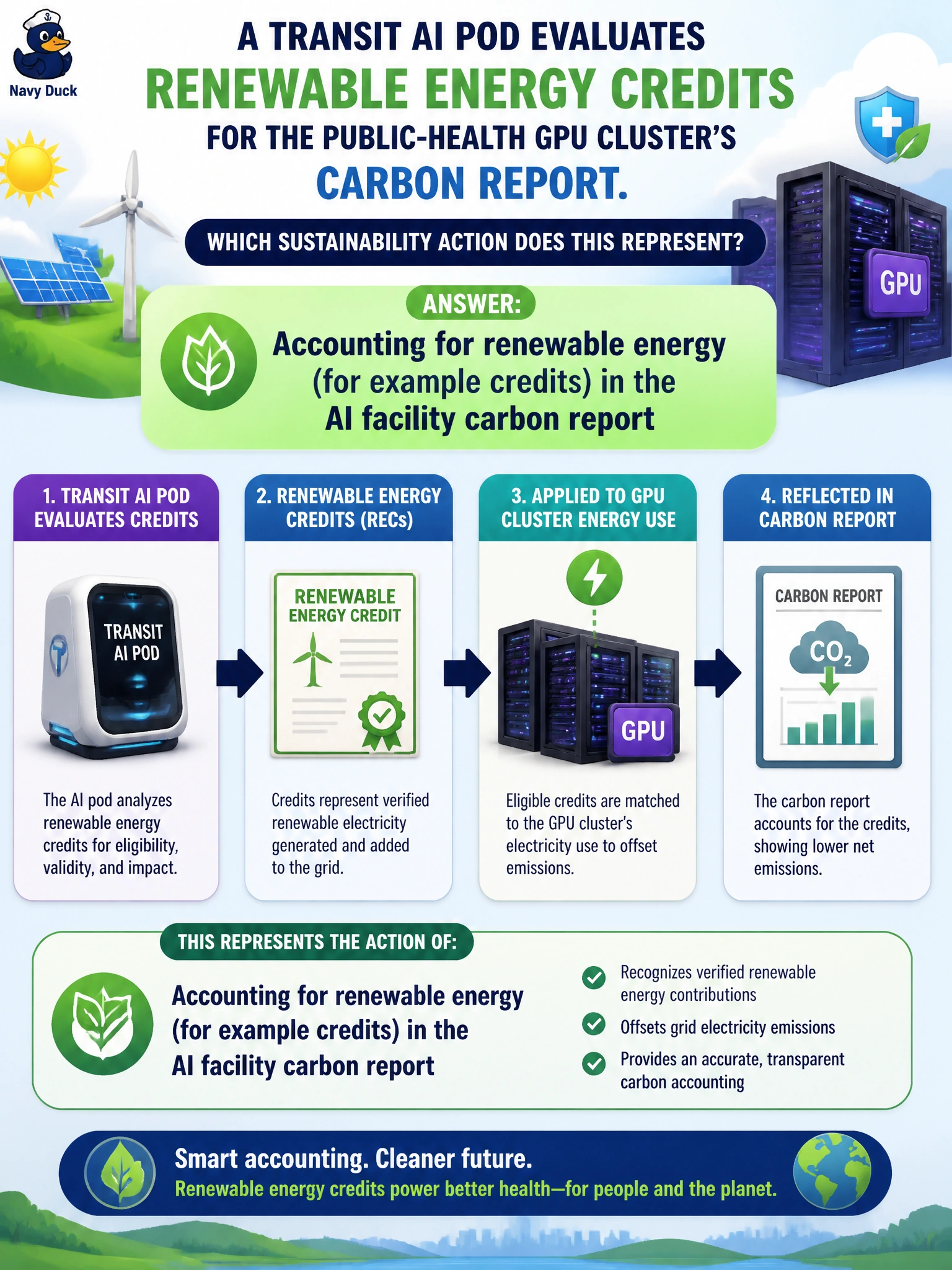
A transit AI pod evaluates renewable energy credits for the public-health GPU cluster's carbon report. Which sustainability action does this represent?
Select an answer to reveal the explanation.
Short Explanation
Renewable energy credits are one way a city shows the GPU cluster's juice is matched to greener supply on the books. Sustainability reporting is part of the AI facility story. You can't file purchased credits as Scope 1 cuts because they're Scope 2 power, you can't log them as on-site output when you bought them, and they don't erase embodied hardware emissions.
Full Explanation
Evaluating renewable energy credits for a public-health GPU cluster's carbon report is accounting for renewable energy in the AI facility sustainability story. Domain 2.4 includes renewable energy as part of power, efficiency, and sustainability evaluation; credits (or on-site renewables) are a recognized way municipal operators reflect greener supply in carbon accounting for dense AI loads. The action is sustainability reporting and energy-source accounting—not accounting for renewable energy (for example credits) for Scope 1 cuts in the carbon report, because credits apply to Scope 2 purchased electricity, not direct Scope 1 emissions. Accounting for renewable energy (for example credits) for Scope 1 cuts in the carbon report fails because renewable credits are a Scope 2 accounting instrument for purchased electricity and do not cut direct on-site Scope 1 fuel-combustion emissions. Accounting for renewable energy (for example credits) as on-site output in the carbon report fails because purchased credits are a market-based claim for off-site supply, not metered electricity physically generated on-site by the facility. Accounting for renewable energy (for example credits) for embodied emissions in carbon report fails because credits cover operational Scope 2 electricity use and cannot offset lifecycle embodied carbon locked in server hardware manufacturing. Exam caveat: Renewable energy credits are an accounting instrument; exam items may also discuss on-site generation or utility green tariffs. The correct idea is including renewable energy in the AI facility carbon/sustainability evaluation, not accounting for renewable energy (for example credits) for embodied emissions in carbon report, which misapplies operational electricity instruments to hardware lifecycle emissions. Operational check: retain energy bills and REC documentation for the GPU cluster; align reporting period with facility metering; present renewable accounting alongside absolute kWh so transit/public-health stakeholders see both efficiency and sourcing.
Prefer to study offline? Printable PDF study book + test engine ($7.50, unofficial). These questions stay free here.