
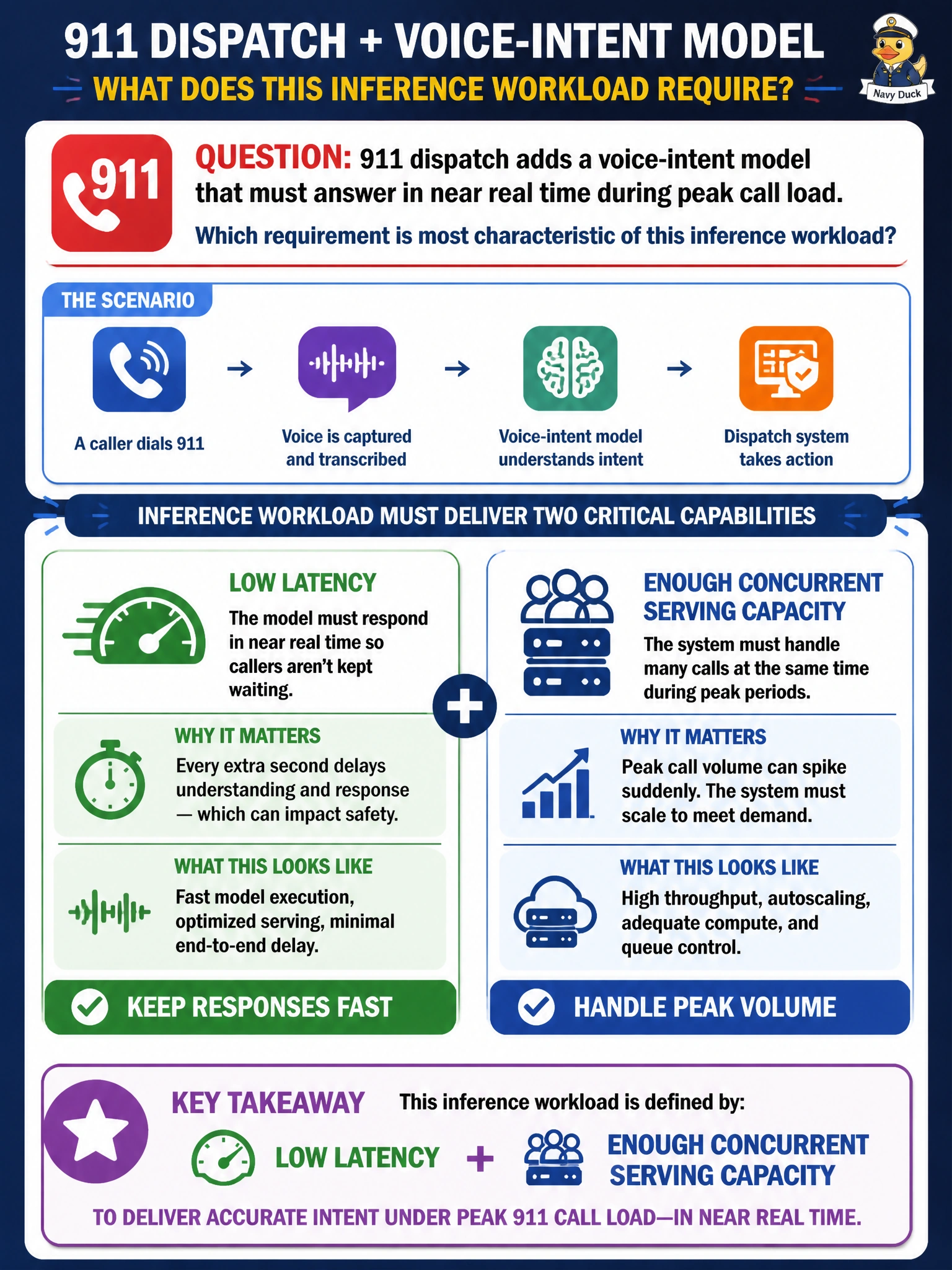
911 dispatch adds a voice-intent model that must answer in near real time during peak call load. Which requirement is most characteristic of this inference workload?
Select an answer to reveal the explanation.
Short Explanation
When the call boards light up, the intent model has to keep up like a well-staffed switchboard—fast answers and room for many calls at once. You're under inference pressure for instant answers, not high-throughput inference with large batching and relaxed latency targets that'll keep callers waiting.
Full Explanation
A 911 voice-intent model that must answer in near real time during peak call load is an inference workload whose defining requirements are low latency and enough concurrent serving capacity for peak volume. Dispatch assistance fails if intent recognition queues behind training jobs or if the serving pool cannot absorb simultaneous calls when boards light up. High-throughput inference with large batching and relaxed latency targets maximizes total volume at the cost of per-request delay, not what live dispatch inference needs hour by hour when every second counts. Buffered serving with deep request queues that smooth average throughput evens out average output but lets live calls wait in line, not the near-real-time serving requirement that defines this inference workload during peak calls. Larger context windows and bigger models for improved answer quality boost potential answer quality while adding compute and latency overhead, not how quickly it answers live 911 calls under peak concurrency. Exam caveat: public-safety inference often still shares a platform with training, so isolation, QoS, and capacity reservations matter—naming the workload inference does not automatically provision peak concurrency or protect SLOs. Operational check: load-test the intent endpoint at peak-call concurrency, verify p95/p99 latency against dispatch SLOs, and ensure training reservations cannot starve the serving pool during surge periods on the municipal fabric.
Prefer to study offline? Printable PDF study book + test engine ($7.50, unofficial). These questions stay free here.