
A virtual firewall image and flavor already boot from the catalog, yet every new instance attaches only to a tenant data network and the orchestrator does not learn a management address. What gives the instantiated firewall its first management reachability?
Select an answer to reveal the explanation.
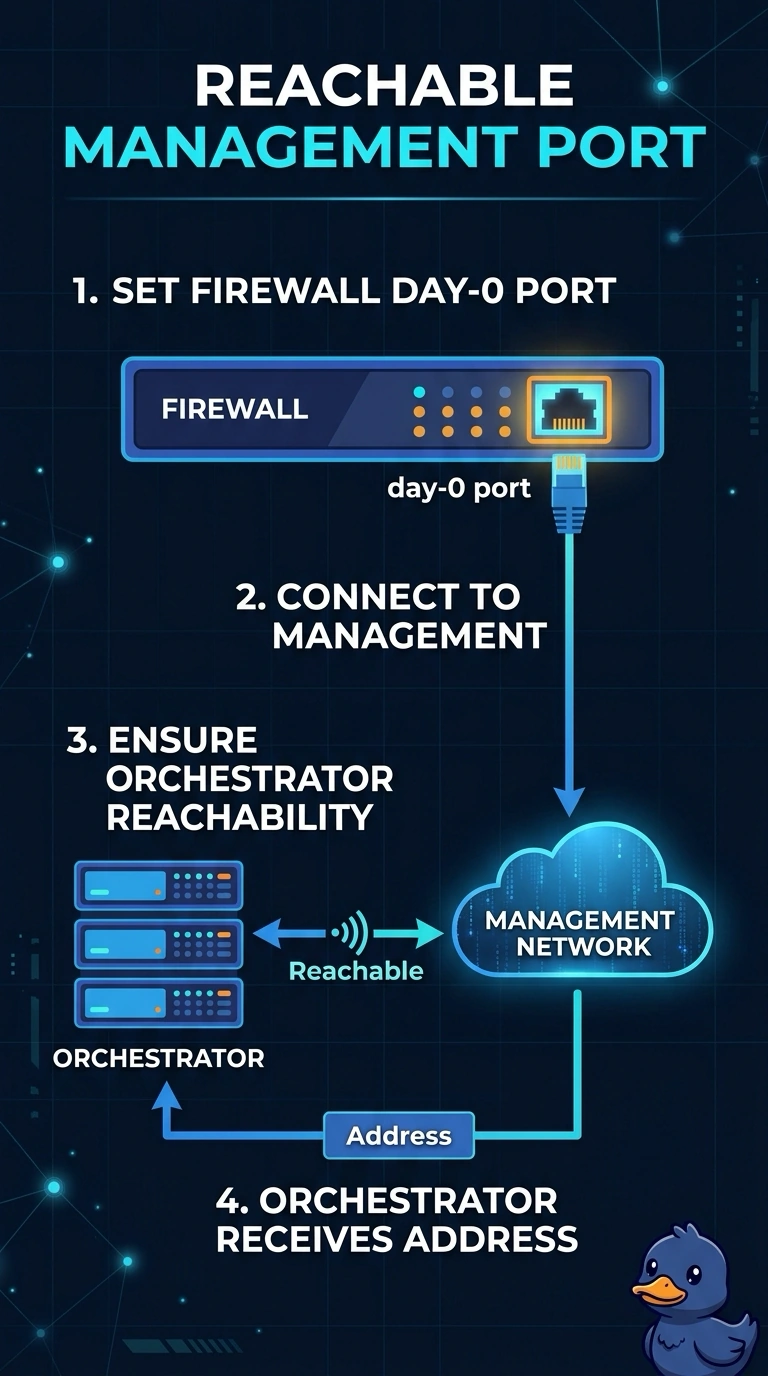
Short Explanation
A firewall with no management cable is a locked room. You already have a working image and flavor, so day-0 has to land on a management network the orchestrator can reach. A second image, a larger flavor, and a VIM used as a WAN controller do not create that path.
Full Explanation
Onboarding a virtual firewall still has three inputs after the catalog exists: the image, the flavor, and day-0 connectivity. Image and flavor only get the guest to boot. Day-0 is the management interface, address, and path the orchestrator must reach to push service configuration. A tenant data port can forward user traffic and still leave orchestration with no session to open. Attach the configured day-0 management network and verify address assignment and reachability. This validates deployment and bootstrap separately from package onboarding. Place the firewall day-0 port on a management network the orchestrator can reach is the design that meets this requirement. Publish a second firewall image even though the catalog copy already boots is the wrong fit because the catalog image already boots, so another copy does not create a management address. Select a larger flavor even though the current flavor already boots and forwards is the wrong fit because the current size already starts the guest, so extra size does not attach a management network. Use the cloud VIM to push service intent out to the provider WAN edges is the wrong fit because pointing the VIM at WAN edges drives the wrong domain and leaves this firewall without management reachability. Operational check: After boot, confirm a management address and an orchestrator session before you treat onboarding as finished.