
Two hotels in the same chain show different loss on their guest paths, and each site's chart has looked like that for weeks. How should the team decide whether today's loss is an incident?
Select an answer to reveal the explanation.
Short Explanation
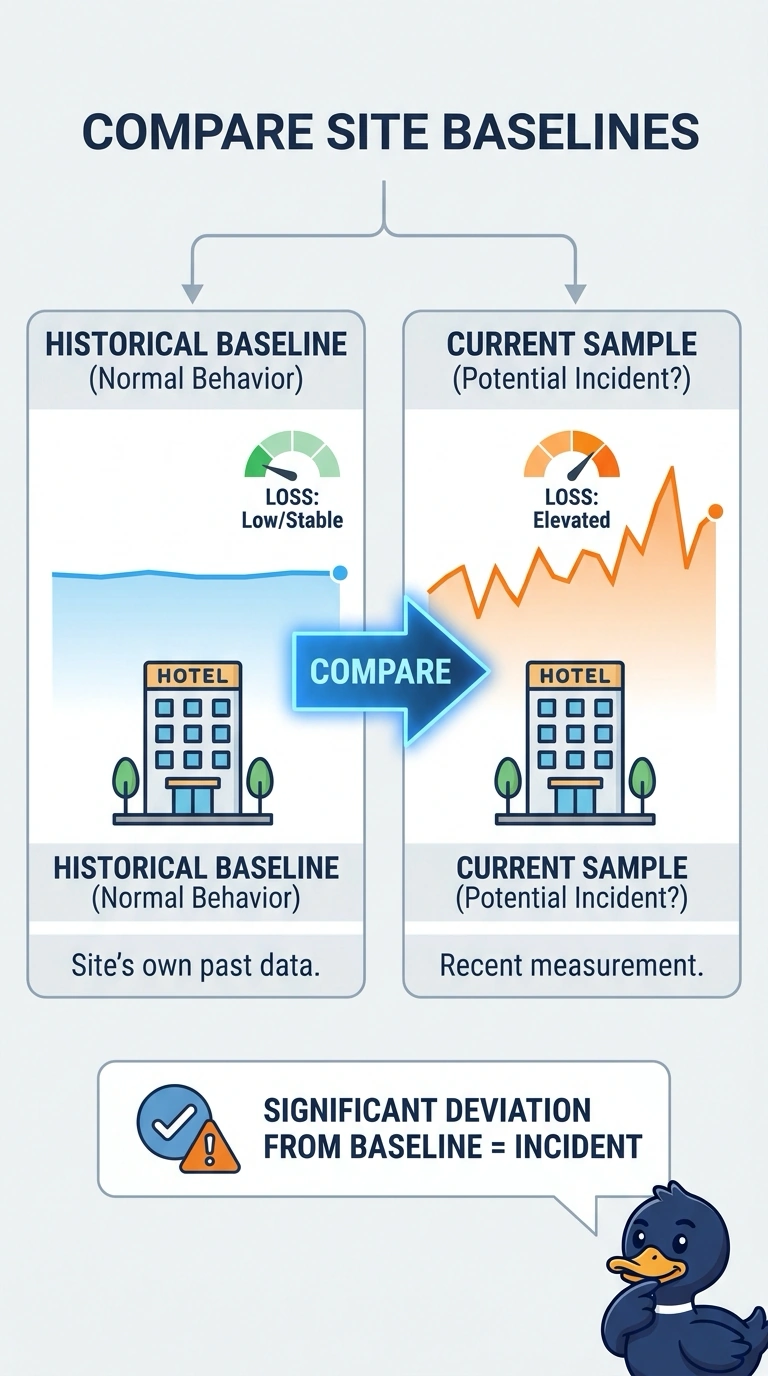
Two kitchens can smell different on a normal afternoon, and that smell is not a fire. You compare each hotel's loss with its own baseline of normal behavior before you call a sample an incident. Paging on the first sample, cranking the threshold until the chart goes quiet, or swapping the metric for a ticket count hides the real pattern.
Full Explanation
A baseline is the range a metric shows during normal operation at a specific place. These two hotels have carried different loss for weeks, so each site already has its own normal. Today's sample is an incident only when it departs from that site's baseline, not when it differs from the other hotel or from a single chain-wide number. Paging on the first loss sample treats any loss as abnormal and will page for behavior the guest path has shown all along. Raising the loss threshold until both charts look quiet forces two different normals into one silent line, which erases the ability to see a real spike at the hotel that usually runs cleaner. Replacing the loss metric with a guest-ticket count measures complaints rather than the path, and tickets can lag or bunch for reasons that have nothing to do with loss. The chart the team already trusts is the loss series itself, read against each hotel's history. Exam caveat: a shared chain does not imply a shared normal when the sites have different steady loss. Operational check: review several weeks of loss for each hotel and mark today's point as an incident only if it sits outside that site's usual range.