
A university wants loss figures for live voice calls and does not want extra synthetic calls placed on the trunk. Which method fits?
Select an answer to reveal the explanation.
Short Explanation
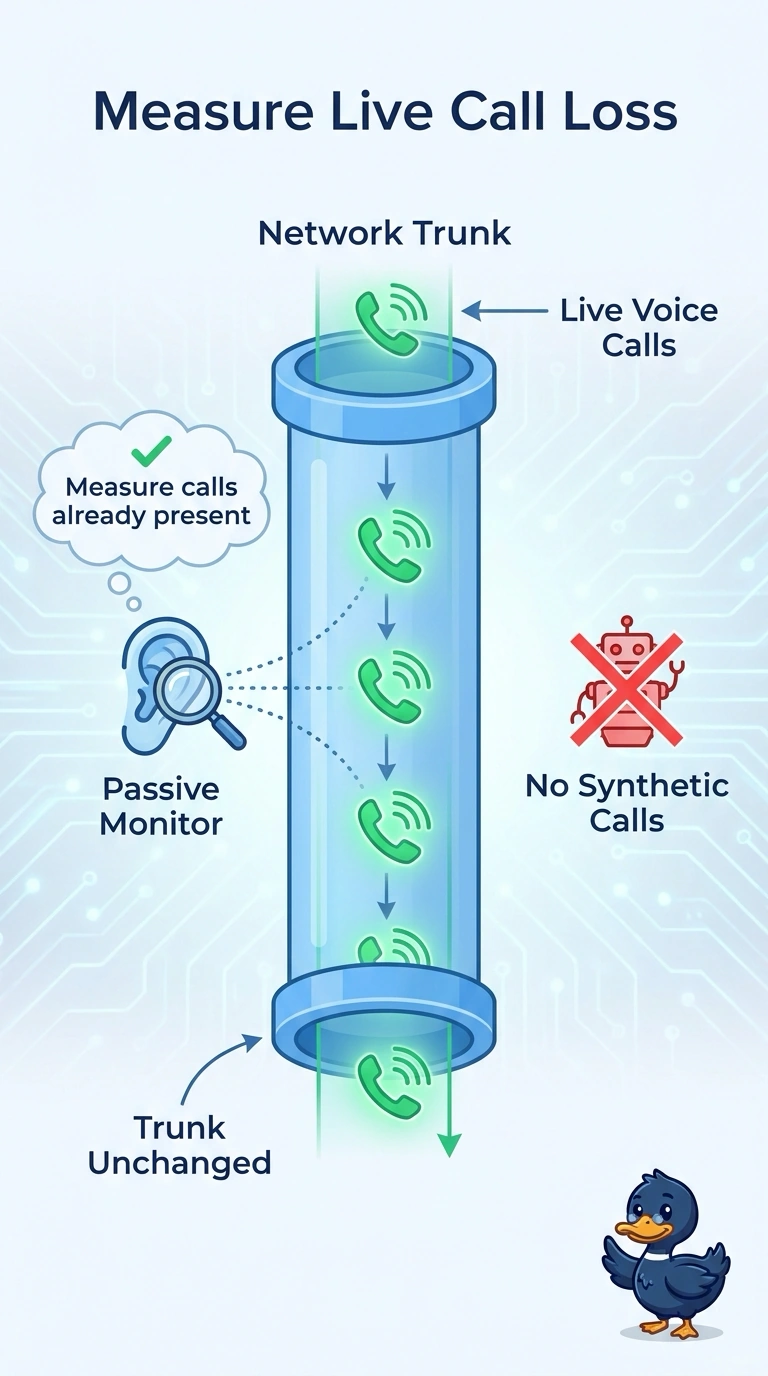
You can judge a conversation by listening to it, or you can interrupt and start a new one. Your campus wants loss on live calls without extra synthetic calls, so you measure passively and leave the trunk as it is. Active test calls, a config backup, or a web login either add traffic or never look at the live voice.
Full Explanation
RFC 7799 treats passive measurement as observation of traffic the measurement system did not create. Loss on live calls, with no synthetic call added, is that method: the figures come from the calls already on the trunk. Active test calls that add synthetic traffic the university does not want on the trunk are the opposite method and break the constraint even if they can report a loss number of their own. A configuration backup of the call-control servers copies how those servers are set and does not observe packet loss on live calls. A synthetic login against a web application that is not the voice trunk generates an application transaction on a different service and does not answer the voice-loss question. Exam caveat: refusing synthetic calls rules active call probes out; it does not rule out observation of the calls people are already placing. Operational check: confirm the loss figure is derived from live call media on the trunk and that the test plan adds no synthetic calls onto the trunk.