
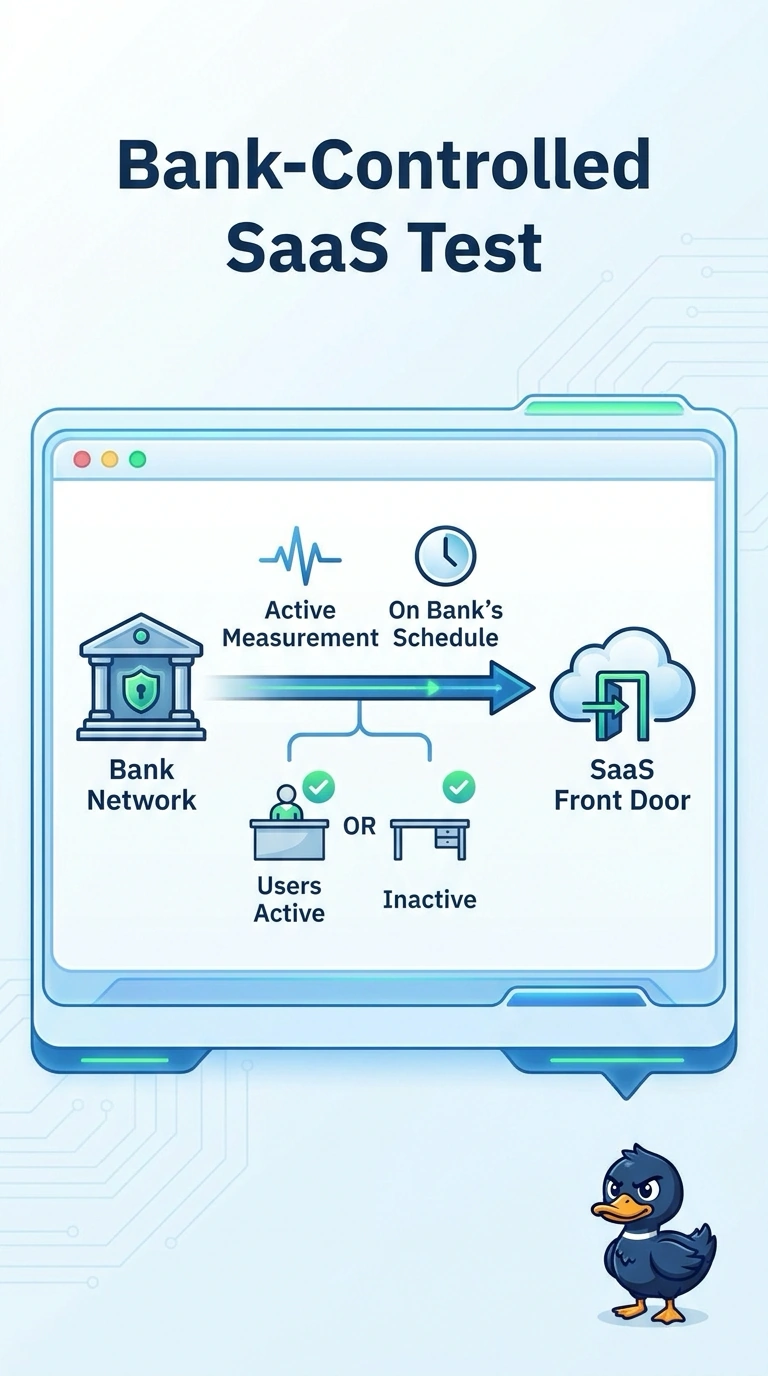
A bank needs a controlled test from its network to a SaaS front door, sent when the bank chooses, whether or not a user is active. Which approach produces that test?
Select an answer to reveal the explanation.
Short Explanation
Knocking on a specific door when you choose tells you more than hoping a stranger walks through it. You send active measurement at that SaaS front door, because the bank wants a controlled probe on its own schedule. Passive capture, a firewall backup, or a password-form login either waits on someone else or answers a different question.
Full Explanation
A controlled probe toward a named target is active measurement: the bank generates the test traffic to the SaaS front door when it chooses, which matches the RFC 7799 description of a method that creates the packets it measures. Passive capture that waits until some other user happens to open the SaaS service is the opposite method; it observes existing use and cannot guarantee a test when no one is active. A configuration backup of the firewall that sits in front of the bank users saves settings and does not probe the front door. A synthetic login that checks a password form rather than the path to the front door exercises an authentication transaction and does not answer the request for a controlled path probe. Exam caveat: a scheduled probe to a target is active even when a login test also exists; the login test is a different question. Operational check: run the probe with no user signed into the SaaS service and confirm packets are sent to that front door on the bank's schedule even if the office is quiet.