
A retailer wants to know whether an outside shopper can open the public storefront the way a visitor would, without a scripted login. Which agent style fits?
Select an answer to reveal the explanation.
Short Explanation
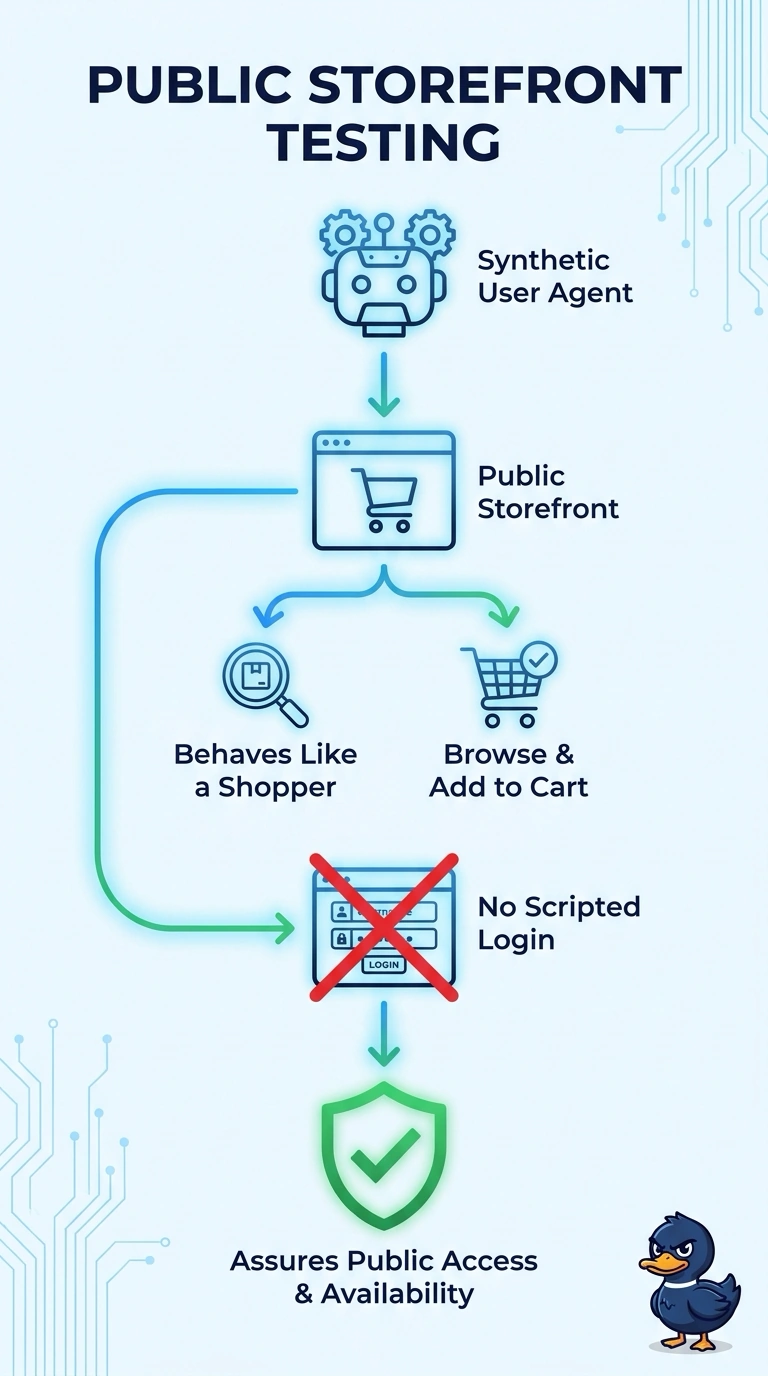
Send a stand-in shopper when you need to know whether the front door opens for a visitor. A synthetic user agent visits the public site the way an outside shopper would. A scripted login, a LAN collector, or a packet capture measures a different job.
Full Explanation
The retailer wants the experience of an outside shopper opening the public storefront, and the visit is not supposed to include a scripted login. A synthetic user agent that visits the public site like a shopper performs that visit and reports the page experience from that vantage point. A scripting agent that logs in and walks a private checkout transaction is the style for a multi-step authenticated flow. It covers a logged-in transaction rather than an anonymous shopper, so it does more than this request and tests a different action. A local collector that sits on the store LAN and measures loss records the local segment. It does not behave like an outside visitor opening the public site. A packet capture that records frames and never walks the public site can show packets on a wire. It does not request the storefront as a shopper would, so it cannot describe that page experience. Exam caveat: a synthetic user, a scripted transaction, and a local collector are three different agent styles, and a capture does not stand in for any of them. Operational check: run the synthetic visit against the public storefront and confirm the result is a page visit from outside, not a login transaction or a LAN loss sample.