
At a bank, teller browsers stall on one loan page while CPU on those PCs stays low and the branch VPN stays up. Which alert fits the symptom the tellers named?
Select an answer to reveal the explanation.
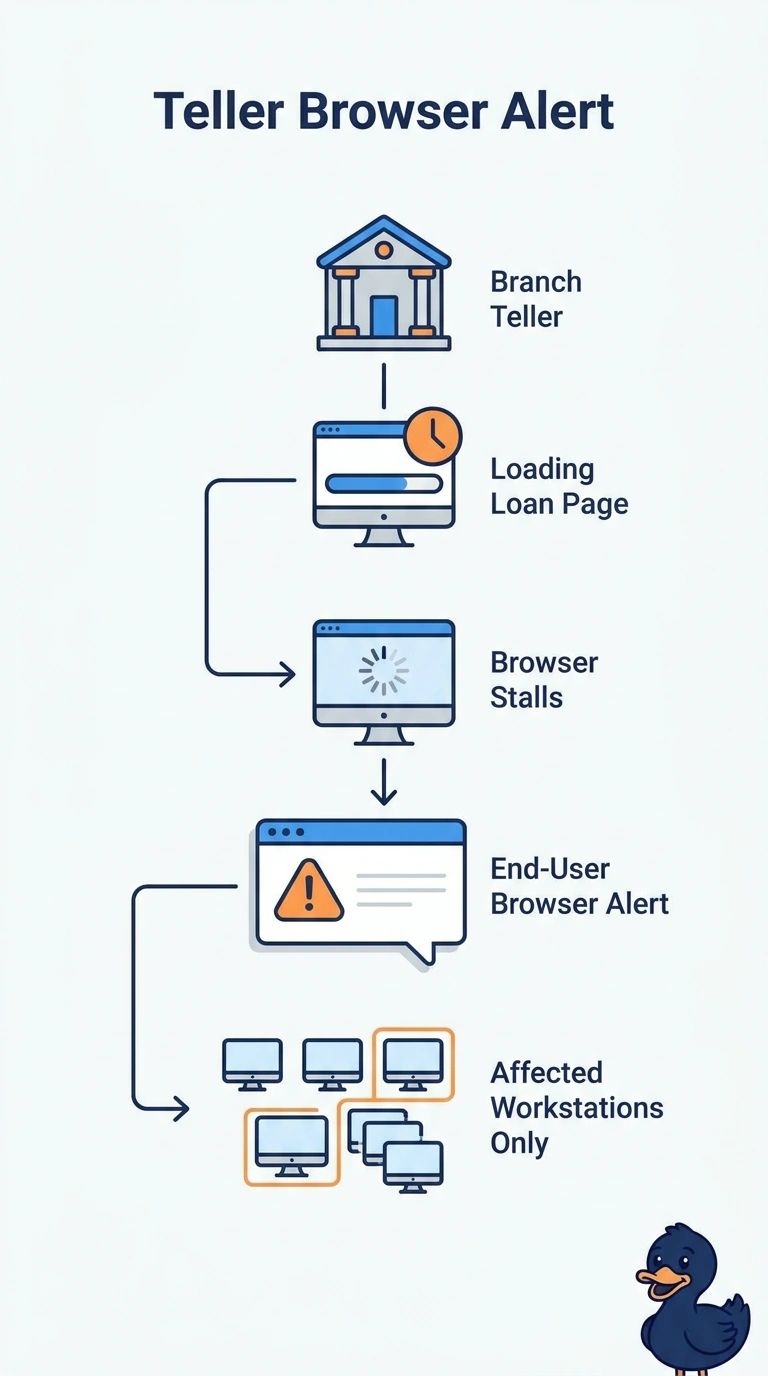
Short Explanation
You heard the tellers describe a stuck loan page, like a clerk naming a jammed drawer rather than a power plant down the street. An end-user browser alert on the teller workstations matches that experience, especially with CPU low and the branch VPN up. A routing-session alert, a core-router interface alarm, or a weekly executive email does not watch the browser behavior they named.
Full Explanation
The tellers named a browser stall on one loan page. CPU on those PCs stays low, and the branch VPN stays up, so the matching user-experience signal is the browser, not the processor or the tunnel. An end-user browser alert on the teller workstations can detect when that page stalls, matching the experience the branch can feel. A BGP-state alert on routing sessions at the bank edge routers watches routing state; it would alert on a session change, which the symptom does not describe. An SNMP interface alarm on the data-center core router uplink watches that interface, and an up branch VPN with one stalled page does not point to an uplink fault. A weekly executive email of branch trends can inform leadership later, but it does not watch the teller browser or alert during the stall. Exam caveat: CPU, browser, and VPN are separate signals, so match the alert to the one users say is failing. Practical check: confirm the browser alert fires when teller workstations stall on the loan page and stays quiet when CPU remains low and the branch VPN stays up.