
During events, a stadium pages the WAN on-call for freezes that line up with client CPU saturation while the path stays clean. What should the rule watch instead?
Select an answer to reveal the explanation.
Short Explanation
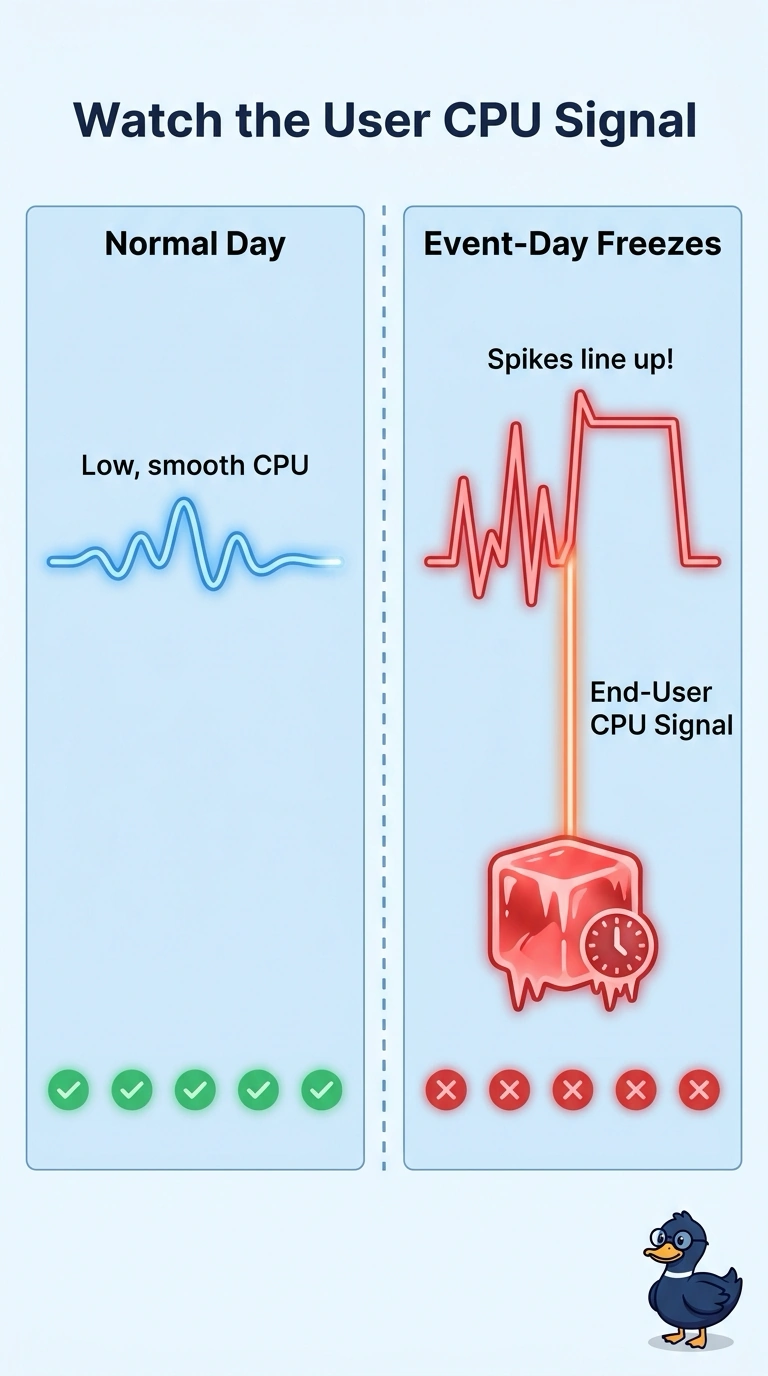
Calling the highway crew because a laptop fan is screaming sends the wrong truck. You move the rule to the end-user CPU signal that lines up with the freezes, since the path stays clean. BGP on the WAN routers, a core SNMP alarm, or a weekly mail that skips client CPU keeps paging people who cannot see the hot device.
Full Explanation
The freezes line up with client CPU saturation and the path stays clean, so the page to the WAN on-call is attached to the wrong signal. The rule should watch the end-user CPU signal that matches the freezes and should reach the people who can act on the client. BGP state on the WAN routers the clean path view does not implicate continues the mis-page: those sessions are not what the evidence shows. An SNMP interface alarm on a core router outside the affected client devices watches a core interface the clean path has not blamed and still ignores the processor on the device that froze. A weekly executive mail that never looks at client CPU on event days is too late for an event-day freeze and does not evaluate the end-user signal at all. Exam caveat: who gets paged follows the signal the rule watches; a WAN page for a client CPU problem means the rule is on the wrong metric. Operational check: retarget the alert to client CPU, replay an event-day freeze, and confirm the WAN on-call is not paged while the path stays clean.