
A hospital campus sees drops concentrated in one traffic class while other classes on the same circuit stay clear. Operators want a page for that condition. Which alert fits?
Select an answer to reveal the explanation.
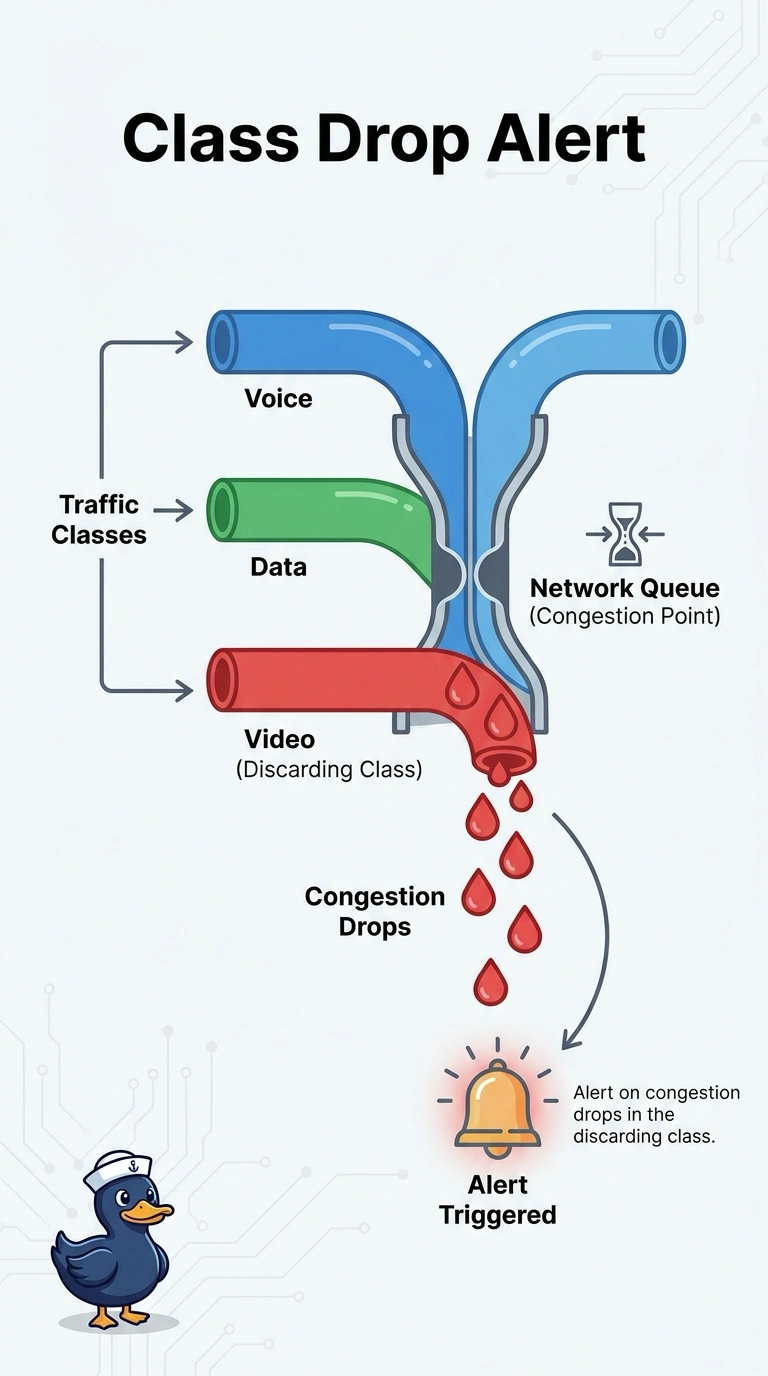
Short Explanation
If only one lane of the highway is backing up, the alarm belongs on that lane. You alert on congestion drops in the class that is discarding traffic, because the other classes on the circuit are clear. A workstation CPU alert, an untied chart, or next month's capacity review will not page you for those drops.
Full Explanation
Drops are concentrated in one traffic class while other classes on the same circuit stay clear, so the alert that fits is a page on congestion drops in the class that is actually discarding traffic. That is the network condition operators can act on, and it matches drops that sit in one class while the other classes stay clear. An end-user CPU alert on clinical workstations in the same wing watches host processors. Workstation load does not identify which traffic class is dropping, and it can fire while every class on the circuit is clear. A class chart on a dashboard can show the discards, but nobody has tied it to an alert rule yet, so the chart never pages when the class starts dropping again. A capacity project that reviews the crowded class next month may eventually change the design, yet it does not page anyone now, and the operators asked for a page for this condition. On the exam, congestion in one class is an alert on that congestion, not a silent chart and not a project plan. In production, confirm the alert fires when that class is discarding traffic and stays quiet when only other classes are busy, then confirm it clears after the drops in that class stop.