
A bank protects an internal status page with digest authentication, and a synthetic test sending a basic password is rejected by that page. Which test setup matches the page?
Select an answer to reveal the explanation.
Short Explanation
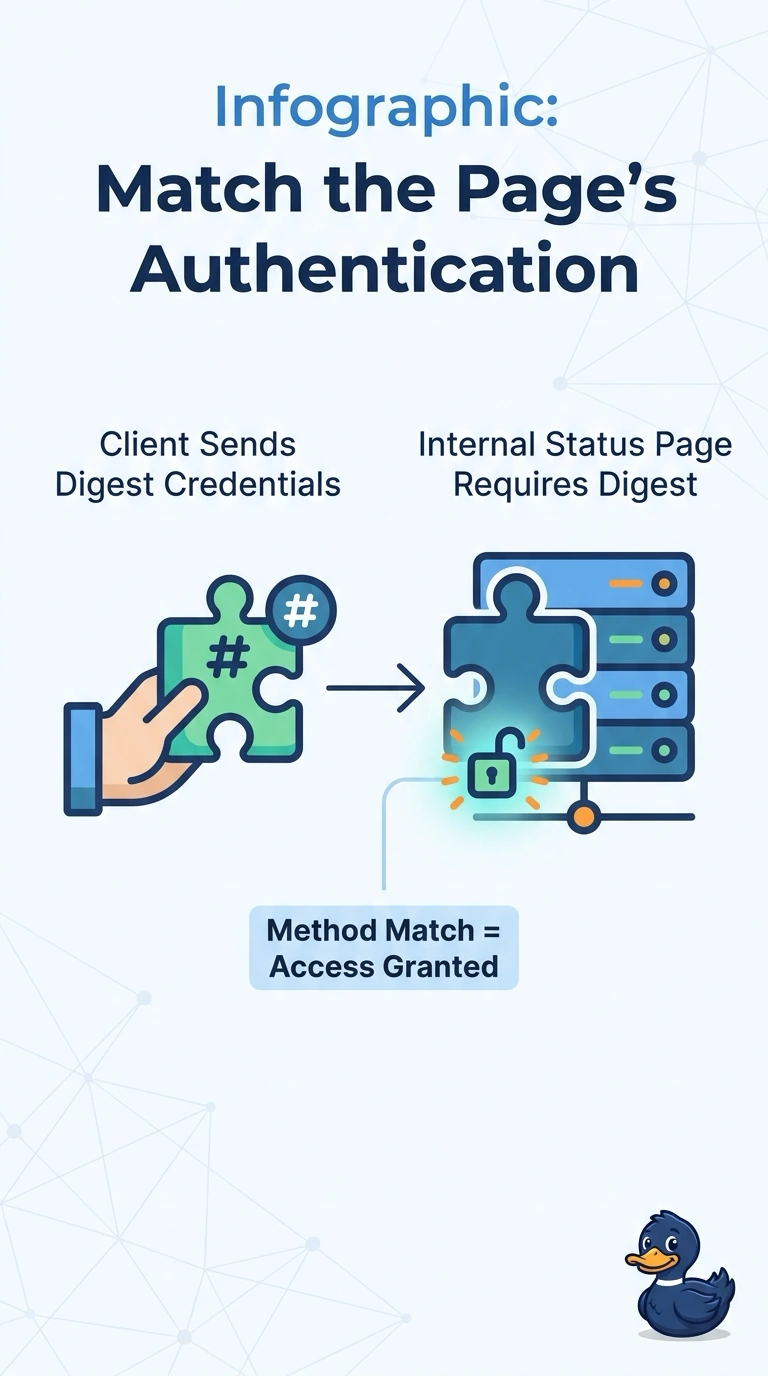
Digest authentication is a challenge handshake, not the basic password exchange this status page already rejected. You set the bank's synthetic test to use digest, because that is what the page requires. Basic credentials, no credentials, or a loss test that does not log in miss the page's actual check.
Full Explanation
The status page requires digest authentication, so a synthetic test matches the page only when it completes that challenge. Digest does not send the password the way basic authentication does; the client answers a challenge. Keeping basic credentials because the page asks for a username uses the wrong scheme, and a username prompt is not proof that basic authentication is accepted. Sending no credentials and scoring the challenge itself as a successful page load treats the authentication barrier as the content the test was meant to reach. A network-loss test that reaches the host and does not log in can show whether the path to the bank page drops packets, and it never answers the digest challenge or proves the status page opened. Exam caveat: a basic-auth rejection on a digest page means the test is misconfigured, not that the status service failed for people who authenticate correctly. Operational check: configure the transaction for digest, confirm it answers the challenge, and compare the resulting page with a manual digest login. If the test still sends a basic password, the failure belongs to the test.