
A manufacturer's legacy maintenance tool accepts only basic authentication, and a proposed synthetic test would use OAuth the way the newer plant applications do. Which test matches this tool?
Select an answer to reveal the explanation.
Short Explanation
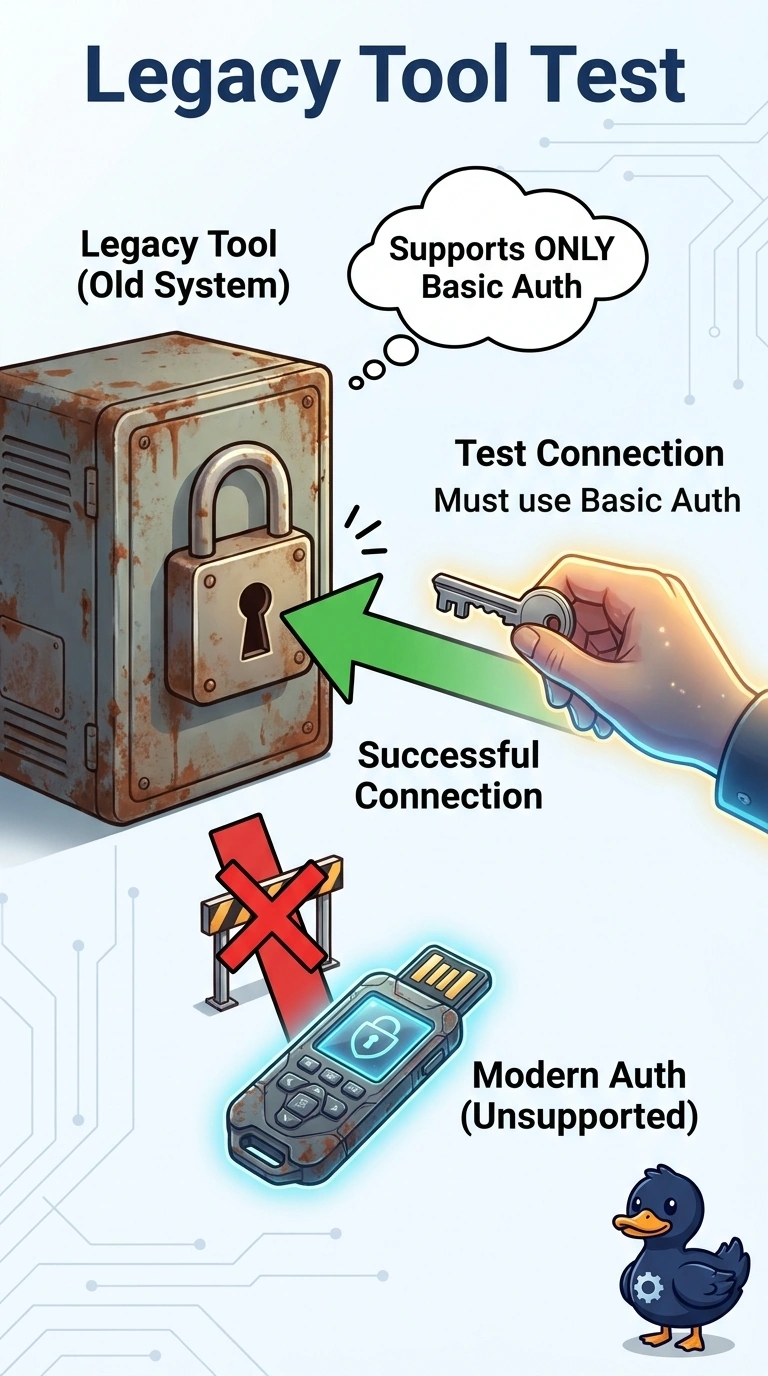
The legacy tool speaks one login dialect, and using a newer dialect at it will not open the door. You use basic authentication for the manufacturer's maintenance tool because that is all it supports. OAuth, an anonymous test, or a loss probe that skips login checks a different exchange than the one in front of you.
Full Explanation
A synthetic test has to use the authentication the target actually implements. This legacy maintenance tool supports only basic authentication, so a basic-authentication test is the one that can log in, and that choice is justified for this tool rather than for every plant application. An OAuth test matches the newer applications and does not match a tool that cannot complete an OAuth grant, so the transaction will fail authentication for a reason that has nothing to do with plant reachability. A test with no credentials checks whether an anonymous read happens to work, which this tool does not offer, and it will stop on the authentication requirement. A network-loss test that does not attempt login can show packet loss toward the tool, and it never proves the maintenance page accepts a session. Exam caveat: basic authentication is a weak scheme, and the test still has to speak it when that is the only scheme the tool implements; upgrading the test to OAuth does not upgrade the tool. Operational check: run the basic-authentication transaction against the legacy tool and confirm it reaches the maintenance page, while the newer applications keep the OAuth tests they require. If this tool is tested with OAuth, the failure is the mismatch.