
A university application authenticates with OAuth, and the synthetic web test stops at the consent redirect without finishing the grant. What must the test do to measure the signed-in application?
Select an answer to reveal the explanation.
Short Explanation
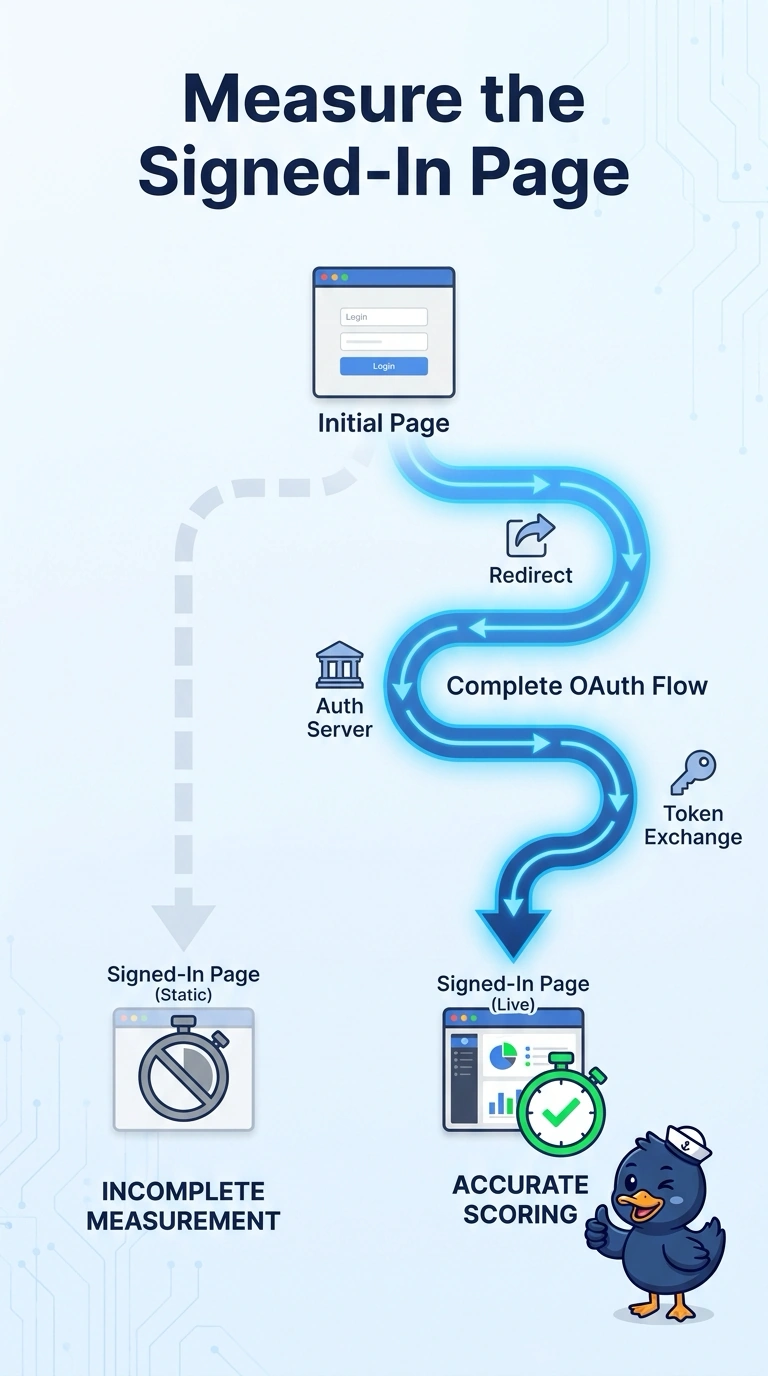
OAuth is a coat check: you hand over a claim and come back with a grant, and skipping the window leaves you outside. You configure the university test to finish that OAuth flow. A basic password, a credential-free hit, or a loss probe that does not sign in measures a different login than the one students use.
Full Explanation
The test measures the signed-in application only after it completes the authentication the application requires. This university application uses OAuth, and the synthetic test currently stops at the consent redirect, so it must finish the OAuth grant before it scores the page behind the login. Submitting a basic password uses a method the application no longer presents, so the test is exercising a form users do not use. Calling the application with no credentials and accepting the login wall as a healthy page records the redirect or the challenge as if it were the signed-in experience. A loss probe that reaches the host and does not sign in can show whether packets are dropped on the path, and it never obtains a grant or loads the application a student sees after OAuth. Exam caveat: a timeout on an unfinished redirect is often the test stopping early, not the application failing for real users who complete the grant. Operational check: step through the synthetic transaction and confirm it passes the consent redirect, receives the grant, and loads the same post-login page a browser reaches. If it still stops on the redirect, the page score is not the application's.