
At a manufacturer, one public name is slow while other names on the same circuit stay healthy. What should the team conclude?
Select an answer to reveal the explanation.
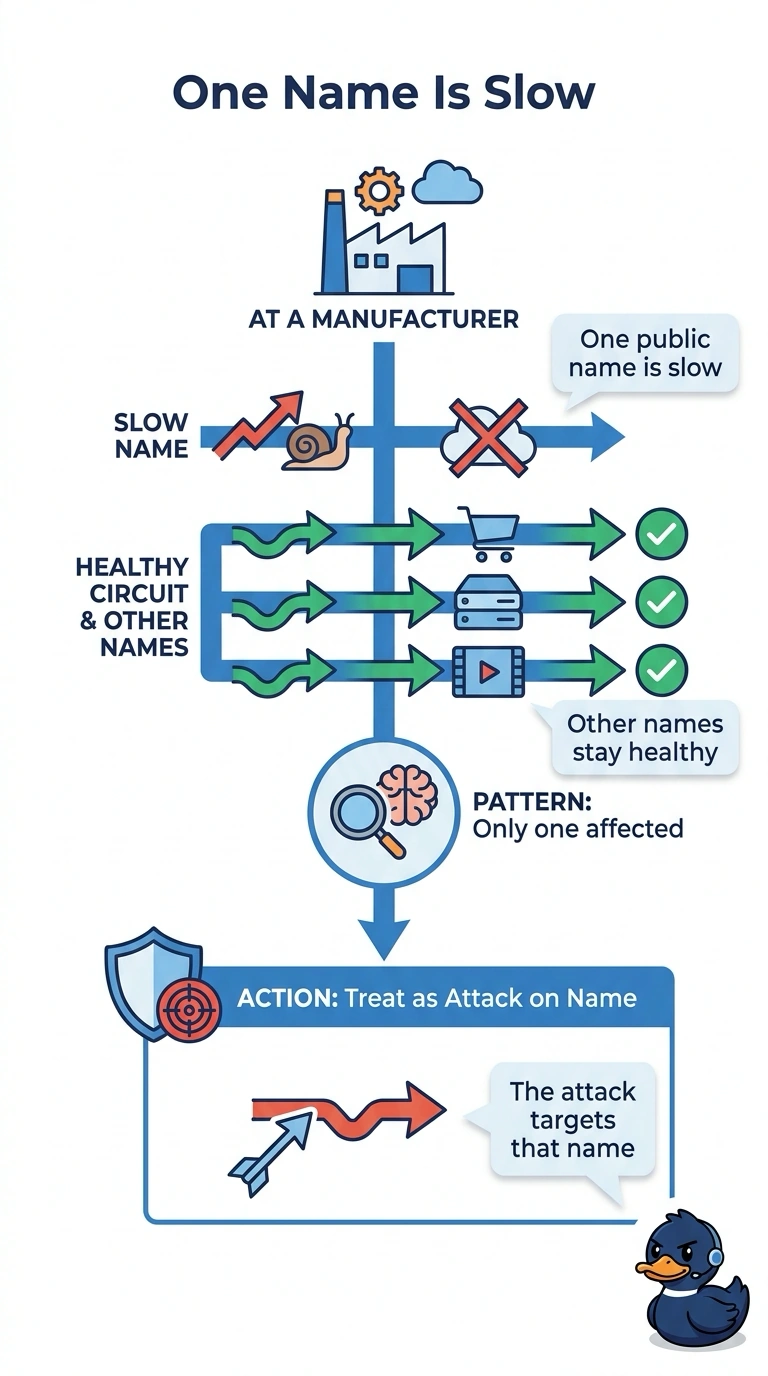
Short Explanation
If one shop on a street is dark and the others are lit, you do not rebuild the whole power grid first. You treat the single slow name as the target of an attack when every other name on that circuit is healthy. Adding bandwidth for the shared circuit, retuning quality of service for every name, or replacing a laptop aims at a fault the healthy names do not show.
Full Explanation
A circuit-wide fault would slow the names that share the circuit. Here only one public name is slow and the others stay healthy, so the fault follows that name. That pattern is an attack, or another name-specific security event, aimed at the name rather than at the manufacturer's access link. Adding bandwidth treats one slow name as proof the whole link is short. The healthy names on the same circuit contradict a capacity shortage, and a larger circuit would not explain why a single name was selected. Retuning quality of service across every name assumes a marking problem that touches the shared path. A class change for the whole circuit does not match evidence that only one name suffers. Replacing the laptop that opened the slow name localizes the fault to one client. Other users of that name would still be slow, and the healthy names do not implicate the laptop's hardware. Investigate the name itself: where it resolves, who is reaching it, and why its path differs from the healthy names. Exam caveat: scope the symptom to the object that is actually degraded before you spend capacity, marking, or endpoint changes. Operational check: compare delay and loss for the slow name with the healthy names that egress through the same circuit.