
A bank sees prefixes that are supposed to stay inside the enterprise being advertised toward the internet. What does that evidence indicate?
Select an answer to reveal the explanation.
Short Explanation
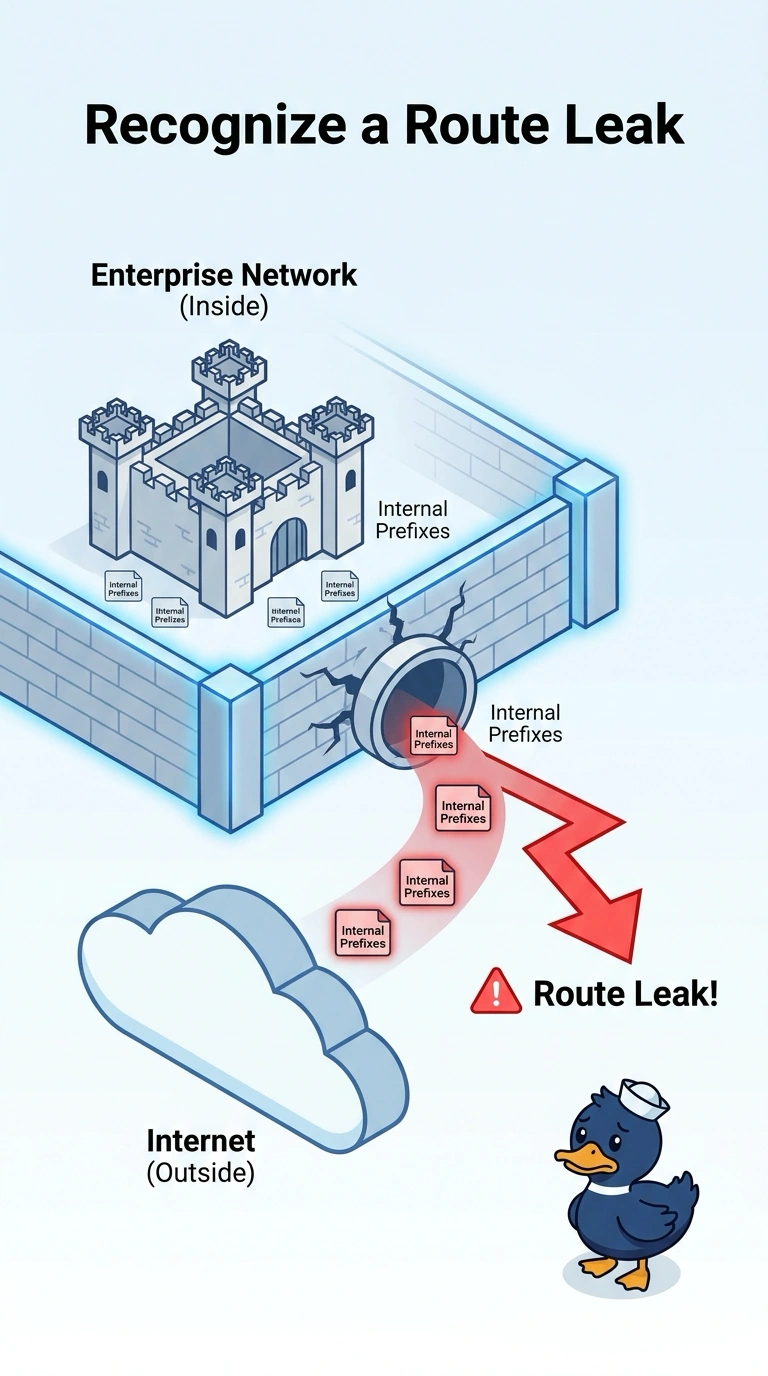
A map that shows the vault door opening onto the public street is a leak, not a slow hallway. You treat internal prefixes advertised toward the internet as a route leak. More bandwidth, a quality-of-service retune, or a replaced laptop does not explain routes that should have stayed inside the bank.
Full Explanation
Prefixes meant to stay inside the enterprise and now advertised toward the internet are a route leak. External networks can learn internal reachability they should never have been offered, which is a routing security event at the bank's edge. Adding internet bandwidth reads the advertisement as congestion. A full link does not by itself inject internal prefixes into an external advertisement, and more bandwidth would carry the leak rather than remove it. Retuning quality of service changes marking or queue treatment for traffic on the edge. It does not stop the prefixes from being advertised, and a higher class would not put those routes back inside the enterprise. Replacing the laptop that first observed the prefix blames the observer. The evidence is in the advertisement toward the internet, not in the endpoint that noticed it. Withdraw the leaked prefixes from the external advertisement and confirm they remain only on the internal side. Exam caveat: a route leak is identified from where the prefixes are advertised, not from utilization or from the client that reported them. Operational check: compare the internet-facing advertisements with the set of prefixes that are allowed to leave the bank.