
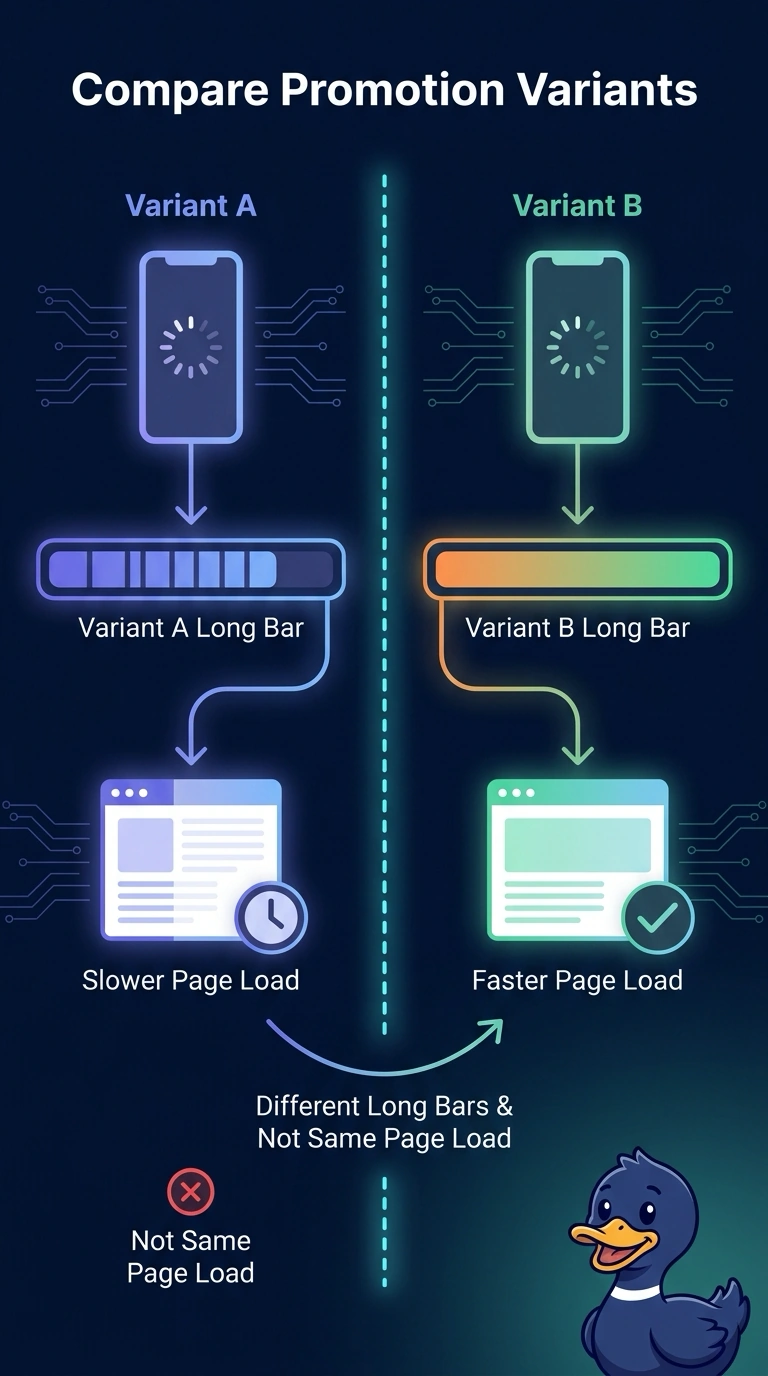
A retailer with branch stores compares two variants of the same promotion and finds different long bars in the browser waterfall. Which conclusion fits these waterfalls?
Select an answer to reveal the explanation.
Short Explanation
Two editions of the same flyer can hide the delay in different places, and you have to know which edition the shopper held. You identify the promotion variant the retail user received before you explain the long bar. The trap is a shared WAN loss alarm, a DNS hijack, or a QoS change when the variants do not carry the same objects.
Full Explanation
The two promotion variants do not draw the same waterfall: each has its own long bar, which means each variant is loading a different slow object or waiting on a different request. Until the team knows which variant the shopper received, they do not know which bar is the shopper's delay, and a single path story will not describe both charts. The conclusion that fits is the variant itself, because the page load is not the same once the variant changes. A WAN loss alarm that treats both variants as the same dropped packets ignores the fact that the long bars differ; shared loss would not hand each variant a different object to wait on. A DNS hijack that treats both names as stolen likewise ignores the split in the charts and substitutes a name-theft story for two different page compositions. A QoS change that assumes one shared class of service does the same, collapsing two object-level pictures into one policy edit the waterfalls have not asked for. Exam caveat: when variants disagree, identify the variant the user received before you explain the bar, and do not promote loss, a hijack, or QoS over that identification. Operational check: record which variant the store browser was served, open that variant's long bar, and compare its object with the other variant's long bar before you open one path ticket for both.