
A SaaS company with remote staff reruns a slow portal test, and the repeat waterfall looks healthy because cached objects return at once. Which load should the team judge?
Select an answer to reveal the explanation.
Short Explanation
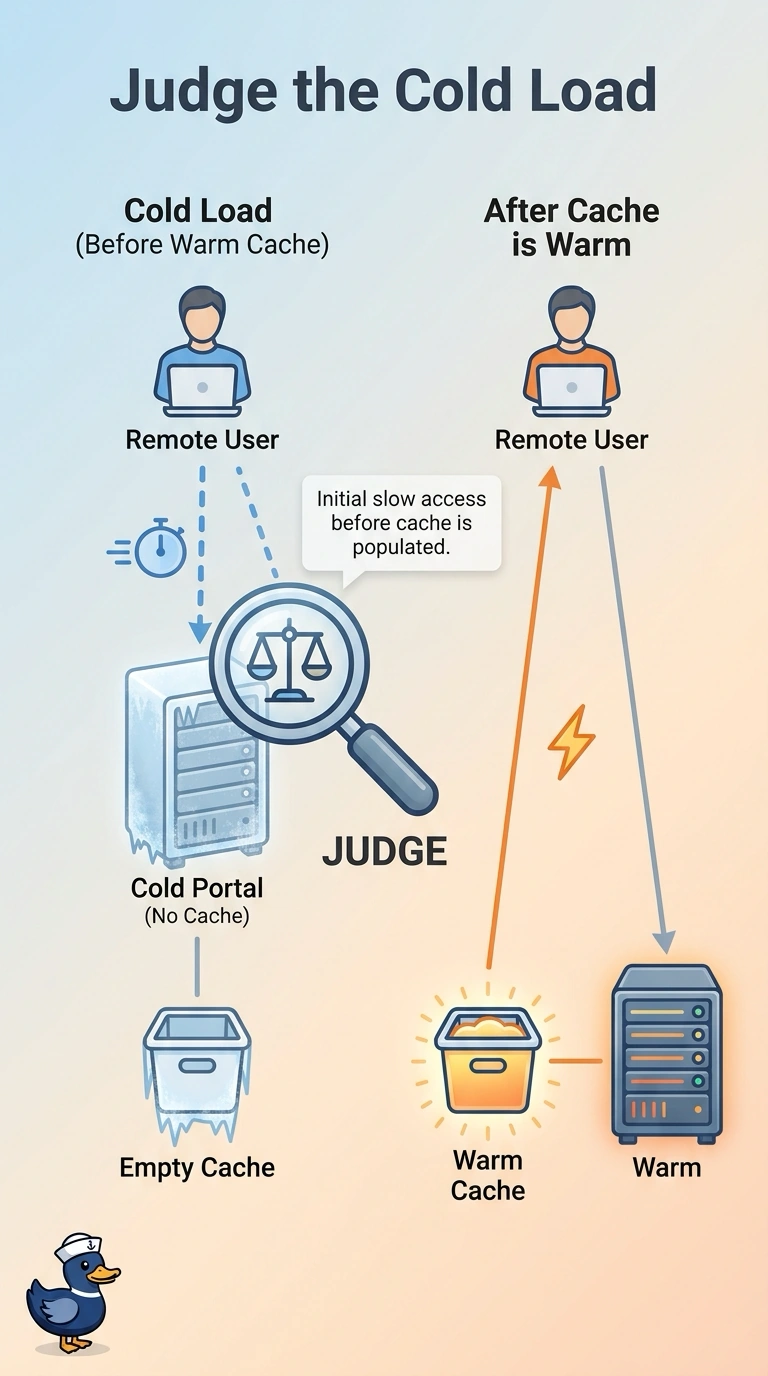
A second trip through a buffet line looks fast when your plate was already filled. You judge the cold load remote users actually hit, not the cached repeat. A loss alarm, a DNS hijack conclusion, or a QoS tweak based on that warm run describes a different problem.
Full Explanation
A repeat waterfall that looks healthy because objects return from cache measures the warm path, not the navigation remote users hit when the cache is empty. The cold load that remote users hit before the portal cache is warm is the load to judge, because that is the set of bytes, connections, and server time a first visit actually pays. A WAN loss alarm based on the fast repeat that served only cached objects invents loss from a run that was short for a local reason. Cache hits do not diagnose the wide-area path, and a fast cached chart is not evidence the path was lossy or clean. A DNS hijack conclusion drawn from objects that returned at once from cache misreads a local hit as a name-resolution event. Those objects were not looked up again in a way that would reveal a forged destination. A QoS change driven by the short wait seen on cached objects during the repeat retunes forwarding from a chart that no longer includes the original transfer cost. Exam caveat: a healthy repeat is not a healthy cold load when the repeat was served from cache. Operational check: capture one waterfall with the cache cleared and one repeat, and judge the user experience from the cleared run.