
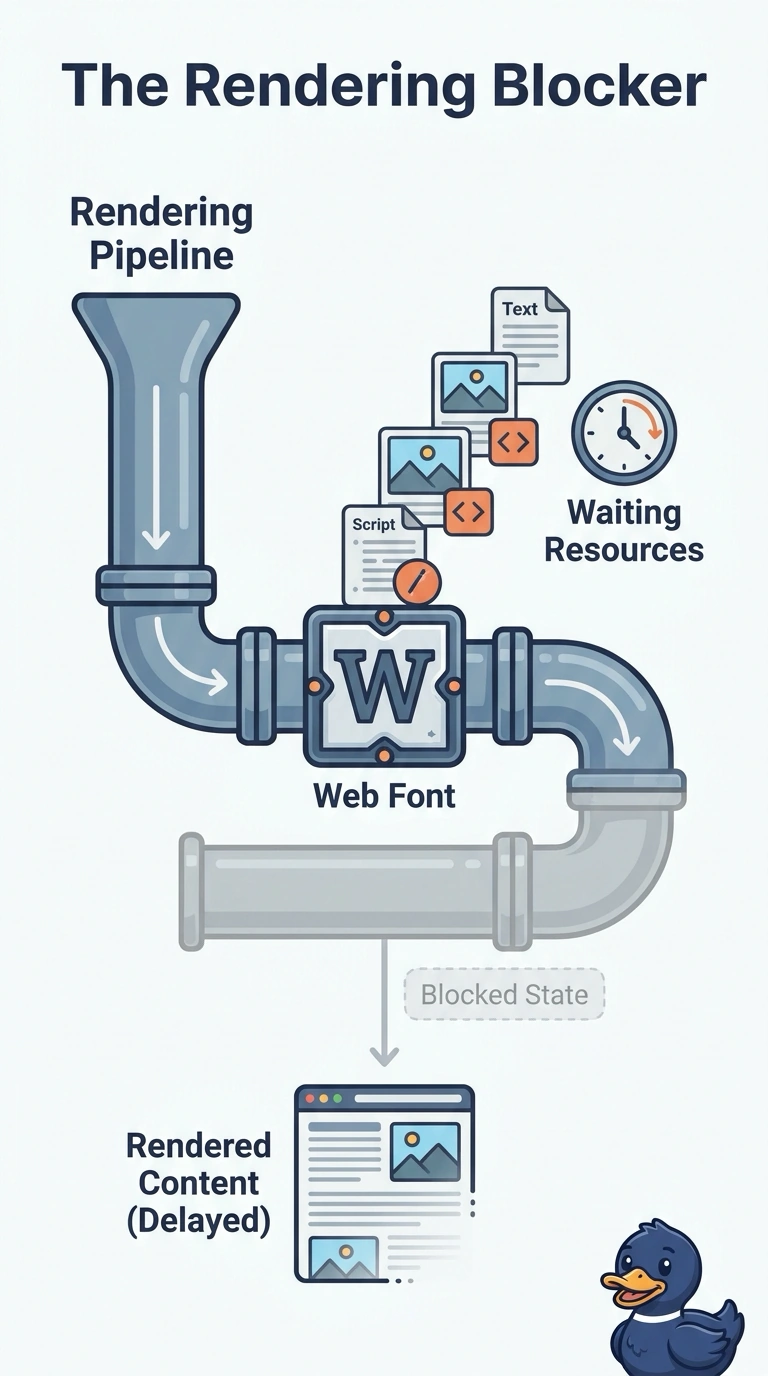
A hotel chain's booking page stays blank until one web font finishes, and the waterfall shows every later resource waiting on that font. Which finding should the assurance team treat as the cause?
Select an answer to reveal the explanation.
Short Explanation
Think of a hotel front desk where one missing key card holds every guest in line behind it. You treat the font that blocks rendering as the cause, because the waterfall shows later resources waiting on that file. Calling it WAN loss, a DNS hijack, or a QoS problem misses a page that is stuck on a single object.
Full Explanation
A browser waterfall orders the objects a page needs, and a render-blocking font holds painting and later requests until that file completes. The web font that blocks rendering while later resources wait on it is the cause, because the hotel chart shows the rest of the booking page stacked behind that single object rather than behind a failed route. A WAN loss alarm that treats the waiting font as loss on the wide-area path confuses a blocked render with dropped packets. Path loss would appear as drops along the route, and this waterfall does not establish that. A DNS hijack conclusion drawn only from the time spent fetching that font confuses delay with a forged response. A hijack would send the name to an unexpected destination, which this capture does not show. A QoS change aimed at the font object when the waterfall shows later resources blocked behind it retunes forwarding for a file the browser is waiting on, and it leaves the blocking behavior in place. Exam caveat: a long bar is not by itself a network fault; read whether later objects are gated by it. Operational check: reload the booking page with a cleared cache and confirm later requests wait on that font, then compare a build of the page that does not block on the same file.