
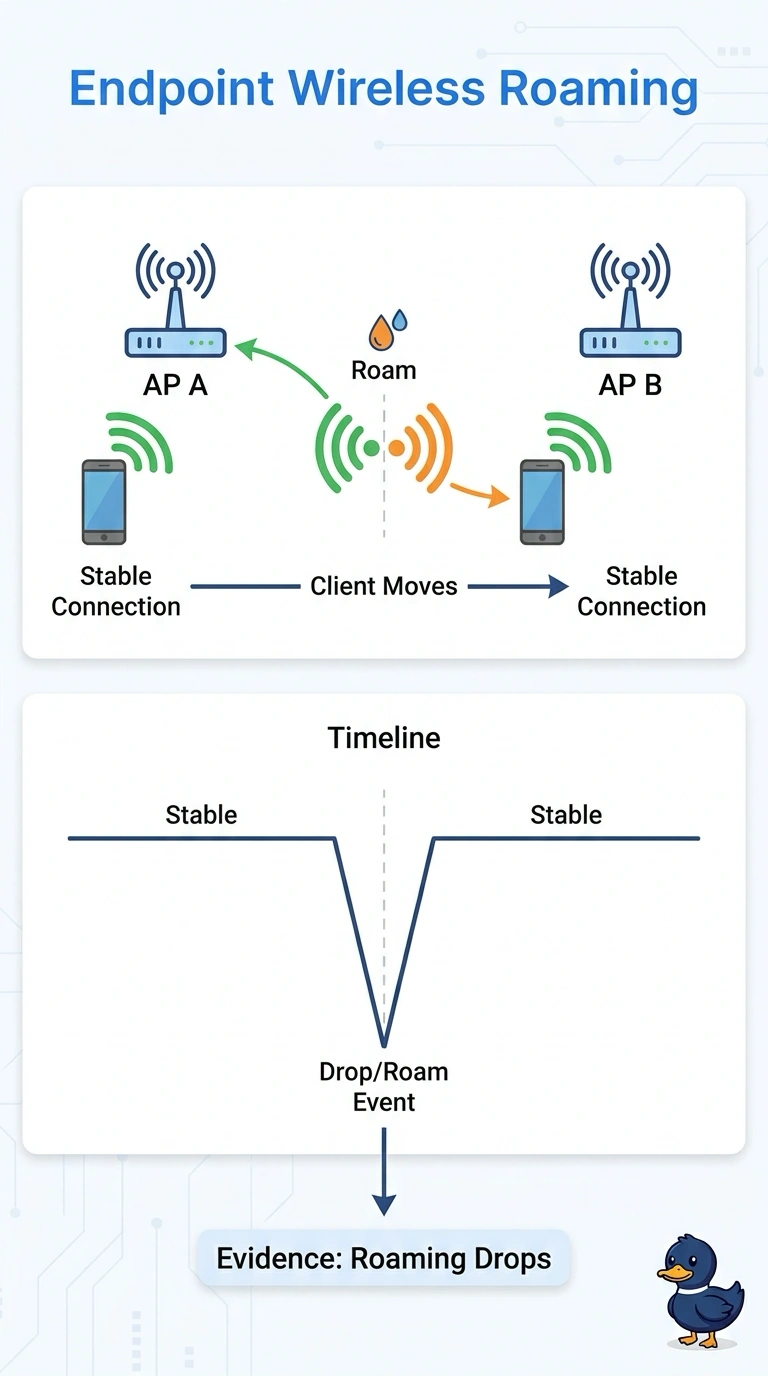
On stadium event days, endpoint drops line up with roaming between access points, and the same clients stay stable when they remain on one radio. Where does the evidence point?
Select an answer to reveal the explanation.
Short Explanation
The drops follow the client from radio to radio the way a call breaks up when you walk between rooms. You treat this as wireless on the endpoint, because the same clients are fine when they stay on one radio. Replacing the venue WAN circuit does not explain a pattern that stops when roaming stops.
Full Explanation
The drops line up with roaming between access points, and the same clients stay stable when they remain on one radio. That correlation places the fault on the wireless path of the endpoint as it moves, not on a circuit that would hurt the client whether or not it roamed. Replacing the WAN circuit that feeds the stadium would be the move if loss stayed high while clients sat still on one radio, which is the opposite of the evidence. A BGP-state alert for prefixes the venue edge advertises watches routing advertisements, and a roam between access points does not change those prefixes. Moving a data-center Enterprise Agent closer to the application changes a probe in the data center and does not follow the client as it roams the stadium radios. Exam caveat: event-day load can be real and still be separate from a roam pattern; here the stability on a single radio is what clears the shared WAN. Operational check: line up roam events on the affected endpoints with the drop times, and confirm clients that stay associated to one access point do not show the same drops.