
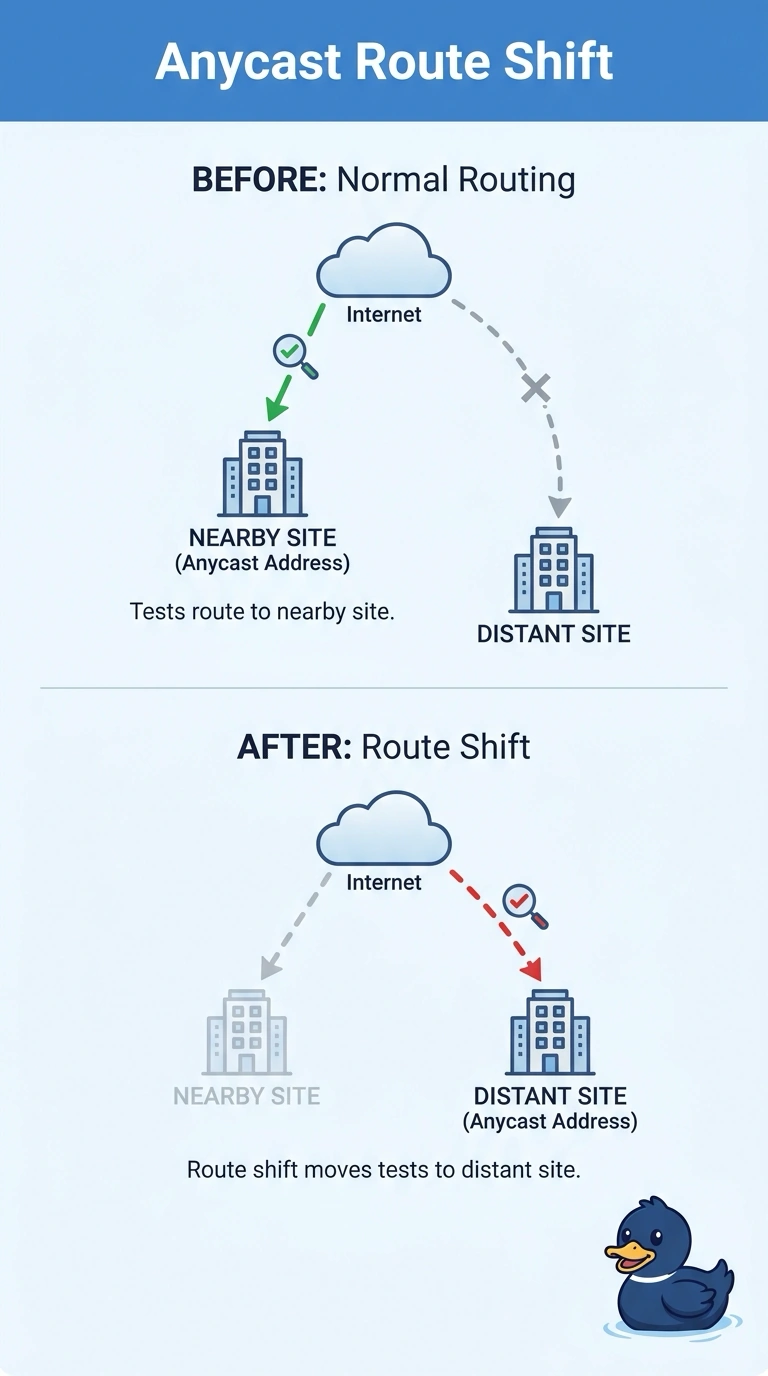
On event days at a stadium, tests aimed at one anycast address start landing at a distant site, while the same address was reached at a nearby site on quiet days. What changed?
Select an answer to reveal the explanation.
Short Explanation
Same street address, but the taxi starts dropping you at a depot in another city. You look at the routing of that anycast target, because the tests moved from a nearby site to a distant one. The browser, DNS, and the wireless network didn't change which site owns that address.
Full Explanation
The tests stay aimed at one anycast address, and on event days that address is reached at a distant site instead of the nearby site used on quiet days. Anycast delivers traffic to whichever site routing selects for that address, so the change is the routing of the anycast target. The browser on the ticket scanners would explain a slow page on the device, not which site receives the address. DNS would matter if the name had started resolving to a different address, and these tests were already aimed at the same anycast address. The wireless network in the stands would be a local radio problem and would not move an anycast target from a nearby site to a distant one. A farther landing site with the address held constant is a routing outcome. Quiet-day and event-day tests use that same address, so the site change is not a new name lookup. Exam caveat: do not treat an anycast site change as DNS when the address under test did not change. Operational check: compare the path to that address on a quiet day and an event day and confirm the landing site is what moved.