
A stadium wants voice to a cloud contact center to prefer the internet color, and to use MPLS when the internet path misses the loss target. Voice must not be dropped. Which policy behavior is that?
Select an answer to reveal the explanation.
Short Explanation
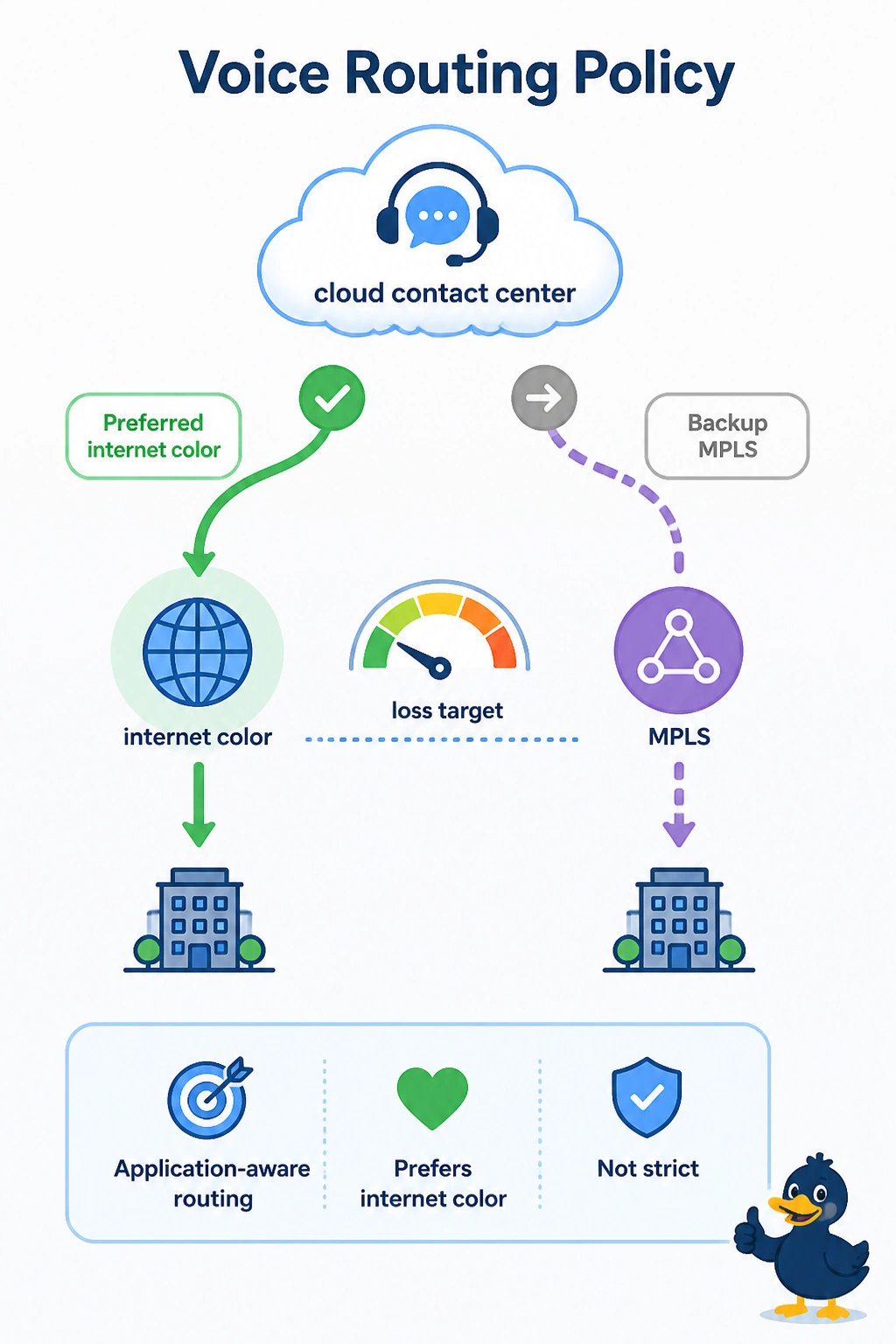
You want the scenic road when it is smooth, and the old highway when it is not. Prefer the internet color in application-aware routing and leave the action loose, so a missed loss target falls back to MPLS instead of dropping the voice. Strict would throw the calls away.
Full Explanation
Application-aware routing sends the matched application into a tunnel that meets the SLA class and can prefer a color. Without the strict action, a miss does not drop the traffic. The edge forwards on an available tunnel, which is the MPLS path in this design. That is the fallback the stadium asked for. The same policy with strict drops voice when no tunnel meets the class, even if MPLS is up. A zone-based firewall that denies voice whenever the internet color is up would block the preferred path and does not measure loss. A control policy that withdraws the MPLS TLOC removes the fallback the requirement depends on. Voice would have nowhere to go when the internet path is bad. Exam caveat: preferred color is a preference among tunnels that meet the SLA, or among remaining tunnels when the action is not strict. It does not reserve bandwidth. Operational check: while the internet path is inside the loss target, voice should take that color. Raise the loss and voice should move to MPLS without a drop counter incrementing on the SLA action.