
Voice to a cloud contact center from a bank branch takes a lossy internet path. The strict voice SLA is configured, firewall counters are zero, and the voice application list used by that policy is empty. What is wrong?
Select an answer to reveal the explanation.
Short Explanation
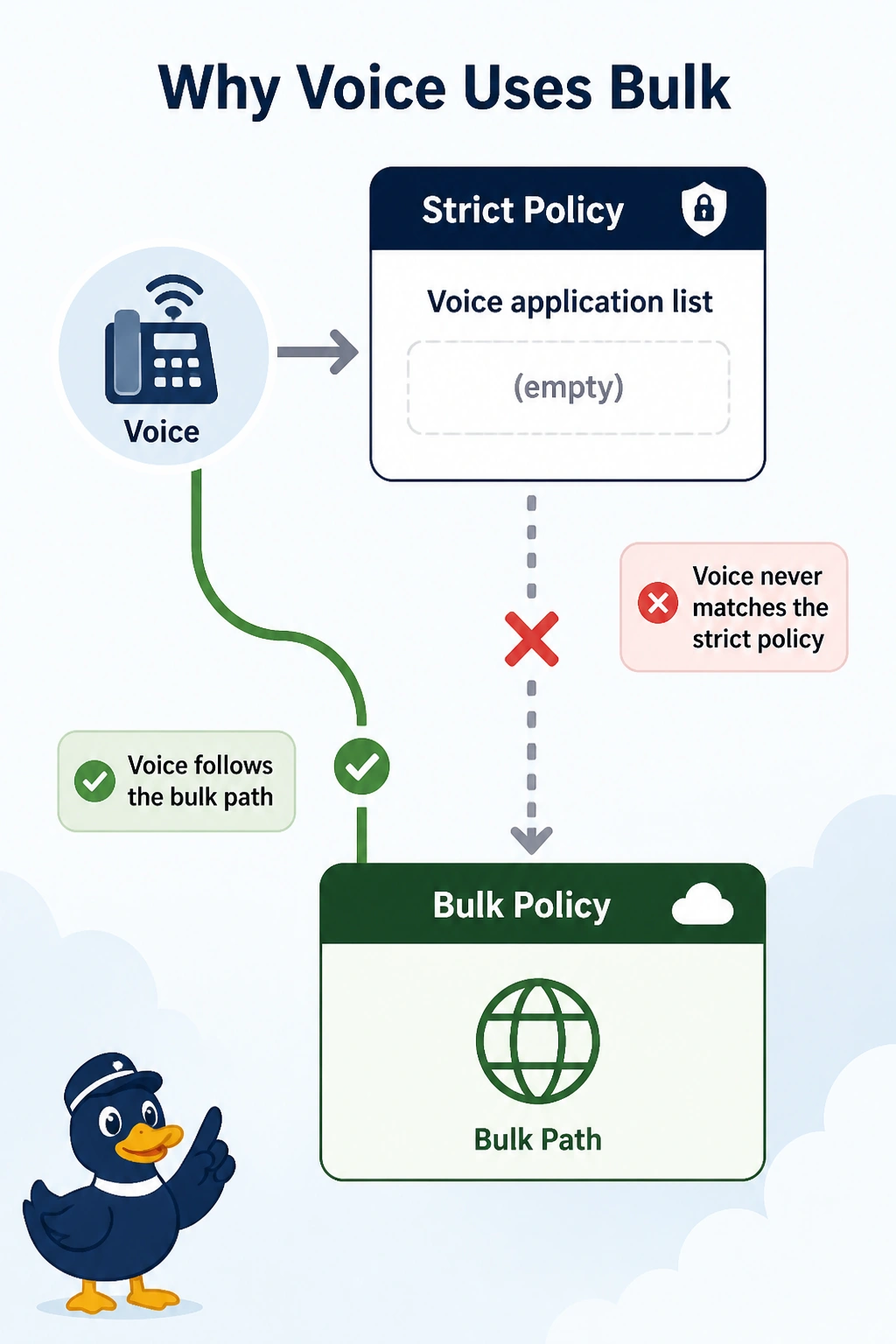
You’ve configured the strict SLA, but its empty voice application list never matches the contact-center traffic. Voice therefore follows the bulk path over the lossy internet, and the quiet firewall counter points away from a firewall drop.
Full Explanation
Application-aware routing matches traffic to an application list and then applies the configured SLA action. Because the voice application list is empty, no contact-center voice flows match the strict policy; they fall through to the bulk path, which can use the lossy internet path. Add the contact-center application to the voice list so the strict policy can match those flows. The zone-based firewall is not choosing the path, and its zero counters show that it is not discarding the voice packets. An OMP withdrawal would remove the contact-center route; voice arriving over an internet path shows that a route exists, rather than the edge needing to invent a lossy static route. An expired SIG credential concerns traffic steered through the secure internet gateway; it does not explain voice alone taking the lossy color while the application list remains empty. Exam caveat: even after correcting the list, a strict action will drop voice if no tunnel meets the SLA. If you prefer a degraded path to dropped calls, strict may not be the right action. Practical check: confirm that the voice policy references a list containing the contact-center application, then place a test call and verify that it takes a path meeting the voice SLA.