
A campus router advertises its prefix to two AWS tunnels. Return traffic from the VPC should prefer tunnel 2. The campus outbound path is already correct. Which advertisement change influences AWS?
Select an answer to reveal the explanation.
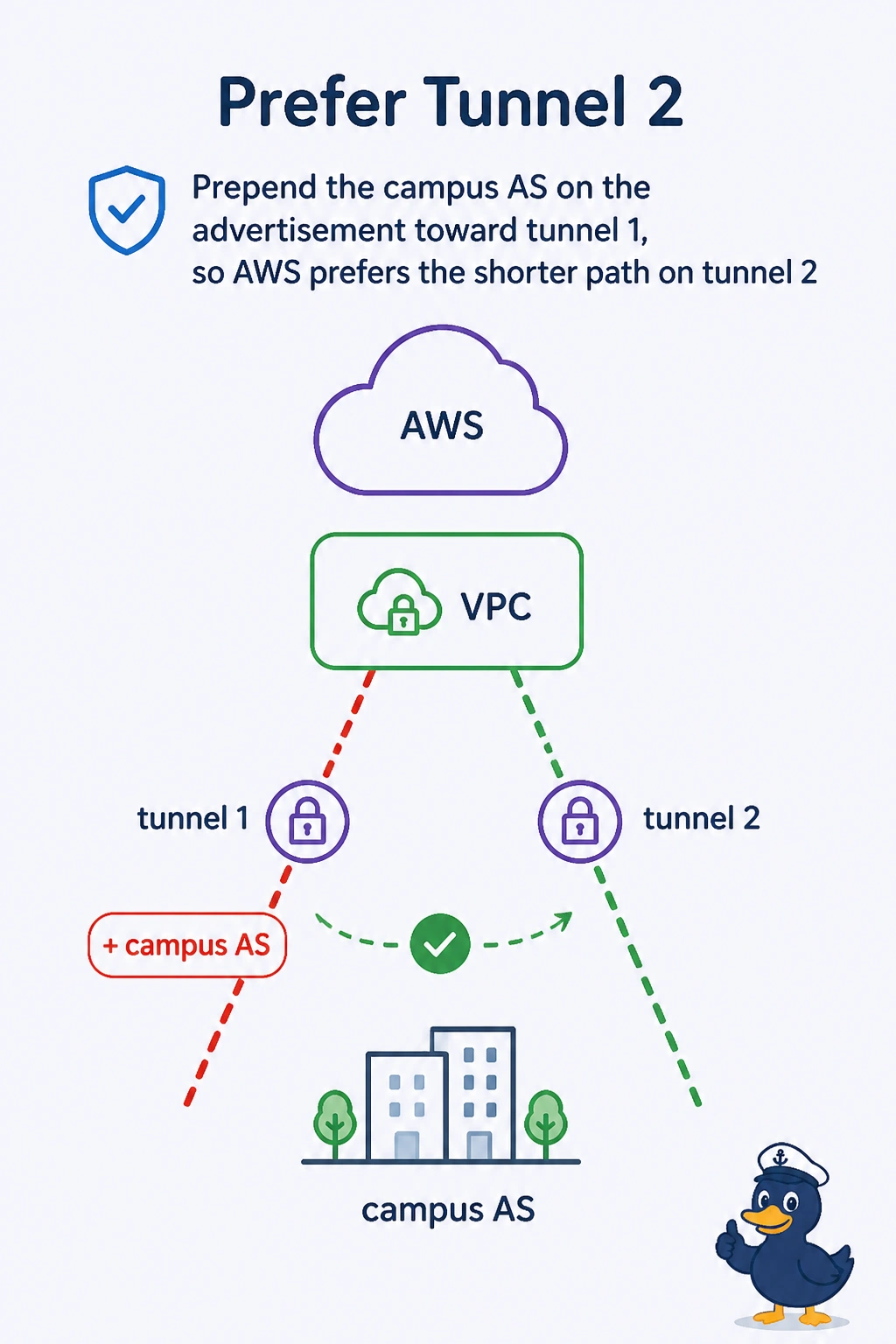
Short Explanation
Local preference picks your exit, and it does not pick theirs. You prepend your AS toward tunnel 1 so the path AWS sees on tunnel 2 is shorter and return traffic prefers tunnel 2. AWS is not running OSPF to take a cost from you.
Full Explanation
AS-path length is a BGP comparison AWS can use on the routes the campus advertises. Prepending the campus AS on the advertisement toward tunnel 1 makes that path longer. The same prefix on tunnel 2, without the prepend, is shorter, so return traffic prefers tunnel 2. Local preference is evaluated only on the router that sets it. Raising it on the campus router does not change AWS's best path back. The virtual private gateway does not run OSPF, so there is no OSPF cost inside AWS to lower. The IKE lifetime does not mark a return path. Both tunnels can be up with the same lifetime while BGP still prefers the shorter AS path. Exam caveat: prepending influences the return. It does not replace the local-preference change that already made the campus outbound path correct. Leave that outbound policy in place. Operational check: the BGP advertisement toward tunnel 1 should show the extra AS hops, and the VPC flow log or the tunnel counters should show return traffic on tunnel 2.