
A factory needs a committed bandwidth into an AWS VPC, sized to a port they order, rather than a best-effort internet rate. Which connectivity choice matches?
Select an answer to reveal the explanation.
Short Explanation
Best-effort bandwidth is whatever capacity remains on a crowded highway. You need a dedicated private connection with a port bandwidth you order for the VPC path. A second static route on the same internet circuit does not reserve any bandwidth.
Full Explanation
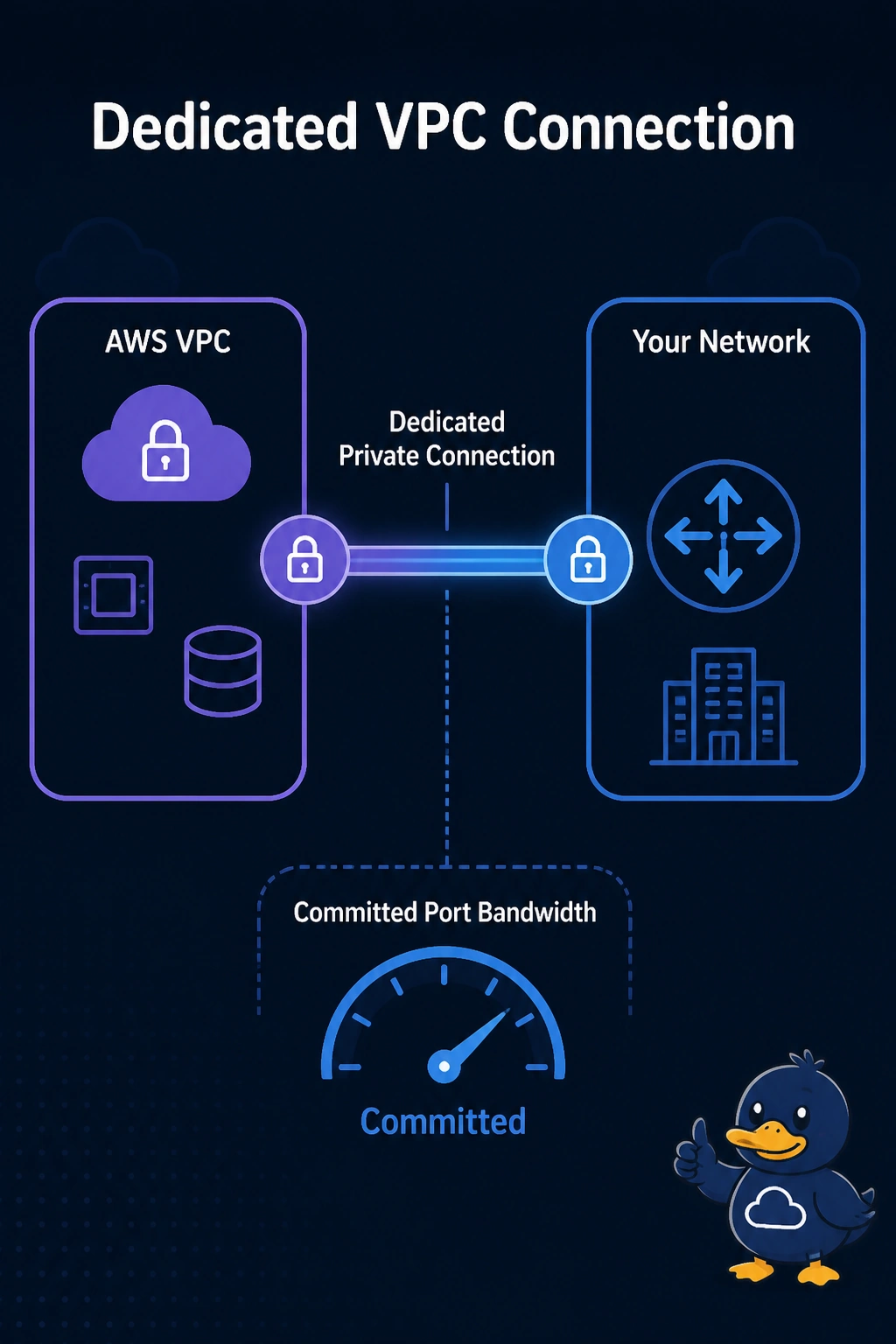
A dedicated private connection, such as an AWS Direct Connect dedicated connection, assigns a port with a stated bandwidth that you order. That fits your need for a committed rate rather than best-effort capacity. An internet IPsec VPN shares the public path, so its throughput varies with available internet capacity and VPN gateway limits; it does not provide a committed port. Direct internet access from factory PCs to a public AWS website does not enter the private VPC path and carries no bandwidth commitment. A second static default route on the same internet circuit toward the same tunnel adds neither capacity nor commitment: it is the same best-effort path written down twice. Exam caveat: a hosted or partner connection can also reserve a smaller allocated bandwidth; the design point is a private attachment with a stated rate, not the internet. Practical check: confirm that the cloud interconnect shows the ordered port speed and that factory traffic to the VPC appears on that attachment rather than in the VPN tunnel counters.