
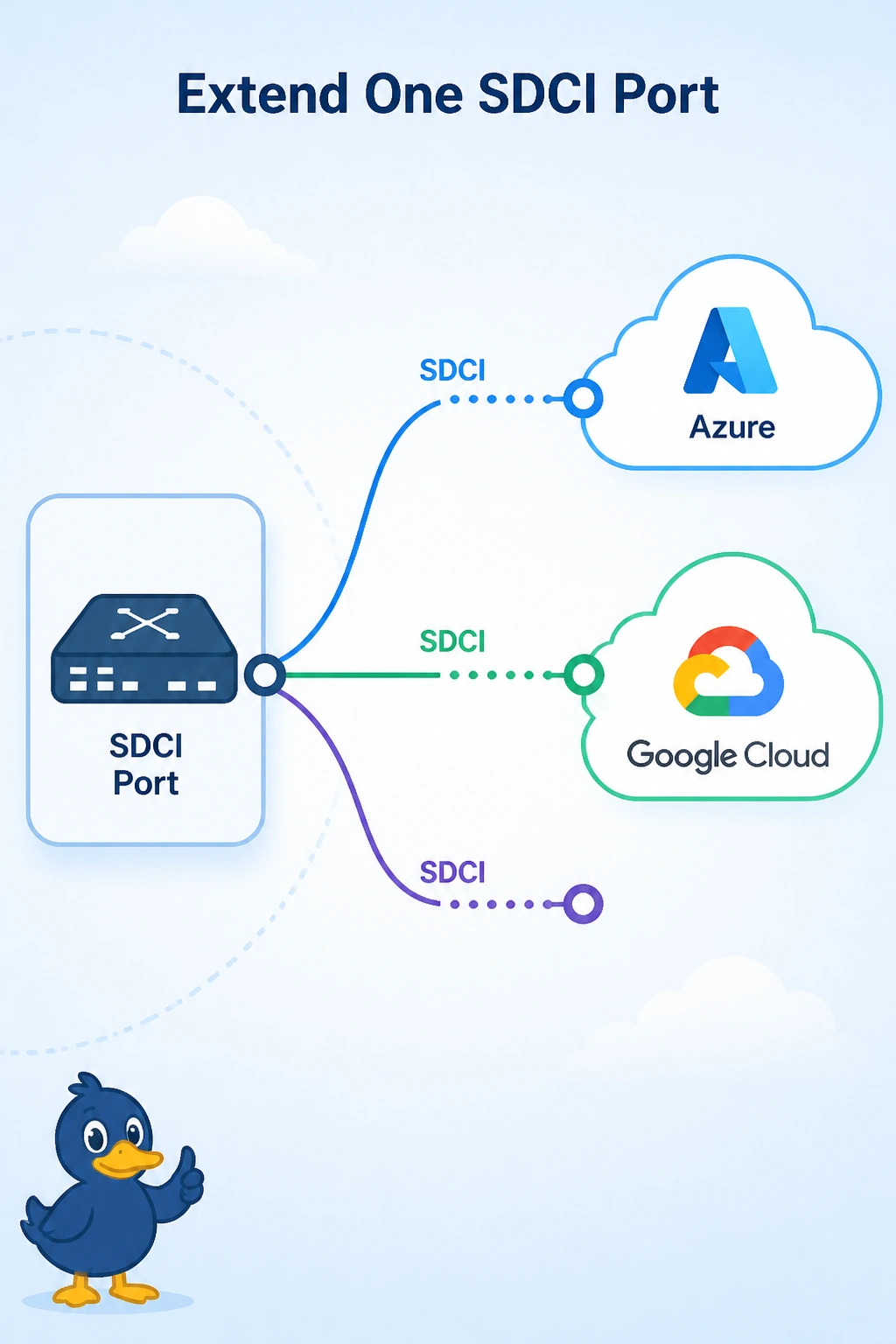
A publisher already has an SDCI port in one metro into AWS. They need private paths from that same port into Azure and Google Cloud this week, without new physical ports. Which model covers the two new paths?
Select an answer to reveal the explanation.
Short Explanation
You already paid for the port, so you light two more virtual circuits from it, one toward Azure and one toward Google Cloud. That is the SDCI model. Ordering two new physical ports is the wait you were trying to avoid, and an internet VPN leaves the private fabric.
Full Explanation
An existing SDCI port can add virtual circuits to other cloud on-ramps in that metro without a new physical port at each provider. The publisher already reaches AWS this way and wants Azure and Google Cloud the same week. Additional virtual circuits from that port are the matching model. Two new dedicated interconnect ports are physical builds they said they would not order. Native IPsec from the SDCI router to the providers' VPN gateways uses the public internet and does not use the private port. A colocation cross-connect needs a cage they do not have. Exam caveat: each virtual circuit still needs the provider-side attachment, such as an ExpressRoute or a VLAN attachment on a Cloud Router. The fabric order does not configure that attachment by itself. Operational check: the fabric portal should show three live virtual circuits from this port, and each cloud should show its attachment up on a private or partner interconnect.