
An automation engineer is scripting Catalyst Center for a new campus: the script must create an area, create a building under it, and fetch that building's details by name afterward to confirm the hierarchy. The create call returns a task rather than the finished site, and the engineer wants one predictable flow for creation and read-back. Which sequence should the script follow to create and then verify the site?
Select an answer to reveal the explanation.
Short Explanation
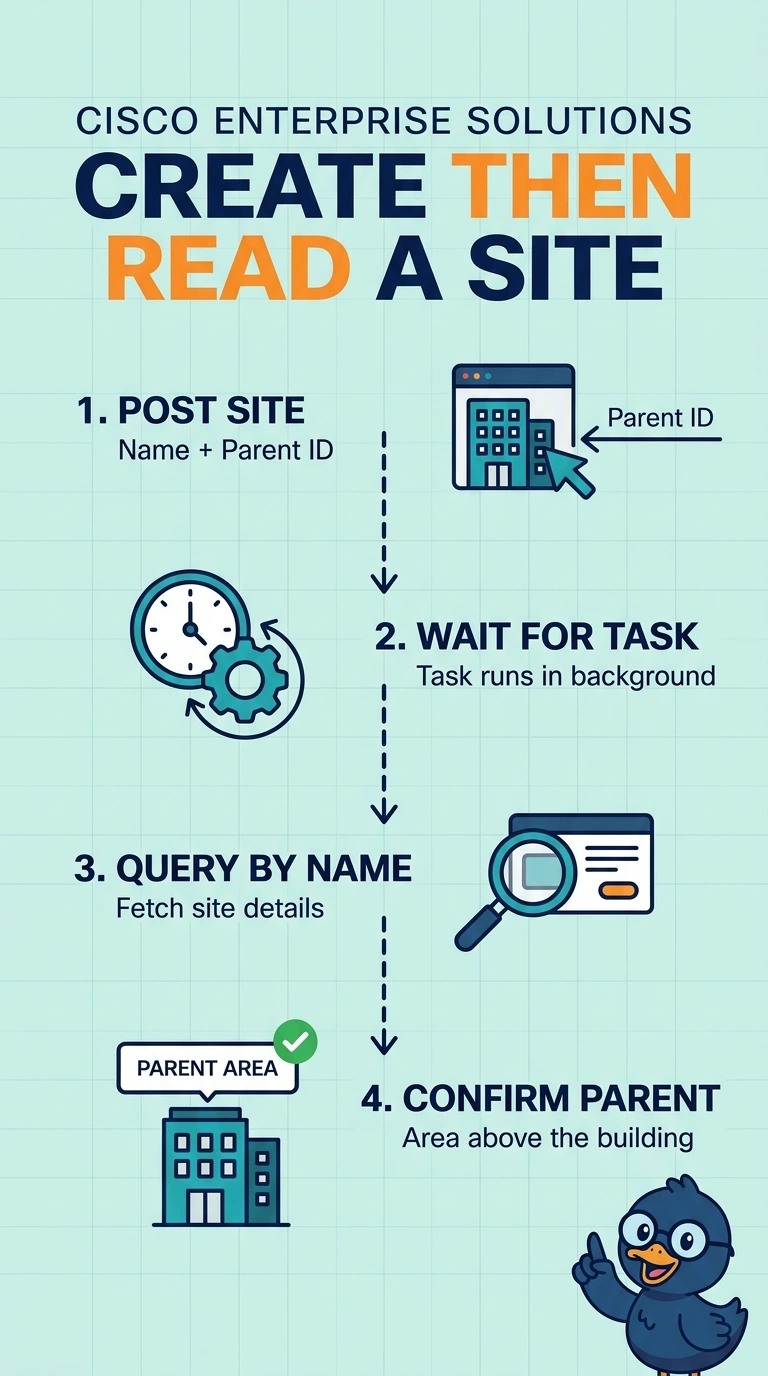
Catalyst Center creates sites in the background, so you get a taskId rather than a finished site from the create call. Once the task finishes, query the building by name to confirm its parent area. That gives you one predictable create-and-verify flow.
Full Explanation
Catalyst Center creates sites asynchronously: the create request validates the payload, schedules the work, and returns a task identifier rather than the finished site. You should create the area and then the building with its parentId, wait until the task finishes, and query the building by name to confirm the hierarchy. Reading an id field from the create response assumes the response contains a completed site resource; because it contains a task instead, that id is not available there for later queries. Creating the building before the area reverses the parent-driven hierarchy: the building must reference an existing area, not receive one afterward. Listing every site and filtering locally can work for a small inventory, but it bypasses the supported name-based query and becomes less efficient as the inventory grows. Exam caveat: older documentation and sample code may use the name DNA Center for these same site endpoints. Practical check: after the task reports success, query the building by name and verify that its parent resolves to the intended area.